


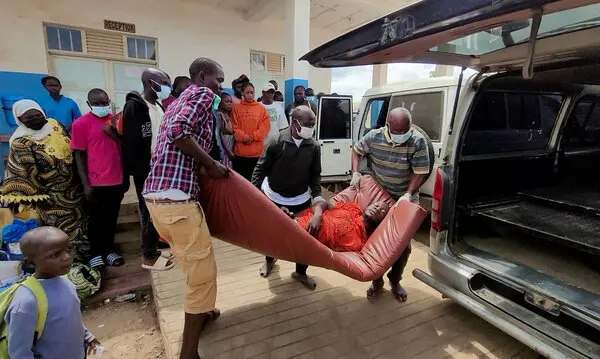
WHO Declares Global Health Emergency Over Deadly Ebola Outbreak in DR Congo
The World Health Organization (WHO) has officially declared the ongoing Ebola outbreak in the Democratic Republic of Congo (DRC) a public health emergency of international concern. While the outbreak has not yet met the criteria for a pandemic, the WHO warns that the virus carries a significant risk of widespread local and regional transmission.
The current epicenter is located in the DRC’s eastern Ituri province, where health officials have recorded approximately 246 suspected cases and 80 deaths. Currently, there are eight laboratory-confirmed cases spread across three health zones, including the provincial capital of Bunia and the gold-mining towns of Mongwalu and Rwampara.
Alarmingly, the virus is already spreading geographically. One case has been confirmed in the capital city of Kinshasa, and another in the eastern city of Goma, which is currently controlled by M23 rebels. The virus has also crossed international borders, with two confirmed cases reported in neighboring Uganda, including a 59-year-old Congolese man who died last Thursday.
The current crisis is being driven by the Bundibugyo virus, a rare and severe strain of Ebola. Unlike the Zaire species of Ebola, there are currently no approved vaccines or drugs available to treat the Bundibugyo strain.
The virus is transmitted through infected bodily fluids and typically incubates for two to 21 days before symptoms appear. Early signs include fever, muscle pain, fatigue, and a sore throat, which can rapidly progress to vomiting, diarrhoea, rashes, and severe internal and external bleeding. Historically, the Bundibugyo strain has caused a fatality rate of between 30% and 50% during previous outbreaks.
Health experts are particularly worried about the environment in which this outbreak is occurring. The WHO noted that the ongoing security situation and humanitarian crisis in the DRC significantly increase the risk of the virus spreading. The Africa CDC also expressed high concern over the virus’s presence in dense urban settings and active mining communities, combined with high population mobility.
WHO Director-General Dr. Tedros Adhanom Ghebreyesus warned that there are “significant uncertainties to the true number of infected persons and geographic spread”. Dr. Jean Kaseya, executive director of the Africa CDC, emphasized that regional co-ordination is essential to manage the crisis effectively.
To mitigate the spread, the WHO has advised both the DRC and Uganda to establish emergency operation centres to trace and isolate contacts. Patients should be treated in isolation until they test negative on two Bundibugyo-specific tests conducted at least 48 hours apart.
Despite the threat to neighboring nations, the WHO has explicitly advised countries not to close their borders or restrict travel and trade, noting that such measures are typically driven by fear and “have no basis in science”.
This marks the 17th Ebola outbreak in the DRC since the virus was first discovered there in 1976. The country previously endured its deadliest outbreak between 2018 and 2020, during which nearly 2,300 people lost their lives.