


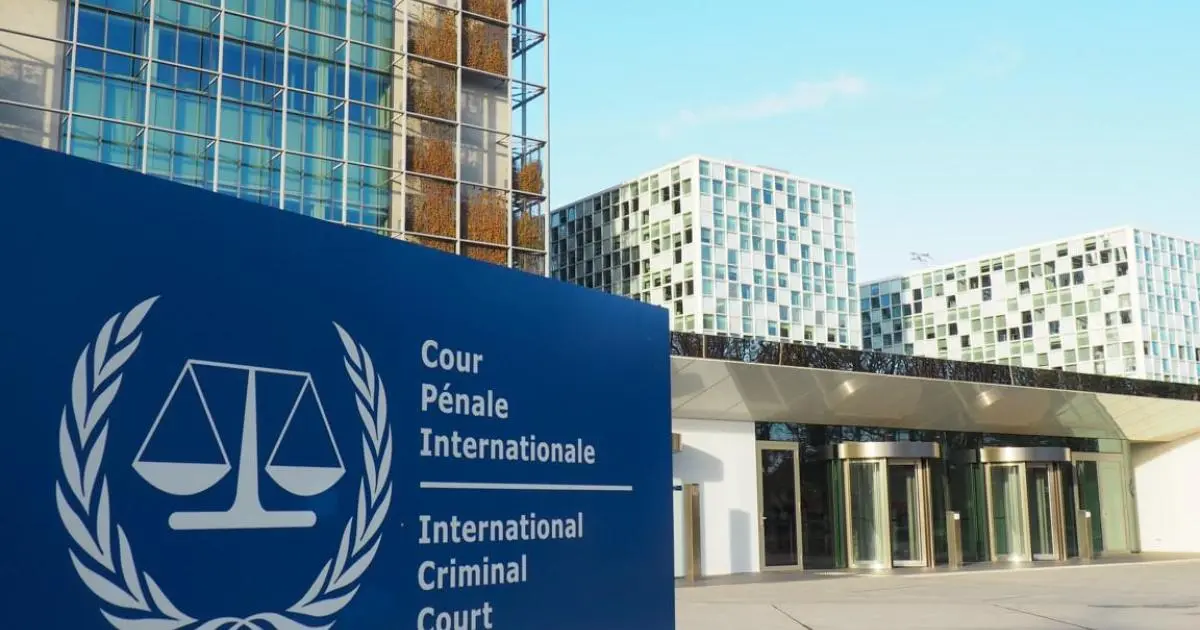
2025 was a very bad year for the International Criminal Court
The year began ominously. In February 2025 the respected Justice Info website published an article entitled ‘Thinking about the death of the ICC and what comes next’. If not quite in the morgue, the International Criminal Court is definitely in the intensive care unit. In the last year both the United States and Russia have imposed sanctions on what Washington describes as a politically-motivated “kangaroo court”. Moscow sentenced the chief prosecutor and eight ICC judges to lengthy prison terms in absentia. Washington’s sanctions means no email, no bank accounts, no credit cards, no online shopping, eBay or PayPal or Ubers, and no US travel visas for several judges and their families. No more Alexa either. The Court has had to change its operating software and might not be able to pay its employees. It is preparing for the worst.
The Court has lost its Prosecutor, Karim Khan, suspended following allegations of sexual misconduct. The ICC has also lost five State Parties across three continents in 2025: Hungary, Mali, Niger, Burkina Faso and Venezuela. Burundi, The Philippines and Malaysia have already left. And key European ICC members have demonstrated a marked reluctance to execute ICC arrest warrants. Other State Parties are voting with their wallet. ICC member states are at least €74 million in default of their contributions, of which €50 million relates to the 2025 budget. A total of 37 States Parties have outstanding contributions of more than one year, and 16 of those are now ineligible, or simply unwilling, to participate in ICC affairs.
It has all gone spectacularly wrong. Critics claim that the ICC has squandered an enormous amount of goodwill, political capital and billions of dollars while destroying its own credibility, legitimacy and respect. The Court opened its doors in 2002, pledging to pursue the most serious of international crimes without fear or favour. The ICC started to go wrong very early on, running headlong into accusations of institutional racism, judicial gerrymandering, political selectivity and simply making things up as it went along. The ICC’s fatal flaws were there from the start: the Court is a Frankenstein monster of conflicting legal systems cobbled together by the non-governmental organisations that gave birth to it and continue to meddle in its affairs. The ICC has simply not lived up to the claims made by the Court’s proponents and by the Court itself.
Most notably the International Criminal Court will never be the world court. Its signatories represent just over one quarter of the global population. The United States, Russia, China and India are just some of the many countries that have remained outside of the Court’s jurisdiction. Neither is the ICC the independent court it claims to be. The ICC’s own statute grants special “prosecutorial” rights of referral and deferral to the UN Security Council – by default to its five permanent members (three of which are not even ICC members). Political interference in the legal process was thus built into the Court from its inception. The veteran international human rights lawyer and prosecutor Reed Brody has noted that “political calculations and double standards . . . have plagued . . . the ICC”. The Court is also inextricably politically and economically tied to the European Union which provides up to 70 percent of its funding. And we all know that “he who pays the piper calls the tune”. The ICC should be seen as an EU project, either by insemination or adoption, serving as an instrument of European foreign policy, especially in Africa.
The ICC claims it has strengthened peace. The Court has instead delayed, destabilised and destroyed peace processes in Africa, causing increased conflict and human suffering. The ICC claims to be fighting impunity, yet it has afforded de facto immunity and impunity to European member states and several serial abusers of human rights who happen to be allies of its European funders.
The Court has performed very badly at a snail’s pace. Promising “swift justice”, the ICC has consumed more than 2 billion Euros resulting in thirteen questionable convictions in the 23 years of its existence in trials lasting up to ten years. The ICC projects itself as a “victim’s court” but has been roundly criticised for its ambivalence towards victim communities. Legal scholar and campaigner Professor Louise Chappell has also stated that “there are questions being raised by the gender justice community around the court’s legitimacy”.
Far from being an exemplary court, the Court’s prosecutors, judges and administrators have proved to be manifestly unfit for purpose. ICC judges – some of whom have never been lawyers, let alone judges – are the result of NGO-vetting and grubbily corrupt FIFA-esque vote-trading amongst member states. ICC trials have been described by legal bloggers as “slapstick comedy”. In 2024, in a moment of clarity, even the currently suspended ICC Prosecutor Karim Khan was candid enough to admit that “[a]round the world, many people are not buying what we are selling.”
All of the above – and this summary merely skims the surface of criticisms of the Court – poses what should be an obvious question. What right has this failed, institutionally corrupt, professionally-inept and procedurally-flawed body have to judge anyone?
Dr David Hoile is the author of Justice Denied: The Reality of the International Criminal Court