

Has SVG Govt Been Asked to Accept Third-Country Deportees?
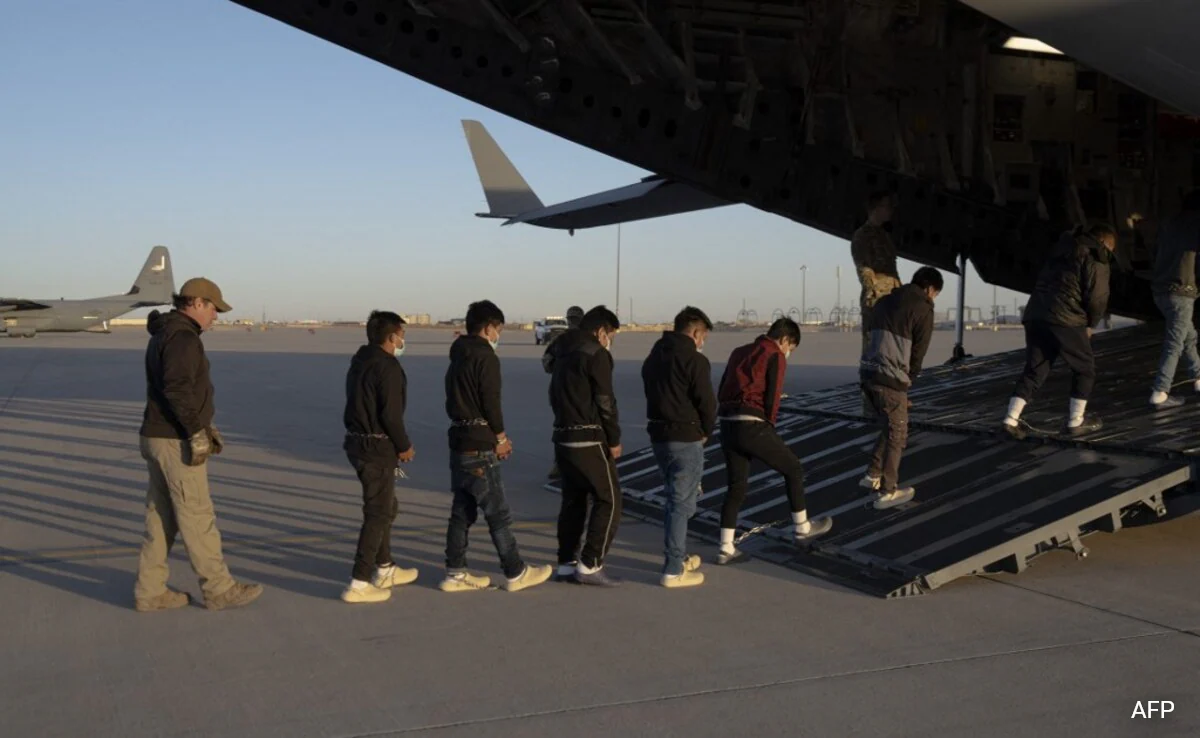
The United States is actively pursuing a regional strategy focused on securing agreements for the deportation of individuals to third countries. As this policy gains traction across the Caribbean, the government of St. Vincent may face a critical foreign policy decision with significant domestic consequences.
The nations of Antigua, Dominica and St Kitts have already entered into agreements to accept deportees and refugees from third countries at the request of the United States. Furthermore, Guyana is reported to be in advanced discussions to formalize a similar arrangement. This established regional trend brings into sharp focus the specific and multifaceted risks that such a policy could present for St. Vincent.
An agreement to accept deportees and refugees from third countries at the direction of the United States could be widely perceived as seceding fundamental control over national immigration and border policy, undermining a core tenet of state sovereignty.
The decision could become a highly contentious domestic issue, potentially fueling political opposition and creating significant public dissent. A government seen as acquiescing to foreign pressure on a sensitive matter of national identity and security could face a considerable political backlash.
Further, aligning so closely with this U.S. policy may alter diplomatic relationships with other Caribbean nations, particularly those who choose to resist such agreements. This could potentially isolate St. Vincent or draw it into new geopolitical fault lines within the region. The latter may not be, after all, it appears Caribbean governments are seceding one by one to the U.S request.
As we continue looking at the risks involved, one must note that an influx of a new population would place immediate and long-term strain on St. Vincent’s public services. Integrating populations of deportees and refugees into a small, often close-knit society presents significant challenges. Cultural differences, competition for resources, and potential social friction could disrupt the existing social fabric.
The arrival of deportees and refugees could place additional burdens on law enforcement and the justice system. Managing the security, vetting, and monitoring processes for new arrivals would require resources and capabilities that may currently be stretched thin.
There would be direct and unavoidable costs to the state for processing, housing, and providing social support for accepted deportees and refugees. A critical question is whether any financial assistance from the U.S. would sufficiently cover the full, long-term costs of integration and support.
Any negative social or security-related incidents could damage the country’s international reputation. This poses a direct threat to the high-value yachting and luxury resort sectors, which are exquisitely sensitive to international perceptions of safety and stability and form a cornerstone of the national economy.
Further, the introduction of a new population into the local labor market could create downward pressure on wages in critical sectors like agriculture and hospitality, potentially leading to economic tension among the local workforce.
These foregoing risks should not be viewed in isolation; their potential to interact and create compounding negative effects presents a more complex and severe challenge.
Casing point, increased pressure on healthcare and housing (a social risk) translates directly into an unscheduled and potentially permanent fiscal burden (an economic risk). This could force the government to divert funds from other critical national priorities, such as infrastructure development or economic diversification, stunting long-term growth.
Then there is the political fallout where public discontent over strained public services, a lack of housing, or perceived security issues (social risks) can rapidly evolve into a potent political force. This unrest could be harnessed by opposition parties, leading to protests, loss of public trust, and a threat to the incumbent government’s stability (a political risk).
Based on this short analysis, the government of St. Vincent must weigh three primary strategic considerations if approached on this matter.
1. Defining the Sovereignty Threshold: The government must carefully balance the geopolitical pressures and potential benefits of aligning with the U.S. against the tangible erosion of control over its own borders and immigration policy.
2. Mandating a Comprehensive Absorptive Capacity Audit: A rigorous and honest internal audit of the nation’s infrastructural, social, and financial capacity to manage an influx of new people is essential before any commitment is made. This must account for the long-term costs, not just initial outlays.
3. Calibrating Regional Diplomatic Posture: The decision will send a strong signal to regional partners. Leadership must consider whether aligning with the U.S. on this issue strengthens or weakens its position and influence within the broader Caribbean community.
Ulitmately, the decision the St. Vincent government would face if ask to bear this burden is not merely a choice of foreign policy alignment but one with profound and lasting domestic implications for its stability, sovereignty, and prosperity.