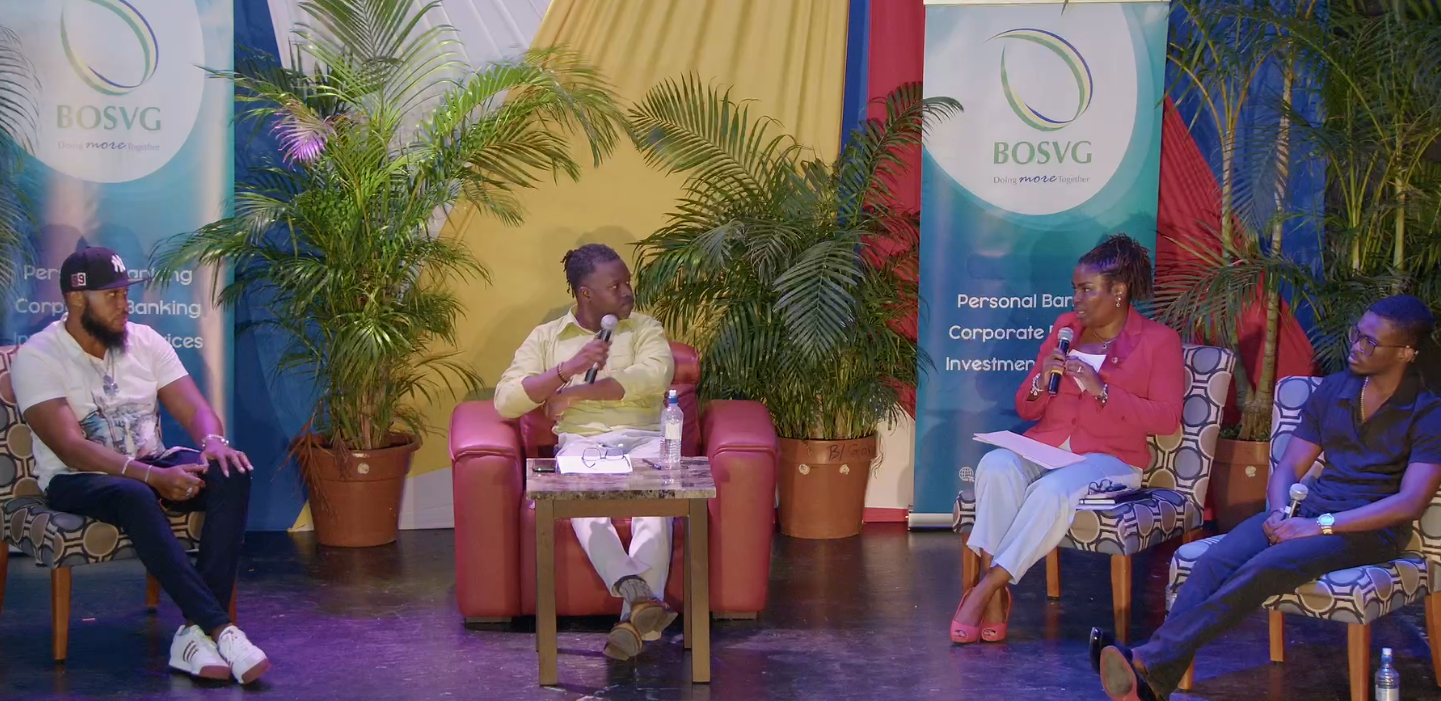
Creative practitioners, cultural advocates, and top government officials gathered at the historic Peace Memorial Hall for a high-stakes symposium examining the untapped potential and persistent bottlenecks facing St. Vincent and the Grenadines’ creative and cultural industries (CCI).
Convened under the banner of navigating the challenges of advancing the “Orange Economy,” the panel discussion sought to chart a viable pathway for local artists to tap into a global creative sector estimated by UNESCO and international financial bodies at between .25 trillion and .5 trillion annually.
Moderated by veteran creative Bomani, the panel brought together educator and policy advocate Nisha Hope, seasoned calypsonian and music educator Gary “Icon” John, and visual artist and entrepreneur Junard Ford. In attendance were key policymakers, including Director of Culture Maxine Browne and the Ministry’s Permanent Secretary.
Throughout the morning, panelists argued that while St. Vincent possesses extraordinary innate talent across music, literature, visual arts, fashion, and theater, the country’s institutional and regulatory framework lags severely behind. Panelist Nisha Hope highlighted that local creative ambition is constantly redirected because practitioners are forced to single-handedly construct the infrastructure required to sustain their craft—acting simultaneously as producers, marketers, shipping agents, and administrators.
Gary “Icon” John stressed that St. Vincent must understand its unique niche in the global market, noting recent growth in global music earnings to 1.7 billion and pointing to spin-off sectors like styling, catering, and event production that could thrive if properly integrated into the school curriculum. Meanwhile, Junard Ford called for an urgent cultural shift, demanding the same professional respect and remuneration for creatives as that accorded to doctors and lawyers.
Despite historical strides made in music copyright and royalty collection, the panel conceded that subsectors like publishing, visual arts, and fashion remain highly vulnerable to intellectual property theft and lack formal representation. The discussion culminated in an open floor session where members of the audience voiced raw, impassioned grievances regarding government neglect, commercial exploitation, and institutional paralysis.
Audience members and multidisciplinary practitioners at the orange economy forum issued an urgent call for legislative reform and strict commercial accountability, warning that talent flight and financial abuse will persist without binding legal protections.
Sean Roach, a multidisciplinary artist, police officer, and founder of Aguicci Company Limited, cautioned that talk of creative progress rings hollow without statutory enforcement. Drawing on decades of history, Roach pointed out that highly skilled Vincentian creatives have historically fled government ministries and emigrated abroad after facing mistreatment and professional disregard.
Roach urged policymakers to move beyond rhetoric by legislating specific statutory quotas, such as mandating that up to 10 percent of public building budgets be allocated toward purchasing original local artwork and sculptures. He also demanded clear oversight and feedback mechanisms to hold state officials accountable when creative development programs fail.
Echoing these concerns, media practitioner Christal Oliver addressed the pervasive practice of withholding payments from creative service providers. Oliver challenged the standard double standard at public and corporate events, where production crews, technical personnel, and performers must chase event promoters for weeks to receive basic compensation while all other commercial vendors are settled promptly.
“Why do I have to call you every week to get my money when everybody else has been paid?” Oliver asked, pointing out that young artists operating under economic distress frequently fear blacklisting if they demand written contracts or timely payment.
Panelists acknowledged the systemic grievance. Gary “Icon” John urged emerging artists to adopt strict commercial standards, advising that industry-standard contracts requiring a 50 percent non-refundable deposit prior to advertising and the remaining balance before stepping on stage must become non-negotiable.
Closing the forum, the Ministry’s Permanent Secretary acknowledged the deep frustration in the room, conceding that while systemic bottlenecks will not dissolve overnight, the government is committed to ongoing consultations to construct an actionable policy framework for St. Vincent’s creative economy.
In one of the most poignant moments of the Peace Memorial Hall forum, celebrated Vincentian playwright and theater director Kevin Rodriguez laid bare the desperate logistical realities confronting local stage artists, revealing that cast members rehearsed their off-Broadway production under municipal streetlights due to the absence of dedicated rehearsal facilities.
Rodriguez, CEO of Axe Enterprise and Managing Director of Agapi Performing Arts Theatre, recently returned from staging his acclaimed theatrical piece, Number 7, in New York. While celebrating the international achievement and praising fellow Vincentian collaborators who contributed choreography and technical direction, Rodriguez emphasized the stark deprivation back home.
“We were practicing to go and present a world-class presentation on a big stage in New York under streetlights,” Rodriguez declared to a stunned room. “Could you imagine that if we were given the resources that are required, what we can do?”
Rodriguez drew sharp contrasts between today’s fragmented landscape and the thriving theater ecosystem of 25 years ago led by pioneer Martin Quashie (Prince Yogi). During that era, theater companies collaborated closely to fill Peace Memorial Hall to overflowing capacity, sustained by mutual mentorship and institutional support.
Today, Rodriguez argued, the lack of a permanent, functional home for the arts severely curtails creative development and limits school outreach, with academic institutions frequently rationing arts instruction to half-hour fragments.
Responding from the floor, Director of Culture Maxine Browne sought to reassure the audience, affirming that efforts to establish a dedicated home for Vincentian creatives remain active and ongoing under her administration.
Declaring the National Performing Arts Conference officially open at the Peace Memorial Hall, Minister of Youth, Sports, Culture and Creative Industries, the Honourable Kashaka Cupid, delivered an inspiring charge to cultural practitioners, urging the transformation of raw artistic talent into sustainable, professional careers within the orange economy.
Speaking under the conference theme “Believe, Innovate, Inspire, Next Level,” Minister Cupid drew upon his own life journey to encourage young creatives across the nation. Reflecting on his humble beginnings and youthful ambition to stand in leadership, he emphasized: “Every achievement begins with the courage to believe in something greater than our present circumstances. Never allow where you are today to determine how far you can go tomorrow.”
Minister Cupid asserted that exceptional talent exists in every corner of St. Vincent and the Grenadines, emphasizing that geographic boundaries and street addresses must never restrict opportunity:
“Somewhere in a classroom in Kingstown, there is a child with an extraordinary gift waiting to be discovered. Somewhere in the northern part of St. Vincent and the Grenadines in Sandy Bay, there may be a young dancer whose talent could one day command an international stage. And perhaps in a small community such as Petit Bordel, there is a future playwright, musician, or performer who has never had the opportunity to showcase what they can do.”
However, the Minister stressed that raw ability alone cannot guarantee success. Just as a gifted cricketer must produce runs rather than rely merely on looking attractive at the crease, dancers, actors, and musicians require more than occasional applause or encouragement. “They need training, exposure, mentorship, and pathways to develop their abilities into meaningful careers,” Cupid insisted.
Highlighting the economic imperative, Minister Cupid called on society to recognize the performing arts as viable professions that generate employment, enhance tourism, and strengthen national identity abroad. He underscored that building this resilient “Orange Economy” requires seamless collaboration among the government, educational institutions, the artists themselves, and committed corporate partners like BOSVG.
“The greatest achievement of leadership is not reaching a position you once dreamed of, but helping others to realize dreams of their own,” Cupid concluded. Reminding artists that St. Vincent and the Grenadines possesses limitless creative potential despite its physical size, he asserted: “The next level will not happen because it is imagined. It must be created through vision, investment, and action.”
Demonstrating its longstanding dedication to nation-building, the Bank of St. Vincent and the Grenadines Limited (BOSVG) has renewed its title sponsorship of the 20th National Performing Arts Festival.
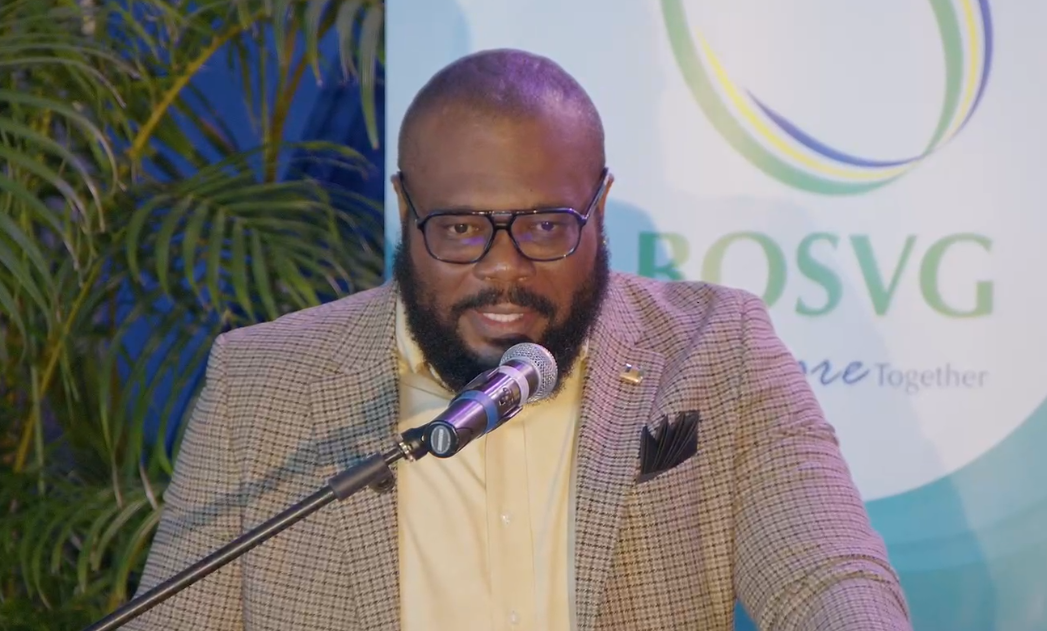
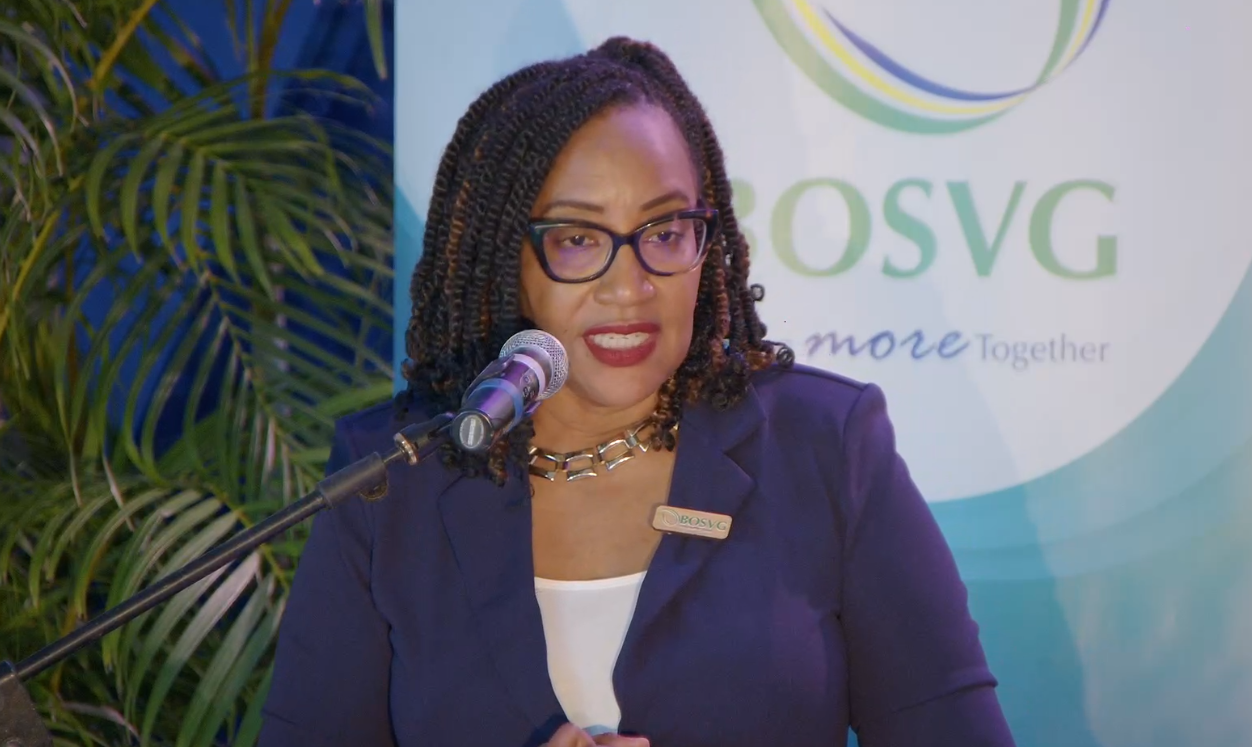
Addressing cultural practitioners, ministry officials, and members of the public at Peace Memorial Hall, BOSVG Marketing Manager Patricia John underscored that corporate support for the arts goes well beyond financial patronage—it is an investment in the nation’s collective soul and future.
“There is something very special about the performing arts: they bring our stories to life, they give expression to our experiences, and they allow us to celebrate who we are as a people,” John stated. She noted that while unforeseen circumstances prevented the festival from staging last year, the hiatus only reinforced the organizers’ determination to return with a broader and more ambitious vision.
John emphasized that the festival’s theme, “Reclaiming Our Legacy,” challenges Vincentians to look beyond nostalgic remembrance. “A legacy is not preserved simply by remembering it; it is preserved when we develop it, when we give new expression and creative opportunities to the next generation so that they can carry it forward,” she noted.
She drew parallels between this cultural imperative and BOSVG’s corporate ethos, which pairs deep respect for founding banking principles with continual innovation and community investment. Through its expansive Corporate Social Responsibility (CSR) program, BOSVG actively supports education, youth empowerment, sports, healthcare, environmental conservation, and the creative arts across St. Vincent and the Grenadines.
The bank’s impact on the performing arts is already yielding tangible results at home and abroad. John highlighted BOSVG’s ongoing support for Dawson Billingy’s production “Soca Relations,” which forms a centerpiece of this year’s schedule. She also celebrated the international success of the play “Number 7,” written by Kevin Rodriguez and produced by ArveeX Enterprises, which recently concluded a successful run in New York City after receiving BOSVG sponsorship—carrying Vincentian narratives to the global stage.
Closing her address, John issued a passionate appeal to Vincentians at home and abroad to attend festival showcases, support local ticket sales, and celebrate native creatives. Emphasizing that cultural preservation is not the sole responsibility of artists, she affirmed that BOSVG stands proudly alongside the Ministry of Youth, Sports, Culture and Creative Industries to ensure Vincentian talent continues to thrive.
Primary school student Kamar Gregg has been named the recipient of the prestigious National Top Saver Award at the annual National Schools Cooperative Awards.
Gregg, who attends the Bequia Anglican Primary School, accumulated savings totaling $11,430 XCD through the school cooperative initiative. The achievement highlights outstanding personal discipline, financial responsibility, and the cultivation of smart money-management habits from an early age.
Organizers commended Gregg’s commitment, noting that his accomplishment serves as an inspiration to young savers and students across St. Vincent and the Grenadines.
Top Participating Schools Recognized
In addition to individual student honors, the National Schools Cooperative recognized the leading educational institutions participating in the savings initiative across the nation:
Georgetown Government School
Girls’ High School
St. Vincent Boys Grammar School
Dickson Methodist School
Kingstown Government School
Lauders Government School
Fairhall Primary School
Richland Park Government School
Sandy Bay Government School
The cooperative program continues to foster financial literacy and long-term saving habits among primary and secondary school students throughout the country.
Welcome back to The Immigration Desk. In my last article, I covered the visitor visa. This time, I want to talk about its longer-lasting relative, the Super Visa. Many of you have children or grandchildren who now call Canada home, and a few months at a time with them never feels like enough. The Super Visa was designed with you in mind. In this article, I will explain what a Super Visa is, who can apply, what your child or grandchild in Canada must show, what you cannot do while you are there and what to do if you want to stay longer.
What is a Super Visa?
A Super Visa is a special type of temporary resident visa for the parents and grandparents of Canadian citizens and permanent residents. It is a multiple-entry visa, which means you can travel in and out of Canada as often as you like while it is valid. It can be issued for up to 10 years, or until your passport expires if that comes sooner.
The real advantage is the length of each visit. With a Super Visa, you may stay in Canada for up to 5 years at a time. A regular visitor is usually allowed to stay for up to 6 months. So, if you only plan to visit for 6 months or less, a regular visitor visa is generally the simpler option.
Who is eligible for a Super Visa?
To be eligible, you must:
Be the parent or grandparent (biological or adopted) of a Canadian citizen, permanent resident or person registered under Canada’s Indian Act;
Be outside Canada when you submit your application. Your spouse or common-law partner may be included in your application, but other dependants, such as your children, cannot;
Be admissible to Canada. In simple terms, this means no criminal record or health condition that would bar you from entering, and no history of giving false or misleading information to immigration authorities;
Complete an Immigration Medical Exam (IME) with a doctor approved by Immigration, Refugees and Citizenship Canada (IRCC);
Have private health insurance that:
is from a Canadian insurance company, or from an insurance company outside Canada that has been approved by the Minister;
is valid for at least 1 year from the date you enter Canada;
provides at least $100,000 in emergency coverage;
covers health care, hospitalization and repatriation; and
has been paid in full, or in instalments with a deposit. A quote alone is not accepted.
Satisfy the visa officer that you are a genuine visitor who will leave Canada at the end of your stay.
A word of caution on insurance: if you are thinking of buying a policy from a company outside Canada, that company must be authorized by the Office of the Superintendent of Financial Institutions (OSFI) and appear on OSFI’s public list of federally regulated financial institutions. Brokers and agents do not appear on that list, because they are not the insurer. Please check this carefully before you pay for a policy. The wrong policy can sink an otherwise strong application.
Also remember that citizens of St. Vincent and the Grenadines need a visa to travel to Canada. This means you will also be asked to give your biometrics (fingerprints and a photo), unless you have given them in the last 10 years.
Who can be your host?
Your host is the child or grandchild you are going to Canada to visit. IRCC looks just as closely at your host as it does at you. Your host must:
Be your child or grandchild, biological or adopted, and be able to prove it (for example, with birth certificates);
Be a Canadian citizen, permanent resident or person registered under the Indian Act;
Be at least 18 years old and live in Canada;
Write and sign a letter of invitation. The letter should promise financial support for the length of your visit and list the people in the household, with their names and dates of birth;
Meet or exceed the minimum necessary income (MNI) for their household size.
The MNI is based on Statistics Canada’s low income cut-off figures, which are updated each year. When working out household size, your host must count themselves, their own family, you and any other relatives they have sponsored or invited. Your host’s spouse or common-law partner may co-sign the letter of invitation and add their income to help meet the requirement. Other relatives, such as your host’s brothers and sisters, cannot co-sign.
There is some good news here. Since March 31, 2026, IRCC has given hosts more flexibility. Your host may now rely on either of the two tax years before the application,
rather than only the most recent one. In some cases, your own income may also be counted towards the requirement, once your host covers a minimum share of it on their own.
Finally, as with every temporary resident visa, you must show that you intend to leave Canada at the end of your stay. Strong ties to home help here: a job, business or pension, property, and family you will return to in St. Vincent and the Grenadines. A clean immigration history also counts. If you have travelled before and always respected the immigration rules of the countries you visited, that works in your favour.
What are your restrictions?
A Super Visa holder is still a visitor, or what the law calls a temporary resident. This comes with some important limits:
You cannot work in Canada, even if the work is unpaid or voluntary, unless you have a work permit;
You may take a short course or program of 6 months or less, but anything longer requires a study permit;
You are not covered by Canada’s provincial public health insurance. This is exactly why the private insurance requirement exists. You are also not eligible for government benefits meant for residents; and
You must leave Canada by the end of the stay you were authorized.
It is also worth knowing that a Super Visa does not lead to permanent residence on its own. Permanent residence for parents and grandparents is a separate process altogether.
What if you want to stay longer, or your visa expires?
This is where many people get confused, so let me make it plain. Your visa and your permitted stay are two different things. The visa is the document that lets you travel to Canada and enter. How long you may stay is decided by the border officer when you arrive.
This means that if your Super Visa expires while you are in Canada, you do not have to leave because of that alone. What matters is the date your authorized stay ends.
If you wish to stay beyond that date, you must apply to extend your stay before it ends. If you apply in time, you may remain in Canada under the same conditions while IRCC makes its decision. This is known as “maintained status”, which you may have heard called “implied status”. Please note that maintained status only lasts while you remain in Canada. If you leave, it ends.
If your stay has already run out, you may still be able to apply to restore your status, but only within 90 days, and there is no guarantee of approval.
If your Super Visa has expired and you are outside Canada, you will need a new visa before you can travel again. You can apply for a new Super Visa, or a regular visitor visa if you only plan a shorter trip.
What’s next?
In the next article of The Immigration Desk, I will continue with temporary residence. Since this area has several categories, I am covering them one at a time. Next up: Study Permits.
Until next time…
To book a consultation**, please feel free to send me a WhatsApp message at437-556-1784orsendanemailto[email protected]andletusstartyourimmigrationjourney.
Allconsultationsareheldvirtuallysothereisnoneedtodisruptyourdayorincurtravel expenses to explore your options.
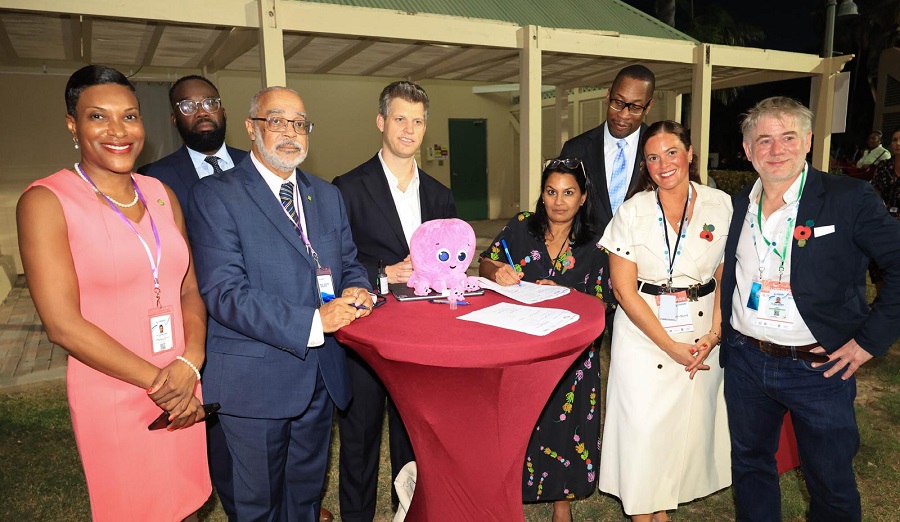
A new Eastern Caribbean Alliance has launched to help slash the region’s fossil fuels reliance, turbocharge the region’s clean energy transition and cut energy bills, spearheaded by Octopus Energy.
The Alliance was announced at the Commonwealth Heads of Government Meeting in Antigua and Barbuda. It unites Octopus with the Organisation of Eastern Caribbean States (OECS), dedicated to the sustainable development of the region through greater integration, Global Citizen, the Sustainable Market Initiative and the Eastern Caribbean Central Bank.
By banding together, the partners are taking a whole-system approach to explore low-cost clean energy systems for homes, industry and transport, mobilise investment and pool expertise.
They aim to unlock economies of scale to harness abundant renewable energy, electric vehicles and battery storage, and manage this all flexibly with technology to cut bills.
This comes as small island nations face the frontline impacts of climate change. In addition, around 90% of electricity generation in the Caribbean comes from imported oil and diesel,* leaving the islands vulnerable to global price shocks and with some of the world’s highest energy prices.
By cutting dependence on expensive fossil fuels, governments can save money which can ultimately be invested across their economies.
This latest move builds on Octopus’ partnership with the Government of Antigua and Barbuda to explore ways of making energy cheaper, cleaner and more secure for the nation.
Zoisa North-Bond, CEO of Octopus Energy Generation, said: “Small island nations face acute challenges from fossil fuel dependence and climate shocks, yet have abundant renewable energy resources.
“Building on our landmark Antigua and Barbuda deal and their leadership, we’re partnering across the Eastern Caribbean to scale cheap clean energy and electric transport. Together, we can break the price hike cycle, boost energy security and lower bills for communities.”
Dr. Didacus Jules, Director General of the OECS, said: “For the OECS, this partnership represents an important opportunity to accelerate a clean energy transition that is affordable, resilient, and responsive to the needs of our people. The people of our Member States cannot continue to bear the economic burden of high energy costs and dependence on imported fossil fuels.
“By bringing together regional institutions, development partners and global expertise, we can unlock investment, leverage our collective scale, and translate our renewable energy potential into tangible benefits for households, businesses and our economies. The OECS is pleased to be part of this Alliance and will ensure that its work is firmly anchored in our regional priorities and the aspirations of our Member States.”
Timothy N.J. Antoine, Governor of the Eastern Caribbean Central Bank, said: “Energy security is economic security. Done well, it can ease energy costs for families and businesses and make our economies more competitive. The ECCB welcomes this Alliance as the kind of collaboration the Big Push demands, because no country or institution can do this alone. Now, from discussion to delivery for our people.”
Michael Sheldrick, Co-Founder and Chief Policy, Impact and Government Relations Officer at Global Citizen, said: “As global energy demand continues to grow, Global Citizen believes that access to reliable, affordable and clean energy must be universal. Achieving this requires bringing together the private sector, governments and philanthropy, alongside the full range of financing mechanisms – including equity, debt and blended finance to mobilize the capital, expertise and partnerships needed to accelerate the energy transition.
“We are excited by the significant potential in Antigua and Barbuda and across the wider Eastern Caribbean, and look forward to working with partners such as Octopus Energy to help translate that potential into investment, infrastructure and lasting impact for communities.”
Jennifer Jordan-Saifi, CEO of the Sustainable Markets Initiative, said: “Through the Sustainable Markets Initiative, we have helped convene a coalition of leaders from across the public and private sectors united by a shared ambition to accelerate the Eastern Caribbean’s clean energy transition. This Alliance demonstrates the power of partnership to mobilise investment, strengthen energy security and support long-term sustainable growth across the region.”
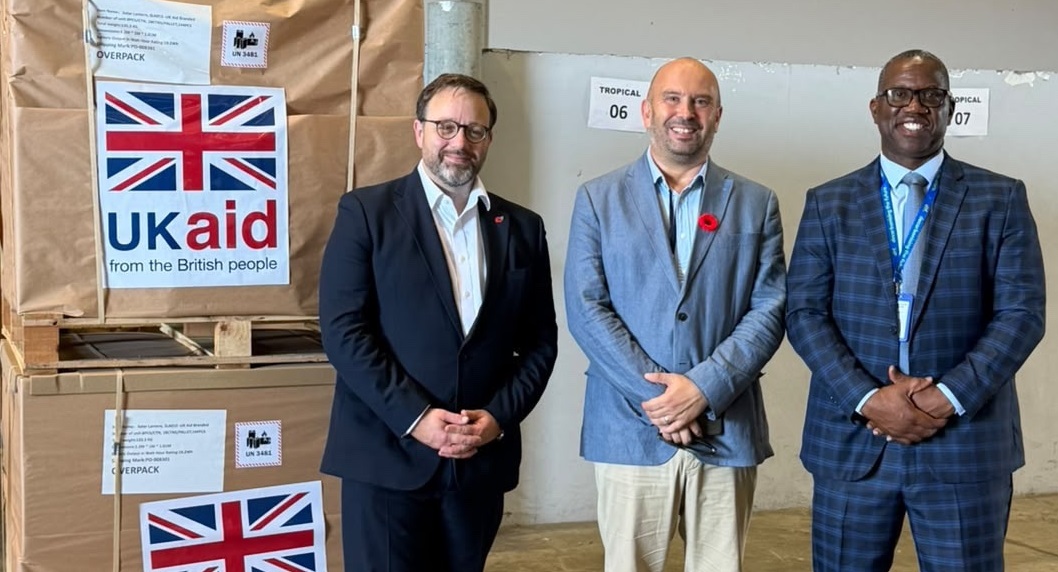
UK Minister for the Commonwealth Chris Elmore said:
“As we mark one year since Hurricane Melissa, we are reminded of the devastating impact hurricanes can have on communities across the Caribbean, and why being prepared before disaster strikes is so important.
“That’s why the UK has trebled the relief supplies we have pre-positioned across the Caribbean, so they are already in the region and can reach communities quickly when they are needed most.
“Here in Antigua and Barbuda, the supplies we have pre-positioned can support at least 10,000 people, including shelter kits, solar lighting and charging equipment.
“And with HMS Trent deployed in the Caribbean, we have a Royal Navy presence in the region ready to support our partners when disaster strikes, as Trent did following Hurricane Melissa last year.”
“We have also agreed a new four-year UK-Jamaica Reconstruction and Resilience Partnership, beginning with a £10 million programme jointly funded by the UK and Jamaica. Alongside our trebling of pre-positioned relief supplies across the Caribbean, this is about working with our Commonwealth partners both to recover from disasters and to be better prepared for the future.”
“That practical cooperation is the Commonwealth at its best: sharing expertise, preparing together and helping protect communities when it matters most.”
Background
Minister for the Commonwealth Chris Elmore is visiting Antigua and Barbuda for CHOGM 2026, where he is undertaking a programme of engagements focused on Commonwealth cooperation, resilience and sustainable development.
As part of his visit, the Minister toured the UK-funded humanitarian relief stores in Antigua, which contain emergency supplies pre-positioned for rapid deployment across the Caribbean during the hurricane season.
The visit comes almost one year after Minister Elmore travelled to the Caribbean in the aftermath of Hurricane Melissa, when he saw first-hand the devastating impact of the storm on affected communities in Jamaica.
The fragile state of St. Vincent’s indigenous musical heritage took center stage during the symposium’s public forum, as prominent steel pan educators and cultural practitioners accused both the education system and the commercial tourism sector of undermining the national artform.
Malaika Knights, an educator representing the Sion Hill Euphonium Steel Orchestra, delivered a scathing critique of institutional bias within the Ministry of Education. Knights revealed that repeated efforts to formally integrate steel pan into the music curriculum at leading institutions, including the St. Vincent Grammar School, have been stonewalled by administrators who continue to prioritize European classical instruments like the piano and recorder.
“There are stumbling blocks everywhere between culture and education,” Knights told the panel. She pointed to a precipitous decline in school-based pan competitions, asserting that the education system fails to recognize the pedagogical and cultural significance of the steel pan.
Knights’ observations were corroborated by multimedia professional and seasoned panist Krystal Oliver, who served as master of ceremonies for Junior Pan Fest 2026. Oliver described the festival’s shrinking participation as “heartbreaking,” revealing that recent competitions saw as few as three or four bands in a category, down from historic highs of eleven competing schools.
Beyond the classroom, Knights exposed routine commercial exploitation of steel pan musicians by local tour operators. Describing performances contracted for luxury boat charters, Knights explained that sea spray regularly corrodes and damages valuable instruments, yet private operators refuse to pay rates reflecting maintenance and replacement costs.
“Every time you try to push back in this industry, they tell you there is an alternative to leave out the steel pan,” Knights said, adding that musicians are repeatedly pressured to perform “for exposure.” She singled out international hotel brand Sandals as virtually the sole corporate entity on the island that justly compensates steel pan performers for their craft and instrument upkeep.
On 3 November 2026, Jerelle Jules, former Investment Manager for the One True Blue Beach development in Grenada, issued a detailed open letter addressed to citizens across the Caribbean Community (CARICOM). Published against the backdrop of an active election season in Grenada, the public document sets forth serious, unverified claims regarding structural safety defects, financial governance irregularities, and an alleged coordinated campaign of retaliation involving private commercial entities, legal intermediaries, and state officials.
Mr. Jules explicitly attributes these claims to circumstances following his raising of internal safety and financial compliance concerns during his tenure. He states that he chose to place these allegations on the public record due to immediate concerns for the physical safety of his wife and three young children. All statements, allegations of political pressure, and assertions of structural or financial impropriety contained in the letter represent single-party claims by Mr. Jules and remain unadjudicated and unverified by independent legal or judicial authorities.
The principal facts and assertions established in the published open letter include:
Date of Publication: 3 November 2026.
Political Context: Released during an active national election season in Grenada, heightening public interest and governance implications surrounding state oversight and commercial development.
Key Parties Named: Jerelle Jules (former Investment Manager), Golden Coast Limited (former employer), Oleg Khomenko (resort developer), Mitchell & Co. (law firm), and Dickon Mitchell (Prime Minister of Grenada).
Primary Allegations: Unresolved structural cracking and engineering deficiencies at the One True Blue Beach project site; alleged non-compliance with financial safeguards and Citizenship by Investment (CBI) regulations; and alleged cross-border harassment by individuals reported to be state agents.
Current Legal Status: All claims remain single-party allegations without formal judicial determination, pending official response, regulatory review, or independent investigation by relevant regional authorities.
Understanding the gravity of these assertions requires examining the background of the author and the operational structure of the resort project.
As detailed in the published document, Mr. Jules was born in London, England, into a family of the Windrush generation, with a Grenadian mother and Jamaican father. Professionally, he holds a degree in surveying from the University of Westminster in London. Prior to relocating to the Caribbean, he managed accommodation operations across more than 800 locations in the United Kingdom for a large provider of serviced and non-serviced properties. Seeking to establish his young family within their Caribbean heritage, Mr. Jules moved from London to Grenada in 2024.
Following his relocation, Mr. Jules was employed as Investment Manager by Golden Coast Limited, the entity developing the One True Blue Beach resort. The development is marketed under Hilton’s Tapestry Collection brand and is led by developer Oleg Khomenko, whom the letter identifies as a former Soviet Air Force fighter pilot.
The primary entities and individuals referenced in Mr. Jules’ letter, together with their reported roles and legal significance, are outlined below:
Entity / Individual
Reported Role or Involvement (per Open Letter)
Legal / Institutional Significance
Jerelle Jules
Author of the open letter; graduate surveyor; former Investment Manager for Golden Coast Limited.
Key whistleblower raising internal safety, financial, and state-retaliation claims.
Golden Coast Limited
Developer entity and former employer of Mr. Jules on the One True Blue Beach project.
Corporate entity subject to allegations of financial oversight failure and retaliation.
Oleg Khomenko
Lead developer of One True Blue Beach; identified as a former Soviet Air Force fighter pilot.
Commercial principal managing resort construction and equity allocations.
Mitchell & Co.
Law firm alleged to have engaged law enforcement authorities regarding company documents.
Law firm founded by Prime Minister Dickon Mitchell, creating potential conflict-of-interest questions.
Dickon Mitchell
Prime Minister of Grenada; founder of Mitchell & Co.; recipient of public policy demands in the letter.
Head of Executive Government holding ultimate oversight of state security and law enforcement.
Hilton (Tapestry Collection)
International hospitality brand licensing its Tapestry Collection brand to the development.
Multinational brand entity tied to the physical safety and regulatory compliance of the asset.
Allegations involving cross-border actions by reported state agents carry profound international legal weight. Unsanctioned extra-territorial operations by foreign state actors within the international transit facilities of a sovereign neighbor—such as Trinidad and Tobago—raise significant questions under international law, civil aviation security conventions, and regional diplomatic protocols. Such reported interventions in foreign transit hubs represent severe jurisdictional irregularities, explaining why local host authorities would be required to step in to enforce sovereign protection over transiting passengers.
In his letter, Mr. Jules details an incident reported to him by his wife concerning her transit through an international airport in Trinidad alongside their three young children. According to her account, individuals she understood to be Grenadian government agents followed the family, seized their luggage, and placed it inside a vehicle. Mrs. Jules reported fearing that she and her children were about to be unlawfully detained or prevented from departing. The situation reportedly resolved only when Trinidadian authorities intervened, removing the family from the encounter and escorting them to a secure zone within the airport, where they remained under police protection until boarding their flight out of the region.
From a defensive legal perspective, this narrative represents a single-party account provided by Mr. Jules and his spouse. The assertions have not been subjected to cross-examination, formal police findings, or legal adjudication in either Trinidad and Tobago or Grenada, and the legal identities and affiliations of the individuals involved remain unconfirmed.
This reported international event occurred alongside alleged law enforcement actions inside Grenada.
Mr. Jules further asserts that local law enforcement processes in Grenada were deployed in a retaliatory manner following his internal whistleblowing disclosures. He states that plainclothes law enforcement officers visited his residential home in Grenada and informed personnel handling his family’s domestic move that he was actively wanted locally and internationally. Mr. Jules disputes the legal basis of these assertions, characterizing them as an attempt to generate public suspicion and damage his standing rather than the execution of lawful process. He maintains that any legitimate warrant or international notice must be formally processed and served through established legal channels.
The open letter explicitly outlines the chronological chain of events that preceded these law enforcement actions:
Internal Concerns Raised: Mr. Jules identified and raised internal concerns regarding construction safety defects and financial safeguards at the resort project.
Formal Grievance Submission: In October, Mr. Jules formally submitted an internal corporate grievance detailing these operational and financial issues.
Labour Ministry Escalation: Following an unsatisfactory corporate response, Mr. Jules escalated his disclosures by filing a formal complaint with the Grenadian Ministry of Labour.
Police Intervention by Private Counsel: Shortly after the labor filing, Mr. Jules learned that Mitchell & Co.—the private law firm founded by Prime Minister Dickon Mitchell—had approached local police authorities regarding company documents in his possession.
This chronological sequence highlights a crucial legal and ethical friction point. The dual status of Prime Minister Dickon Mitchell—as the head of state holding ultimate executive authority over public law enforcement agencies, and as the founder of Mitchell & Co. acting on behalf of private commercial entities—raises constitutional and governance concerns. When a law firm closely associated with the head of government engages state police apparatuses in connection with a private commercial dispute involving a corporate whistleblower, it creates potential conflict-of-interest issues, raises questions about the misuse of state powers for private commercial aims, and risks eroding public confidence in the neutrality of law enforcement agencies.
Mr. Jules summarizes his allegations regarding law enforcement involvement as follows:
Initiation of Police Complaint: The engagement of law enforcement by Mitchell & Co. regarding internal documentation immediately following Mr. Jules’ labor grievance filing.
Rejection of Criminal Characterization: Denial of criminal wrongdoing and the assertion that criminal allegations are being manufactured to neutralize his public safety disclosures.
Dispute of Informal Statements: Rejection of unverified statements made by plainclothes officers to private moving contractors regarding his international legal status as an improper tactic.
Demand for Due Process: Assertion that all legal claims must be evaluated through transparent judicial forums with formal evidence, independent of executive or commercial influence.
Unverified structural deficiencies in major commercial developments present severe operational, financial, and human safety risks. Operating public hospitality facilities without fully validated engineering sign-offs creates potential liability and safety hazards for workers, hotel guests, and first responders.
In his open letter, Mr. Jules outlines physical defects observed during his employment as Investment Manager at the One True Blue Beach site. He alleges that structural cracking and material distress were evident across the build. Based on engineering findings generated prior to his departure, Mr. Jules asserts that these defects required substantial, specialized structural remediation. He emphasizes that these issues remained uncorrected at the time his employment concluded, and he states he has received no verified documentation confirming that proper engineering remedies were subsequently completed.
In light of the resort’s planned commercial opening, Mr. Jules outlines specific demands directed at developer Oleg Khomenko, Grenadian regulatory bodies, and Hilton:
Scope of Inspections: Comprehensive public disclosure detailing the precise nature, frequency, and findings of structural inspections conducted at the site.
Remedial Engineering Documentation: Full technical disclosure of the specific corrective engineering works executed to resolve the identified structural cracking and distress.
Independent Technical Certification: Unambiguous identification of the independent, certified engineering bodies that have formally inspected and certified the structural integrity of the build prior to occupancy.
Beyond physical building conditions, the letter links project management to financial governance and state citizenship programs.
The open letter raises additional questions regarding the financial governance and regulatory compliance of the One True Blue Beach project. Mr. Jules calls for verified accounting regarding whether developer equity obligations were met, how third-party investor funds were secured, and whether shareholder transactions conformed to governing statutory requirements. He notes that these financial questions have drawn broader public scrutiny, referencing an investigation into the One True Blue Beach project published by the investigative entity KLEPTIK.
Mr. Jules links these project-level financial concerns to regional diplomatic stability and international mobility, specifically citing real estate Citizenship by Investment (CBI) programs. The letter highlights the European Union’s revised visa-suspension mechanisms, which target investor citizenship programs that grant nationality without requiring a genuine link between the applicant and the host country.
Mr. Jules references a July meeting where regional heads of government, including Prime Minister Dickon Mitchell, convened to address European Commission concerns regarding CBI administration and the potential revocation of visa-free access to the Schengen area for CARICOM passport holders.
In framing these systemic risks, Mr. Jules draws an inter-generational parallel. He contrasts the sacrifices of his Windrush-generation ancestors—who crossed oceans to build economic opportunities and secure international standing for their descendants—with the modern risk facing CARICOM citizens, who now face “diminished mobility” due to compromised CBI schemes. He argues that prioritizing developer profits over regulatory transparency jeopardizes national integrity and damages the international mobility rights of ordinary Caribbean citizens.
Formal public petitions addressed to elected heads of government hold distinct legal and civic significance within CARICOM constitutional structures, representing formal demands for administrative oversight, statutory compliance, and the protection of civil rights.
In closing his open letter, Mr. Jules addresses Prime Minister Dickon Mitchell directly, outlining three primary administrative demands:
Binding Public Safety Guarantees: Issue an explicit, binding public assurance that Mr. Jules, his wife, his three children, his extended family, and assisting third parties will remain free from state or private harassment, intimidation, or unlawful intervention.
Independent Retaliation Inquiry: Authorize and support an independent investigation into the reported incident at the Trinidad airport, local police actions in Grenada, and potential improper coordination between private corporate entities and public offices.
Substantive Public Safety and Financial Disclosures: Instruct regulatory and municipal planning authorities to publish full structural safety certifications and financial compliance records for the One True Blue Beach development prior to permitting public operations.
Mr. Jules affirms his willingness to cooperate with credible journalists and independent legal authorities, stating he is prepared to present supporting documentation once protective measures for his family are established.
This investigative report is based exclusively on claims, statements, and documents set forth in the public open letter published by Jerelle Jules on 3 November 2026.
All assertions detailed within this report—including allegations of structural engineering defects, financial non-compliance, cross-border state harassment, and improper law enforcement action—constitute single-party allegations. They remain unproven claims and have not been subjected to judicial testing, formal fact-finding, or legal adjudication in any court of law or administrative tribunal. None of the named parties—including developer Oleg Khomenko, Golden Coast Limited, Mitchell & Co., or Prime Minister Dickon Mitchell—have had adverse judicial findings entered against them regarding these matters, and all named entities and individuals retain full rights of response, defence, and rebuttal.
A stern warning has been issued regarding the potential reversal of St. Vincent and the Grenadines’ historical poverty reduction achievements. Citing a credit rating downgrade by Moody’s within the first six months of the New Democratic Party administration—a stark departure from the favorable international credit assessments maintained in early 2025—Carlos James warned that weakening state social protections and escalating cost-of-living pressures threaten to push thousands of vulnerable households back into extreme economic distress.
To illustrate the stakes, James and caller Audrey Gittens referenced the landmark Country Poverty Assessment conducted by Kairi Consultants (commissioned for 2007/2008). The independent report documented the transformation of Vincentian socio-economic conditions between the mid-1990s and late 2000s:
Assessment Era
Indigent Poverty Rate (Extreme Dirt-Poor)
Geographical Focus & Mitigation Mechanisms
1996 NDP Era Baseline
25.7%
Heavy concentration in rural North Windward and East St. George (Calliaqua). Citizens lacked basic daily nutritional security.
2007/2008 ULP Era
2.9%
Drastic reduction achieved via Zero Hunger Trust Fund, housing programs, TVET expansion, and universal secondary education.
The assessment established that under the NDP administration in 1996, indigent poverty stood at a staggering 25.7%. By 2007/2008, targeted interventions by the ULP administration drastically compressed the national indigent poverty rate down to 2.9%. James cautioned that current fiscal austerity measures threaten to collapse these precise protection networks, conditioning citizens to accept returning poverty as an unalterable reality.
The administration’s public posture regarding rising cost-of-living pressures came under severe criticism. James dismissed recent official commentary advising citizens facing food inflation to “ban your belly,” or telling households struggling with soaring Vinlec electricity fuel surcharges to “check your wiring.” James pointed out that dismissing utility surcharges of $500 to $600 on newly constructed homes as bad wiring reflects an executive completely detached from basic economic realities.
These official dismissals were contrasted sharply with vibrant, real-life accounts delivered by citizens calling into the broadcast:
Glen Brown (The Supermarket Incident): Detailed a frustrating encounter at a Kingstown market opposite the vegetable market. Brown attempted to purchase a pack of “mosquito destroyer” (mosquito coils) and a pack of salted peanuts with a $10 bill. When sudden price inflation pushed the cost beyond $10, the cashier crumbled up the products, grabbed the $10 bill back out of his hands, returned it to the register, and threatened to call the police when he protested. This grounded account illustrates the daily transactional friction and rapid erosion of purchasing power facing ordinary workers.
Monica Maloney (Public Hardship): Spoke directly to the pervasive sense of hopelessness taking root across rural communities, warning that citizens are being subtly conditioned to accept rising poverty as an unalterable lot under the current administration.
Safeguarding the nation’s socio-economic trajectory requires an unyielding commitment to accountable governance, evidence-based fiscal management, and the active preservation of state safety nets to ensure that vulnerable citizens are never forced back into the shadows of poverty.