• Nevis Targets 2 Million More Gallons of Water Daily

    Nevis Targets 2 Million More Gallons of Water Daily

    The Nevis Island Administration (NIA) is pressing ahead with efforts to access a new source of underground water at Dasent’s, despite significant challenges encountered by the drilling team.

    Premier of Nevis, Honourable Mark Brantley, has provided regular updates on the project, which follows the successful drilling of new wells at Maddens by the Water and Oil Well Service (WOWS) team.

    The Premier explained that the drilling operation at Dasent’s has been hampered by repeated cave-ins, but the technical team remains committed to completing the well, which is expected to have a high yield.

    “I come month after month and we keep saying that we are at Dasent’s because we’ve had some serious problems in terms of caving in, but the drillers, the ministry officials, the technical people keep telling me that they’re persevering because they expect that that well will be a very high yielding well…”

    He further explained that considerable time had been spent trying to retrieve a stuck casing. The borehole has since been cleaned, and the 10-inch casing is being reinstalled as drilling resumes.

    The search for additional water sources forms part of the NIA’s long-term development planning, informed by the effects of climate change across the region, including reduced rainfall and diminishing water availability. To support these efforts, the Administration engaged specialists to map Nevis and identify areas with potential underground water resources.

    Premier Brantley said the Concerned Citizens Movement (CCM)-led Administration had set a target of securing between 1.5 and two million additional gallons of water daily through the development of new wells. Two high-yielding wells have since been completed at Maddens, while another was drilled at Braziers.

    “Once we’re done with this one at Dasent’s we will continue to do work in the Church Ground, Hamilton area as we continue our relentless quest to find more water for the people of Nevis.”

    Nevis currently produces approximately 2.3 million gallons of water daily and has a storage capacity of four million gallons. Daily consumption ranges between 1.5 and 1.7 million gallons, while the entire island enjoys a 24-hour supply of potable water.

    Premier Brantley said the statistics highlighted a decade of investment in water security on Nevis and the tangible progress residents could experience in their daily lives. He noted, however, that the Government’s efforts often go unrecognised, as residents tend to take a reliable water supply for granted until shortages occur.

    He attributed the island’s water security achievements to deliberate planning, investment and execution, noting that Nevis had maintained full water coverage even during the severe drought conditions experienced this year.

    “This is not by happenstance, not by accident, but through planning, through investment, and through execution. The people of Nevis have had 100% coverage 24/7, even in this harsh drought period that we’ve experienced this year…

    “If you’re talking about government that is forward-looking, you’re talking about government that understands development, then I put my hand up and I say, ‘Look at Nevis. Look at what we have done in relation to water security.”

    The Premier also outlined the phased approach taken to strengthen the island’s water system, beginning with improvements to distribution, followed by storage and increased supply.

    “We are not just responding to the realities of today. We started this a decade ago. We approached this in a very scientific way. The first phase of this was distribution…We then moved to water storage…We then set about getting more water.”

    Premier Brantley commended Cabinet for approving the necessary funding and Honourable Spencer Brand and his team at Water Services for their work in advancing the island’s water security programme.

  • Sabrina Lampkin Denies EC$9,999 Bank Theft Charge

    Sabrina Lampkin Denies EC$9,999 Bank Theft Charge

    BARROUALLIE RESIDENT CHARGED WITH THEFT

    On November 5, 2026, police arrested and charged Sabrina Lampkin, a 35-year-old unemployed resident of Barrouallie, with the offence of theft.

    Investigations revealed that between March 10, 2026, and September 16, 2026, at the Bank of St. Vincent and the Grenadines, the accused allegedly stole EC$9,999.00 in cash, the property of a 50-year-old landscaper of Choppins.

    The offence was committed in Kingstown. Lampkin appeared before the Kingstown Magistrate Court on November 6, 2026, where she pleaded not guilty to the charge. She was granted bail in the sum of EC$10,000.00 with one surety and was ordered not to have any contact with the complainant.

    She was also ordered to surrender all travel documents and to report to the Barrouallie Police Station every Monday between 6:00 a.m. and 6:00 p.m. The matter was adjourned to November 9, 2026.

  • SVG police force welcome 109 officers after 6 months training

    SVG police force welcome 109 officers after 6 months training

    109 RECRUITS COMPLETE POLICE TRAINING IN SVG

    Six months of early mornings, examinations, physical training, drill and discipline came to an end on Thursday, November 5, 2026, as 109 recruits completed Course 43 of the Royal Saint Vincent and the Grenadines Police Force and marched onto the Arnos Vale Stadium for their Passing Out Parade.

    But amid the ceremony, applause and presentation of awards, one message followed the new officers from speaker to speaker: completing training was an achievement; living up to the responsibility of the uniform will be the greater test.

    The 43rd Passing Out Parade was held under the theme “Forged Through Discipline, United in Service.”

    Course 43 began training on May 18, 2026, with 115 recruits. Over the months that followed, they were exposed to police law and procedures, criminal investigation, communication, community policing, human rights, ethics, discipline, self-defence, physical training and drill, among other areas.

    At the conclusion of the programme, 109 successfully completed the course.

    Commandant of the Police Training School, Lieutenant Commander William Theobalds, told the recruits that the training was deliberately demanding because the responsibilities awaiting them are serious.

    He reminded them that their graduation should not create a false sense of arrival.

    Their “real examination,” he said, would begin when they are deployed into communities and operational environments where their training, judgement and character will be tested.

    Lt. Commander Theobalds also stressed that entry into the Police Force is an opportunity, but successful completion of training must be earned through commitment, performance and adherence to established standards.

    He further explained that the theme, “Forged Through Discipline, United in Service,” was deliberately chosen to reflect both the transformation demanded by police training and the collective nature of policing.

    He likened the training process to the forging of metal under heat and pressure, noting that recruits had been challenged and shaped to strengthen their resilience, character and readiness for service. He also emphasised that policing is not an individual undertaking, but one built on teamwork, trust, communication, mutual respect and shared responsibility.

    Featured Speaker Mr. Ronnie Richardson developed that theme further, challenging the recruits to understand discipline as something demonstrated long after the parade ground is behind them.

    He told them that discipline means doing what is right when nobody is watching, following lawful instructions, respecting established procedures and accepting that accountability applies to every officer regardless of rank or seniority.

    “The uniform you wear gives you authority, but discipline determines how responsibly you exercise that authority,” he told the recruits.

    Mr. Richardson also urged them to remember that policing is fundamentally about people and extends beyond making arrests and enforcing the law.

    He reminded the recruits that there would be occasions throughout their careers when they would be corrected, challenged and pushed beyond what they believed were their limits. Those experiences, he said, should be understood as part of the preparation required for the realities of policing.

    Drawing on the second half of the parade theme, he encouraged the recruits to support, encourage and, when necessary, correct one another, reinforcing the idea that the strength of the organisation depends on the conduct and commitment of each member.

    Prime Minister Dr. Hon. Godwin Friday similarly challenged the recruits to view the occasion as the beginning of their professional responsibility rather than its culmination.

    He told the 109 recruits that completing the training programme was a significant achievement, but urged them to continue learning and to build lasting careers in policing. He described service in the Police Force as a high responsibility rather than simply a job and reminded them that few responsibilities are more serious than being entrusted with the safety of others.

    The Prime Minister urged the recruits to treat people with dignity, exercise their authority fairly and never allow the uniform to become an excuse for arrogance or abuse.

    He stressed that the public must be able to trust the men and women sworn to protect them and that such trust must be earned every day through professionalism, honesty, restraint and respect.

    He also placed the graduation within the wider national effort to confront serious crime.

    The Prime Minister noted that no homicides were recorded during October, describing the development as encouraging while cautioning that one month without a homicide did not mean the work was finished. He said the desired outcome was for that level of safety to become the norm throughout the year and across communities.

    He also outlined a more coordinated approach to crime reduction, including the establishment of a National Crime Reduction Task Force and an intensified 90-day crime reduction, border protection and citizen security action plan scheduled to begin on December 7.

    The plan, he said, would place particular emphasis on illegal firearms, criminal gangs, border security, intelligence sharing, police visibility and the protection of vulnerable young people.

    The Prime Minister further stated that Government intends to continue building the capacity of the Police Force through training, equipment and operational support, while maintaining high expectations for professional conduct.

    He also raised concern about the loss of trained and experienced officers over the years and said Government intends to work with the leadership of the Force to address the reasons officers are leaving and to create better opportunities for capable personnel to build long-term careers in policing.

    RECRUITS RECOGNISED FOR OUTSTANDING PERFORMANCE

    PR 072 Romel McDowall emerged as the standout recruit of Course 43.

    He was adjudged Best Recruit and also received the Baton of Honour and Commissioner’s Trophy. McDowall additionally secured the award for Best at Multi-discipline Subjects and later delivered the Valedictory Address.

    Other award recipients were:

    • PR 095 Desray Samuel – Best at Sociology
    • PR 049 Fem Hepburn – Most Improved
    • WPR 091 Staffiesha Richards – Best at Giving Evidence
    • PR 017 Immari Cain – Best at Physical Training (Male)
    • WPR 096 Eldica Samuel – Best at Physical Training (Female)
    • PR 046 Cazael Greene – Best at Police Duty Subjects
    • PR 046 Cazael Greene – Best at Psychology
    • PR 077 Philroy Nero – Best at Drills
    • PR 118 Rivas Young – Best at Self Defence (Male)
    • WPR 108 Vynus Thomas – Best at Self Defence (Female)
    • WPR 108 Vynus Thomas – Most Discipline
    • WPR 108 Vynus Thomas – Best Turned Out Female
    • PR 016 Darie Cadogan – Best Turned Out Male
    • PR 072 Romel McDowall – Best at Multi-discipline Subjects
    • PR 072 Romel McDowall – Best Recruit
    • PR 072 Romel McDowall – Baton of Honour and Commissioner’s Trophy

    Lt. Commander Theobalds noted that the competition among the top-performing recruits was particularly close, with only 0.05 and 0.52 of a percentage point separating the first three positions respectively.

    He also reminded those who did not receive awards that the true measure of their success would not be the number of trophies earned at the end of training, but the quality of police officers they become and the positive difference they make in the lives of others.

    As the ceremony drew to a close, the message from the speakers remained consistent.

    The recruits had earned their place on the parade ground, but their greater responsibility now lies beyond it.

    Prime Minister Friday told them that once the ceremony was over, “the true test begins” in how they treat the people they encounter and whether they remain faithful to the oath and responsibilities they have accepted.

    He reminded them that poor conduct by individual officers can affect the reputation of the entire organisation and urged them to guard their names, uphold high standards and remember that the people of Saint Vincent and the Grenadines are counting on them.

    On behalf of the Commissioner of Police (Ag.), Mr. Trevor Bailey, and the rank and file of the Royal Saint Vincent and the Grenadines Police Force, congratulations are extended to all 109 recruits on successfully completing Course 43.

    The Force commends their perseverance, discipline and commitment throughout the training period and welcomes them into the wider policing family.

    As they begin their careers, they are encouraged to uphold the standards of professionalism, integrity, fairness and service expected of every member of the organisation, and to remain conscious that the authority carried by the uniform must always be matched by responsibility.

    The training may be complete. The uniform has been earned.

    Now comes the part that cannot be rehearsed on a parade square: earning the confidence of the people they have sworn to serve.


  • Rotary SVG marks 30yrs of village doctor with free services

    Rotary SVG marks 30yrs of village doctor with free services

    The Rotary Club of St. Vincent is proud to celebrate the 30th anniversary of its Village Doctor Programme, an initiative that brings quality healthcare services directly to communities across St. Vincent and the Grenadines. This year’s programme will serve residents of Diamond and Brighton.

    On Sunday, November 8, 2026, volunteer doctors and other healthcare professionals, with support from a team from the Ministry of Health, will provide free services at Brighton Methodist School from 10 a.m. to 4 p.m.

    Services will include general medical consultations, basic health screenings, dental and vision care, and ear, nose and throat services. Free medication will also be available, and patients will be referred for further care where needed.

    The programme supports Rotary International’s commitment to disease prevention and treatment, one of its key areas of focus.

    The Rotary Club of St. Vincent thanks its sponsors for helping make this year’s programme possible: Trinity School of Medicine, Facey Trading, Eyes R Us Beachmont Eye Institute, Dental Arts Clinic and Spectacle Shoppe (a division of OSV Group).

    Residents of Diamond, Brighton and surrounding areas are encouraged to attend and share the event details with their families and neighbours.

  • Caribbean connectivity gains momentum as KARULINK advances

    Caribbean connectivity gains momentum as KARULINK advances

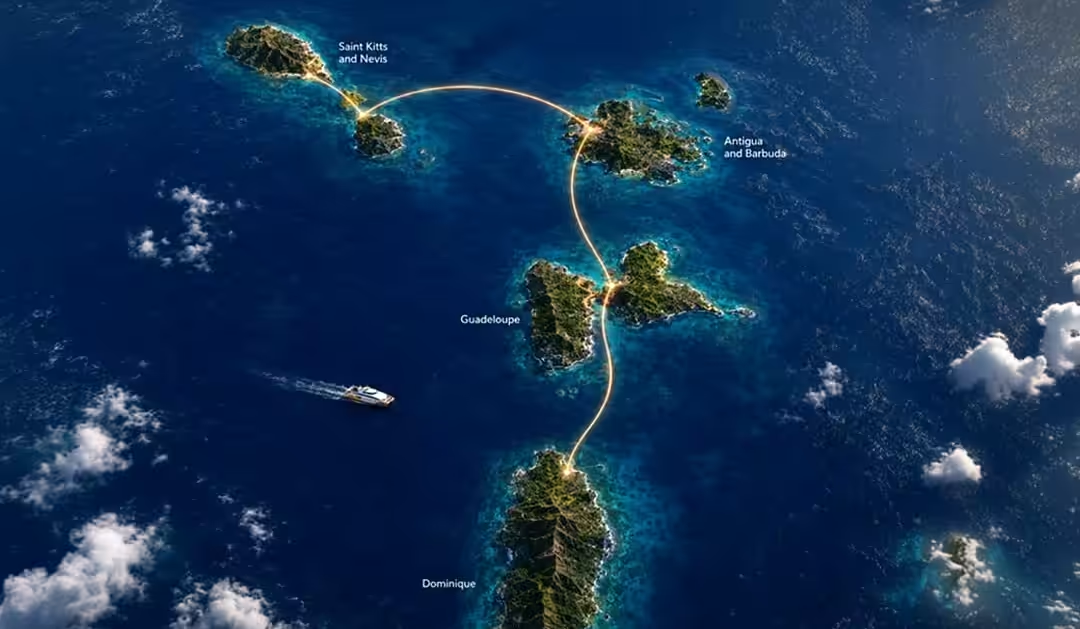
     Regional efforts to bridge island transport divides across the Eastern Caribbean have reached a decisive operational milestone. The KARULINK project, an inter-island territorial cooperation initiative designed to enhance maritime transit and multimodal connectivity between Guadeloupe, Antigua and Barbuda, Dominica, and Saint Kitts and Nevis, has officially launched its feasibility studies alongside an intensive campaign of ground-level stakeholder engagement.

    Initiated under the auspices of the European INTERREG Caribbean 2021–2027 programme and co-financed through the European Regional Development Fund (ERDF / FED-FEDER), the initiative addresses long-standing transit fragmentation across the archipelago. Operating under the banner of “linking islands,” KARULINK connects island territories through coordinated maritime links and centralized digital transit tools, aiming to establish a smoother, more sustainable mobility network that deepens regional economic integration.

    The operational acceleration follows the formal convening of the project’s inaugural Steering Committee (COPIL) in Guadeloupe in June 2026. Under the leadership of project coordinator Groupe STEP—a Guadeloupe-based mobility advisory firm—the international partnership has moved swiftly from initial planning into active regional implementation.

    Scheduled to run until December 31, 2027, the multi-year initiative focuses on delivering structural solutions to Caribbean transit challenges. Rather than treating sea crossings in isolation, KARULINK positions maritime routes as integral links within a wider multimodal journey, connecting ports with local overland transit systems and municipal centers across all four participating territories.

    Project DimensionStrategic & Operational Details
    Framework ProgrammeEuropean INTERREG Caribbean 2021–2027
    Funding MechanismEuropean Regional Development Fund (ERDF / FED-FEDER)
    Participating TerritoriesGuadeloupe, Antigua and Barbuda, Dominica, Saint Kitts and Nevis
    Lead Partner & CoordinatorGroupe STEP (Guadeloupe)
    Operational TermActive through December 31, 2027
    Core Technical FocusMobility needs assessment & centralized multimodal digital platform

    The foundational technical priority of the newly launched feasibility studies centers on accurately evaluating commuter and traveler transit needs while engineering the architecture for a centralized multimodal information platform—identified by project leaders as the primary catalyst for seamless and low-carbon regional travel.

    To guarantee that the forthcoming digital platform responds directly to daily travel realities, the consortium has mobilized extensive field consultations and technical exchanges across Guadeloupe and regional industry networks.

    Stakeholder engagement accelerated sharply throughout October 2026, pairing public consultations with specialized clean-technology showcases:

    • Youth and Commuter Engagement at the Université des Antilles (October 12, 2026): Project leaders met directly with university students in Guadeloupe to preview the functional features of the upcoming centralized multimodal platform. The session provided a forum to analyze student commuting habits and daily transit bottlenecks, gathering practical data to align future digital services with user needs while raising awareness around ecological transition issues.
    • Showcasing Clean Mobility at EKO Innovation (October 14, 2026): Featured at EKO Innovation—the flagship future-solutions conference organized by the Synergîles innovation cluster—KARULINK presented its strategic vision for connected, low-carbon mobility. Dialogues with economic stakeholders, institutional representatives, and project developers highlighted the initiative’s direct contribution to regional attractiveness and economic integration.
    • International Industry Dialogue at IFTM Top Resa: These regional field actions expanded upon strategic exchanges and insights shared during the international tourism and industry trade fair IFTM Top Resa, held from September 15 to 17, 2026.

    Ongoing collaboration with regional academic and innovation bodies, including the Université des Antilles and Synergîles, continues to provide analytical grounding as technical specifications for the mobility platform take shape.

    KARULINK’s delivery model rests upon a structured alliance between public authorities and private-sector chambers of commerce across French and English-speaking Caribbean territories.

    The governance coalition brings together key institutional and municipal actors across the four partner territories:

    • Groupe STEP (Guadeloupe): Serves as Lead Partner and overall project coordinator, steering technical execution and operational alignment.
    • Antigua & Barbuda Chamber of Commerce (ABCC): Represents commercial and logistical interests within Antigua and Barbuda.
    • Dominica Association of Industry and Commerce (DAIC): Mobilizes private-sector commercial links and transit advocacy in the Commonwealth of Dominica.
    • St. Kitts and Nevis Chamber of Industry and Commerce (SKNCIC): Coordinates commercial stakeholder input and local maritime connectivity priorities for Saint Kitts and Nevis.
    • Communauté d’Agglomération La Riviera du Levant (CARL): Represents south-eastern and coastal Guadeloupean communities, including Le Gosier, Sainte-Anne, Saint-François, and La Désirade.
    • Municipality of Bouillante: Provides municipal governance and western coastal territorial perspectives from Guadeloupe.

    This cooperative framework ensures that the technical guidelines established under the European funding programme align directly with local economic priorities and municipal transport realities across each island.

    The consortium will mark its next major milestone on December 10, 2026, when delegates convene in Saint Kitts for the project’s second Steering Committee meeting.

    The Saint Kitts summit will bring together the full network of institutional, municipal, and commercial partners to evaluate the initial findings of the feasibility studies. The committee will assess travel demand data, review platform technical requirements, and define the strategic technical guidelines that will steer operational implementation through 2027.

    As the initiative progresses toward its December 2027 conclusion, the technical blueprints established in Saint Kitts will lay the groundwork for a more cohesive, sustainable, and interconnected maritime transport network across the Eastern Caribbean.

  • 6 sectors, 20 plans: Taiwan’s 2030 climate roadmap

    6 sectors, 20 plans: Taiwan’s 2030 climate roadmap

    Mobilizing action globally to accelerate implementation of climate commitments

    In 2026, extreme heat continued to sweep across the globe, with historically high temperatures occurring in many regions. Western Europe experienced its hottest June on record. These temperatures intensified drought and wildfires and put pressure on water resources. This disrupted public health, energy supplies, and economic activity. Taiwan has likewise faced climate risks including extreme heat, heavy rainfall, and typhoons. Climate change has become a shared challenge with profound implications for social stability, industrial development, and national resilience.

    Against this backdrop, global climate governance is moving beyond the formulation of targets and commitments toward concrete implementation. At this year’s COP31 meeting, participants will emphasize the principles of dialogue, consensus, and action while working to turn commitments into concrete, trackable results. Even though Taiwan is not a party to the United Nations Framework Convention on Climate Change, it continues to work on climate governance in the spirit of the Paris Agreement. Having submitted its 2035 nationally determined contributions in 2025, Taiwan is now translating its emissions-reduction targets into action by many government agencies to reach a green industrial transition, resource circulation, climate adaptation, and a just transition. It is also collaborating with international partners to develop practical solutions.

    Aligning with international norms while achieving concrete emissions reductions through transparent governance

    Article 4 of the Paris Agreement calls on parties to progressively strengthen mitigation plans and reach nationally determined contributions. The enhanced transparency framework laid out in Article 13 calls for consistent, trackable information to assess progress on climate actions. Aligning with these international norms, Taiwan this year formally approved its third-phase greenhouse gas reduction action programs for six sectors, covering the years 2026-2030. These programs address energy, manufacturing, residential and commercial buildings, transportation, agriculture, and the environment, incorporating 20 flagship mitigation action plans, annual emissions targets, and 63 performance indicators. They further embed national mitigation goals into sectoral policies and allow for annual monitoring and evaluations. Taiwan’s latest national greenhouse gas inventory also shows that net greenhouse gas emissions in 2024 were 6.59 percent below 2005 levels and demonstrated a decline for the third consecutive year. Over the same period, real GDP continued to grow, even as carbon dioxide emission density fell 48.59 percent. This indicates a gradual decoupling of economic growth from carbon emissions.

    As concerns transparency, Taiwan follows recommended frameworks set by the Intergovernmental Panel on Climate Change and the Paris Agreement. It regularly publishes related documents, including nationally determined contributions, biennial transparency reports, and national inventory reports, matching international practice. Through clear mitigation pathways, sectoral action, and transparent information, Taiwan will continue to assess its progress and turn climate commitments into measurable, trackable outcomes.

    Pursuing net-zero and zero waste to enhance industrial competitiveness during the green transition

    To accelerate the green industrial transition, Taiwan began collecting carbon fees this year, part of its effort to make carbon pricing a key policy instrument for the decarbonization of industry. The collection system is linked to voluntary reduction plans and preferential rates that encourage companies to incorporate emissions reductions into their investment and operational decisions. In the first year of collection, the carbon fee has thus far generated NT$4.97 billion in revenue, which goes to the Greenhouse Gas Management Fund, a dedicated fund for greenhouse gas reduction and climate change adaptation efforts. The fund offers loan credit guarantees and interest subsidies so as to optimize operations. Meanwhile, the Regulations Governing Subsidies for Greenhouse Gas Reduction Technologies and Climate Change Adaptation were promulgated to support reduction technologies and adaptation measures. Through such diverse instruments as subsidies, financing, and risk sharing, Taiwan’s framework will introduce more private capital in support of the net-zero transition.

    During the next stage, a cap-and-trade system will be progressively developed. This will be called the Taiwan Emissions Trading System (TW-ETS) and will move toward a diversified carbon pricing framework in which the carbon fee and the ETS operate in parallel. The United Kingdom recently listed Taiwan’s carbon fee as a qualifying carbon pricing scheme under its Carbon Border Adjustment Mechanism. This will permit eligible Taiwanese products to claim carbon-price deductions in accordance with applicable rules, marking an important step in building links between Taiwan’s carbon pricing framework and international systems.

    The industrial net-zero transition must extend beyond energy and carbon management to address the way resources are used. This year, Taiwan completed amendments to the Resource Circulation Promotion Act and the Waste Disposal Act, shifting management efforts from end-of-pipe treatment toward governance across the entire product life cycle. The government has identified eight major aspects of the circular economy: food, plastics, textiles, health, construction, electronics, inorganic resources, and circular industries. At present, there are 69 publicly listed companies in the circular economy sector, which generatesf over NT$1 trillion in total annual revenue. This shows that the circular economy is progressively taking shape as a green industry of scale. Taiwan continues to promote digital product passports, source plastic reduction, and reuse. Through legislation, industrial collaboration, and digital innovation, Taiwan aims to accelerate resource circulation and zero waste, and reduce its reliance on virgin resources, and lower its carbon burdens. This will enhance resource security, supply chain resilience, and green competitiveness.

    Strengthening climate resilience and integrating adaptation into national planning and everyday life

    Article 7 of the Paris Agreement sets out a global goal to enhance adaptive capacity, strengthen resilience, and reduce vulnerability to climate change. At COP30, participants adopted the Belém Adaptation Indicators to further advance the Global Goal on Adaptation toward measurable and trackable action. Taiwan continues to align with international adaptation efforts by integrating climate risk assessments into national and local governance and bolstering resilience to climate events like extreme heat and torrential rainfall.

    In response to a growing heat risk, Taiwan this year used a 40°C extreme-heat scenario to advance cross-ministerial adaptation strategies, strengthening preparedness and coordination for public health, energy, transportation, occupational safety, and support for vulnerable groups. Furthermore, on the instructions of President Lai Ching-te, Taiwan established the national-level Urban Forest Promotion Committee to advance the National Green Canopy Program. This initiative makes urban forestry an element of national resilience infrastructure and integrates LiDAR remote sensing, 3D digital twin technology, and microclimate data to accurately identify heat hotspots and shading gaps, thereby creating a resilient terrestrial green network that balances climate adaptation with public health. Taiwan will draft an urban forests act that will promote professional certification for protecting trees while advancing the high-value circularity of wood. By guiding corporate ESG resources and encouraging community adoption, Taiwan will launch local demonstration zones, bringing to bear private sector expertise and emerging technologies to enhance urban resilience against extreme climate events and natural disasters.

    Realizing a just transition and mobilizing society for net-zero

    The preamble to the Paris Agreement emphasizes the need to take into account the imperatives of a just transition of the workforce and the creation of decent work and quality jobs. In recent years, the UNFCCC has furthered discussions on energy, industry, labor, and the social dimensions of the transition. At COP30, participants advanced mechanisms related to a just transition, strengthening international cooperation, technical assistance, capacity building, and knowledge sharing so that the needs and development opportunities of different groups could be addressed during the net-zero transition.

    Taiwan has made leaving no one behind a core principle of its net-zero transition, and established a basis for governance that addresses a just transition via the Climate Change Response Act. To realize a just transition while implementing carbon reduction policies, Taiwan this year is conducting stakeholder consultations across six major sectors—energy, manufacturing, residential and commercial buildings, transportation, agriculture, and environment. By gathering a wide scope of public opinion and having each sector review and respond to this feedback, cross-ministerial collaboration is being improved. Subsequently, Taiwan will synthesize sectoral policies to draft a nationwide just transition action plan, crafting a national-level policy framework for a just transition and ensuring that social participation remains a vital component of net-zero policy planning and execution. This year, Taiwan used the Greenhouse Gas Management Fund to integrate cross-sectoral capacities and support workers, industries, regions, and groups affected by the transition. This will help advance green-collar talent development, the low-carbon transition of small and medium-sized enterprises, vulnerable groups, local participation, and transition governance.

    Enhancing global partnerships to jointly craft climate solutions

    Article 6 of the Paris Agreement encourages voluntary cooperation to enable higher ambition for climate action while promoting sustainable development on the basis of environmental integrity, transparency, and the avoidance of double counting. As relevant arrangements move into the stage of implementation, international climate cooperation is expanding from policy dialogue to mitigation projects, technology cooperation, capacity building, and investment, which are important pathways for accelerating implementation of the Paris Agreement.

    Taiwan is moving forward with climate diplomacy through pragmatic action. Last year, Taiwan signed a memorandum of understanding on Paris Agreement cooperation with its diplomatic ally Paraguay. Today, the two countries are advancing 12 action plans for environmental governance, thereby implementing global climate action and substantive environmental cooperation through sharing technology and engaging in youth dialogue and exchanges on the circular economy.

    Türkiye has labeled COP31 as the COP of the Future, emphasizing that commitment is a declaration of intent, while execution represents trust. As global climate governance enters a critical phase focused on practice and outcomes, Taiwan will continue to deepen global partnerships through pragmatic engagement, making concrete contributions, and sharing its experience with the net-zero transition. Taiwan seeks international support for its meaningful participation in the UNFCCC and global climate governance efforts. It firmly believes that achieving the goals of the Paris Agreement requires the participation of every partner with the capacity and willingness to act. Taiwan is ready to collaborate with other nations to transform climate commitments into action and together build a more resilient, sustainable net-zero future.

  • Electrician charged with wounding after bottle attack

    Electrician charged with wounding after bottle attack

    DUBOIS RESIDENT CHARGED WITH WOUNDING AND DISOBEYING FAMILY COURT ORDER

    On November 4, 2026, police arrested and charged Dacey Ollivierre, a 41-year-old electrician of Dubois, with the offences of wounding and disobeying a Family Court Order.

    Investigations revealed that on October 4, 2026, at Dubois, the accused allegedly unlawfully and maliciously wounded a 67-year-old farmer of the same address, by striking him on the head with a glass bottle.

    The accused was also charged with disobeying Family Court Order No. SVGFDV2025/0139, issued on October 13, 2025, by Miss Coleen McDonald, President of the Family Court, which he allegedly breached at Dubois on October 4, 2026.

    The offences were committed in Dubois. Ollivierre appeared before the Kingstown Magistrate Court, where he pleaded guilty to the wounding charge and not guilty to the Family Court offence.

    He was granted composite bail in the sum of EC$2,900.00 with one surety, under the following conditions:

    • He must have no contact with the victim.
    • He must report to the police every Monday between 6:00 a.m. and 6:00 p.m.
    • He must seek permission from the Court before leaving the state.

    The matters were adjourned and transferred to the Layou Magistrate Court.

  • ‘Cannot have benefits without burden’, Browne’s case for slavery reparations

    ‘Cannot have benefits without burden’, Browne’s case for slavery reparations

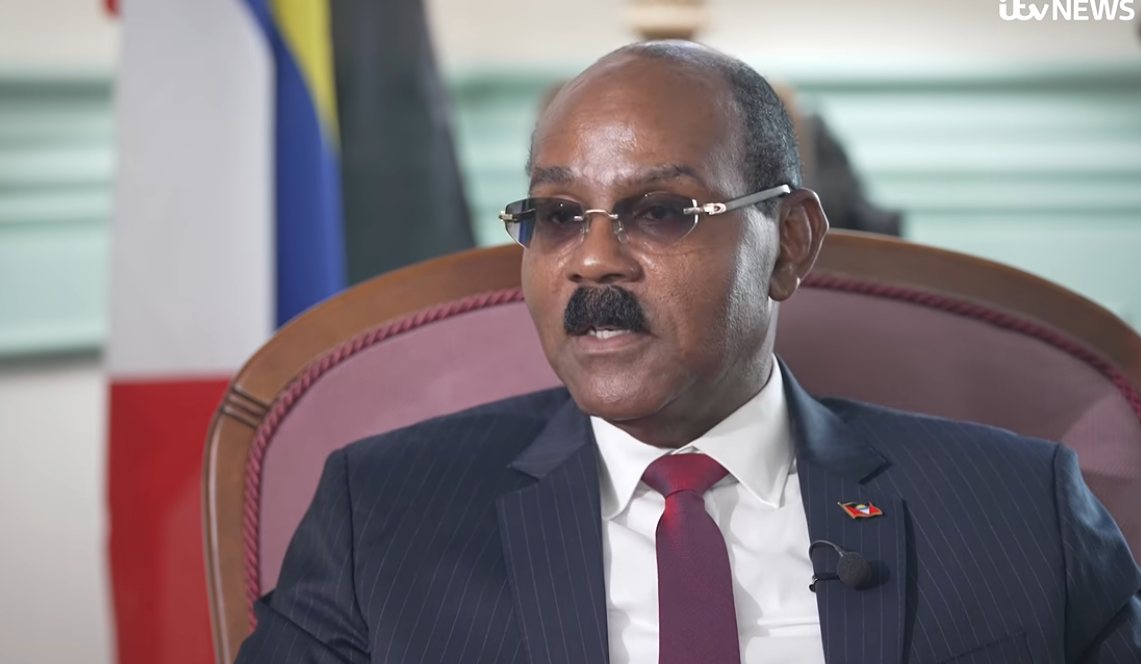
     In a definitive challenge to British foreign policy ahead of the Commonwealth summit, Antigua and Barbuda’s Prime Minister Gaston Browne has articulated an uncompromising case for transatlantic slavery reparations, warning that the United Kingdom’s reluctance to provide financial restitution threatens to normalize historical atrocities and embolden modern state brutality worldwide.

    Speaking in an extended diplomatic interview with ITV News, the veteran Caribbean leader dismantled conventional defenses used by former imperial powers to evade colonial restitution. Rather than framing reparations as a punitive levy or an exercise in historical grievance, Browne presented reparatory justice as a cornerstone of international law, an economic debt rooted in centuries of uncompensated labor, and a vital modern deterrent against escalating international aggression.

    His intervention sharpens the political lines between Caribbean leaders demanding systemic redress and a British political establishment divided over how to confront its imperial past. While welcoming British Prime Minister Andy Burnham’s willingness to engage in structured talks regarding a formal state apology, Browne made clear that diplomatic remorse alone cannot resolve the lasting economic damages inflicted by chattel slavery.

    At the core of Prime Minister Browne’s argument is what he characterizes as the global deterrence doctrine. Rejecting the view that transatlantic slavery is merely a closed historical chapter, Browne contends that exempting former colonial powers from financial restitution creates a dangerous global precedent that signals to modern autocrats that state-sponsored atrocities carry no lasting penalties.

    Browne pointed directly to the current fracturing of international norms and the rise of unprovoked state aggression, citing the war in Ukraine as evidence of a more brutal global environment. In Browne’s assessment, when powerful states commit historic crimes and escape restitution simply through the passage of time, future regimes are taught that generational turnover provides an inevitable shield against legal and financial accountability.

    “If there is not some form of compensation and even liability for future generations, present generations will commit these atrocities thinking that all that is necessary to resolve the issue is for a new generation to come into being. That in itself will not be a deterrent; if anything, that will encourage future human atrocities.”

    To underscore the historical reality behind the legal claim, Browne placed chattel slavery within the architecture of international human rights, emphasizing that the United Nations formally recognizes the transatlantic slave trade as the most heinous crime committed against humanity. Browne detailed the extreme brutality of the system: four hundred years during which millions of African men, women, and children were classified as legal chattels, subjected to torture including being broken on the wheel, thrown overboard during the Middle Passage, and denied compensation while building European imperial wealth.

    To ground this legal appeal, Browne invoked an evolutionary perspective, arguing that humanity’s common scientific origin demands mutual empathy and reconciliation:

    A Shared Biological Lineage: Scientific evidence indicates that the entire human family traces its ancestry to a common mitochondrial lineage in Africa approximately 250,000 years ago, demonstrating that racial subjugation was an artificial construct imposed upon a single human family.

    Universal Standards of Justice: Because all nations belong to the same human family, colonial atrocities cannot be dismissed as standard historical practice exempt from universal standards of restitution.

    Preventing Future Repetition: Enforcing meaningful liability for historic crimes serves as a practical deterrent, warning modern military powers that the economic exploitation of conquered populations incurs permanent, legally enforceable debts.

    A central pillar of British political resistance has been the argument that contemporary UK taxpayers cannot be held responsible for wrongs perpetrated centuries ago by prior generations. Browne met this defense head-on, identifying a profound moral and legal contradiction in the British stance: modern societies enthusiastically embrace inherited colonial wealth while disavowing the unliquidated liabilities created by the system that produced it.

    Browne detailed how centuries of unpaid African labor in the Caribbean served as the primary capital base for British industrial development. The massive wealth extracted from Caribbean sugar plantations was systematically repatriated to Britain and North America, financing civic infrastructure, commercial banking systems, global trading empires, and higher education institutions that continue to generate prosperity today.

    The Principle of Asymmetric Inheritance: Modern states cannot legitimately claim the accumulated institutional and financial capital of empire while disclaiming the legal and moral liabilities incurred to produce that capital. Inheriting the benefits of colonial extraction binds the inheritor to its corresponding debts.

    The Prime Minister emphasized that Caribbean nations were left at independence with severely underdeveloped domestic infrastructure, structural poverty, and fragile fiscal systems directly resulting from centuries of colonial extraction. The ongoing economic hurdles faced by Caribbean small-island developing states, he observed, represent the direct structural legacy of uncompensated wealth extraction.

    For Browne, the financial and moral reality is straightforward: Britain cannot enjoy the compound returns of chattel slavery while treating the descendants of its victims as strangers to the imperial balance sheet. Those who enjoy the assets of empire inevitably carry the obligation to address its unresolved burdens.

    Mindful of domestic political realities in London—where critics cite Britain’s £3 trillion national debt, strained public health services, and crumbling domestic infrastructure—Browne presented a pragmatic, non-punitive financing model designed to avoid imposing new tax burdens on British citizens.

    Rather than demanding immediate, multi-billion-pound cash payments from the British Treasury, the Prime Minister proposed a structured, long-term reallocation of existing British overseas spending. Specifically, Browne called on the UK government to redirect a portion of its existing Official Development Assistance (ODA) budget into dedicated Caribbean developmental investments.

    The following comparative breakdown contrasts traditional reparations demands with Browne’s negotiated development framework:

    DimensionConventional Reparations ModelBrowne’s ODA Realignment Blueprint
    Fiscal MechanismDirect, newly appropriated cash transfers from the UK TreasuryPartial reallocation of existing foreign aid and ODA budgets already authorized by Parliament
    Domestic ImpactRequires additional British borrowing or domestic tax increases amid public austerityGenerates zero net increase to the British national debt or domestic spending limits
    Capital AllocationUnrestricted budgetary cash payoutsTargeted capital investment in Caribbean regional infrastructure, climate adaptation, and education
    Sovereign DebtUnconnected to sovereign debt burdensIntegrates systematic debt restructuring and relief for vulnerable small-island economies
    Diplomatic FramingInsistence on adversarial litigation and formal damagesFlexible diplomatic mechanisms focused on long-term developmental transformation

    Browne reiterated that Caribbean nations are not seeking handouts or charity. Instead, the proposal establishes an institutional framework to address the structural underdevelopment inherited from the colonial era through predictable, targeted developmental financing.

    “We are not coming cap in hand begging, and we are not going to make any unreasonable demands,” Browne affirmed. “You have an ODA budget, and a portion of it can be allocated towards developmental support for Caribbean countries. You don’t have to call it reparations, but there has to be a systematic program of funding to deal with the issues of underdevelopment that Britain has left us over the decades.”

    Browne’s statements underscore a widening fissure within British politics over how to respond to Commonwealth calls for historic justice. The Prime Minister drew a sharp contrast between Prime Minister Andy Burnham’s constructive diplomatic posture and the outright rejection voiced by Conservative opposition leader Kemi Badenoch.

    Browne commended Burnham for exhibiting diplomatic courage by signaling openness to working toward a formal British state apology during bilateral talks at the Commonwealth heads of government summit. Describing Burnham’s stance as a “breath of fresh air,” Browne recognized the domestic political constraints facing Downing Street and credited the Prime Minister with engaging in serious dialogue where prior administrations maintained rigid opposition.

    However, Browne emphasized that formal expressions of regret must serve as the foundation of an inclusive, structured, and time-bound process rather than an end in themselves:

    Constructive Engagement: Reassurance that Caribbean leaders will conduct summit negotiations with maturity, dignity, and grace, fostering dialogue rather than hostility.

    Structured, Time-Bound Dialogue: Insistence that bilateral talks adhere to concrete timetables to ensure discussions lead to actionable development agreements rather than perpetual delays.

    Concrete Goodwill: A direct invitation for Downing Street to demonstrate good faith by announcing an initial Caribbean development assistance package during the Commonwealth gathering.

    In sharp contrast, Browne delivered an uncompromising rebuke of Conservative opposition leader Kemi Badenoch, who publicly criticized Burnham’s openness to an apology by arguing that “the time for apologizing is over” and asserting that apologies merely open the door to financial compensation. Badenoch maintained that historical sorrow was sufficient and that modern Britain should move on.

    Browne dismissed Badenoch’s position as fundamentally misguided and completely out of step with the magnitude of the atrocities committed under British colonial rule:

    “I think she’s misguided, and no wonder she is the leader of the opposition and not the prime minister. Some of the most heinous crimes were ever committed against humanity, and they don’t see the need for an apology and for restitution. If I had a relative that committed those crimes, I would feel ashamed and condemn that behavior. I don’t see how anyone can feel proud about atrocities where millions of human lives were destroyed.”

    Browne concluded that durable diplomatic reconciliation between Britain and the Caribbean cannot be achieved through historical denial or unilateral declarations that the past is resolved. By connecting historical accountability directly to modern developmental finance, Antigua and Barbuda’s Prime Minister has positioned reparatory justice at the center of the Commonwealth agenda, requiring modern Britain to reckon with both the source of its prosperity and the unfinished business of its empire.

  • Adriana King on why ‘the freed label’ feels like a lie

    Adriana King on why ‘the freed label’ feels like a lie

     To the public and radio commentators celebrating the legal collapse of a protracted criminal prosecution, Vincentian educator Adriana King was supposedly a free woman. But when King logged onto social media on Friday morning and saw her name broadcast across a live radio stream beneath the triumphant caption “Adriana King ‘freed’,” she did not feel relief or closure.

    Calling live into Hot 97.1 SVG’s morning programme, King directly challenged the celebration, offering an unsparing account of why the state’s procedural retreat does not equate to freedom. For King, the end of the court case brings neither an affirmative exoneration nor an end to the psychological, financial, and professional trauma inflicted on her family since August 2021.

    “It’s strange that people are using that word—that it’s done, it’s over,” King told hosts Luke and Chris during her live telephone intervention. “I saw your caption when I logged on to Facebook, and that’s why I jumped on the live, because I was like: ‘Adriana King freed.’ I don’t feel that. I don’t feel freedom. I don’t feel a sense that things are over. I guess when you have been in survival mode, in combat mode for so long, it probably would take me a while before I could register that things are changing, because I honestly don’t feel as if a change is here.”

    Her intervention transformed a routine morning broadcast into a searching examination of state prosecutorial overreach, the limits of procedural dismissals, and the enduring human toll exacted on public sector workers who challenged government policy.

    At the heart of King’s refusal to celebrate is the critical legal distinction between an aborted prosecution and a definitive verdict of innocence. The case against King had initially been stayed on May 28, 2024, by Magistrate John Ballah, who permanently halted the proceedings. However, the state appealed that dismissal, and the Court of Appeal recently overturned the magistrate’s order, granting prosecutors the procedural right to proceed to trial.

    Yet, immediately upon securing that appellate ruling, the Office of the Director of Public Prosecutions (DPP) informed the court that it possessed no interest in actually prosecuting King. Prosecutors claimed they had pursued the appeal solely to settle a “point of law” and establish judicial precedent. The matter is now slated to be returned to the Magistrate’s Court for the formal entry of a nolle prosequi—the state’s formal discontinuance of criminal charges.

    For King, this procedural mechanism operates as an evasion of accountability rather than justice, leaving an indelible cloud of suspicion over her name.

    “There are still people who speak as if I actually did something,” King stated, reiterating concerns she had raised with local press following the appellate ruling. “When a matter is nolle prosequi, as they say, you don’t have that. It’s not like if I’m innocent, not to say I fought the case—it’s like you did me a favor.”

    King emphasized that rather than a quiet discontinuance, she wanted a full, open trial where state witnesses would be forced to testify under oath. Specifically, she wanted the prosecution’s primary witness—then-Assistant Superintendent of Police and current Commissioner of Police Trevor “Buju” Bailey—to face cross-examination.

    “I would have preferred we have a trial,” King explained. “Buju takes the stand, he explains what he saw—even though he and I were at the same place on that day, which is in front of the prison’s gate while the Prime Minister was entering Parliament—and let him say exactly what he has in the witness statement, so that he could be examined by my counsel, who could then establish: ‘No, this did not happen.’ Everybody on this live knows that what I’ve been accused of didn’t happen. It didn’t. But there’s still people who are… and plus, of course, you’re thinking now at some point I might want to migrate, to be somewhere else, to start over. There is this trailing behind me, and it’s left to people to assume whether or not I did or I didn’t.”

    The criminal case arose from the mass civil unrest of August 2021, when hundreds of citizens and public sector employees demonstrated in Kingstown against proposed legislation mandating COVID-19 vaccinations for public workers—a policy later passed into law. Amid the street protests, King was arrested and accused of attempting to block then-Prime Minister Dr. Ralph Gonsalves from entering the Parliament building.

    From the beginning, the premise of the charge was met with public derision. On air, the radio hosts openly mocked the logistics of the state’s allegation, questioning how a single female teacher could physically obstruct a prime minister moving with an armed security detail and an entire police escort. “What kind of vitamins you been taking girl? You alone stop a whole barracks?” host Luke quipped during the call, highlighting the physical impossibility at the center of the prosecution.

    King recounted how the state repeatedly modified and weakened the formal charges across several years in an effort to keep the case alive:

    Initial Charge: Formally accused of directly blocking Prime Minister Ralph Gonsalves from entering Parliament.

    First Revision: Altered to alleging that King performed “something to block him” from entering the legislative chamber.

    Second Revision: Watered down further to asserting that King did “something that could have led to him being blocked” from Parliament.

    King stressed that prosecutors had “absolutely nothing to present to the magistrate” other than Bailey’s lone witness statement, noting that despite that statement, the state felt compelled to constantly reword the offense. Listeners and callers noted that the female Director of Public Prosecutions who oversaw the prolonged action had since resigned from office, underscoring broader community demands for institutional accountability.

    While the legal proceedings stalled in procedural maneuvers, the state imposed immediate administrative penalties outside the courtroom. Following her arrest, King was placed on official interdiction from the national teaching service.

    Under interdiction, King was removed from her classroom and her salary was slashed to half-pay. The loss of income triggered years of severe household austerity, made particularly painful by her responsibilities as a mother providing specialized care.

    “I was on half-pay. Let me put it this way: I literally, for about a year and some, wore a single slipper—literally, I mean everywhere—until that just went down to nothing, and then I got another one,” King recounted. “Because for me, it was always making sure that my daughter had what she needed. She’s on the autism spectrum, so she needs other things that neurotypical children might not need. And so it was always to sacrifice to get her that, make sure she has what she needed. It was an anguish.”

    The conditions of interdiction also stripped King of fundamental freedom of movement. Under government regulations, she was barred from traveling outside St. Vincent and the Grenadines without formal permission from the very authorities prosecuting her.

    “I couldn’t travel,” King pointed out. “They didn’t take my documents, but part of interdiction is that you are not allowed to travel. You have to ask the same people who have you on interdiction for permission to travel.”

    Although broadcast commentators noted that King received her full salary and outstanding arrears around April 2026 under a new political administration, financial restitution did not erase the psychological toll of half a decade of enforced marginalization.

    When asked whether she plans to return to the public school system now that the prosecution has been abandoned, King stated unequivocally that she has no desire to re-enter the traditional classroom, rejecting the premise of going backward. While she continues to educate students through private online tutoring, she views stepping back into her former teaching post as a continuation of her punishment.

    “To be honest, I would rather not go back to the classroom,” King stated. “And just for that word—that phrase ‘go back’—I’ve been saying to people: I think I have been through enough. I have sacrificed enough. I have been tormented enough. And there are people now who are enjoying a better life, a better job, a better everything because of what I had to go through and others. And so I think it would be really unfair to send me backwards, if you catch where I’m coming from. I’m using a literal interpretation of the word ‘go back.’ My career then, five or six years ago—had all of this not happened, I’m certain I would have been in a far better position today. So to go back, to me, would be further punishment, further abuse.”

    Rather than succumbing to stagnation during her years on interdiction, King invested heavily in professional development and curriculum development:

    Textbook Authorship: King contributed directly to national pedagogy by writing an English textbook for Vincentian schools.

    Human Resource Management: She earned a professional certification in Human Resource Management from the University of the West Indies.

    Health and Safety Studies: She is currently pursuing certification in Occupational Health and Safety.

    Despite the years of administrative torment and public suspicion, King insisted that her pursuit of justice is not driven by personal malice or vengeance against former officials or prosecutors. Instead, she framed her case as an essential matter of civic principle and democratic hygiene for St. Vincent and the Grenadines.

    “I don’t have any bitterness,” King explained. “I just hope that people could understand these sort of things are not right. You’re not supposed to be prosecuting somebody innocently, and people defend that and say, ‘You know, that’s okay.’ You shouldn’t ever accept these things. I don’t feel any bitterness; I just believe that we as Vincentians, we need to hold those in authority accountable for the things that they’ve done. It’s not a matter of being bitter, but if you pick someone, then you should be expected to say sorry, and at least to show that you’re sorry.”

    King confirmed that she plans to consult with legal counsel to evaluate her options for civil redress and compensation for the damages she sustained.

    When morning host Luke urged her to take comfort in the fact that the legal battle is formally over and that she can now move forward, King acknowledged that the emotional aftermath will take time to process. “I think when it really hits me, I will sit down and have a good bawl,” she said. Until that day arrives, King remains determined to challenge the easy assumption that dropping a wrongful charge is the same as being set free.

  • Maurice Saad, Rotary district Governor, to pay official Visit to SVG

    Maurice Saad, Rotary district Governor, to pay official Visit to SVG

    District Governor Maurice Saad of Rotary District 7030 will visit St. Vincent and the Grenadines from 8 to 11 November 2026 as part of his programme of official visits to Rotary Clubs across the region.

    The visit will provide an opportunity to strengthen engagement with local Rotary leadership, recognise the contributions of Rotarians to national development and encourage greater collaboration in addressing community needs. During his time on island, Governor Saad will pay a courtesy call to His Excellency the Governor General, meet with local Clubs, and visit projects throughout SVG.

    Guided by the District’s 2026–2027 theme, “Create Lasting Impact,” Governor Saad continues to emphasise innovative approaches to service, stronger membership engagement and partnerships capable of delivering sustainable results.

    The visit also takes place during Rotary Foundation Month, when Rotarians worldwide highlight the role of The Rotary Foundation in advancing health, education, peacebuilding, community development and environmental sustainability.

    About District Governor Maurice Saad

    Born in Senegal in 1968, Maurice Saad is a pharmacist and toxicologist with 30 years of professional experience.

    He graduated from the University of Paris XI in France and completed further studies in Industrial Pharmacy at the University of Montreal, Canada. After working in research and development within the pharmaceutical industry, he established a pharmacy in Guadeloupe.

    A Rotarian since 2003, Saad served as President of the Rotary Club of Pointe-à-Pitre Doyen in 2015–2016 and Assistant Governor for Guadeloupe from 2020 to 2023. He became District Membership Chair in 2023, reflecting his commitment to strengthening and developing Rotary membership. He is married to Aline, and they have two sons.

    About Rotary District 7030

    Rotary District 7030 encompasses 17 countries and territories and 78 Rotary Clubs across the Southern Caribbean and parts of South America.

    Through Rotary International, its members collaborate on humanitarian initiatives addressing education, healthcare, economic development, peacebuilding and other community priorities.

  • Mitchell’s NDC wins 14 of 15 seats in Grenada election

    Mitchell’s NDC wins 14 of 15 seats in Grenada election

    Grenada’s ruling National Democratic Congress (NDC), led by Prime Minister Dickon Mitchell, has declared victory in Thursday’s general election, with reported results showing the party securing 14 of the country’s 15 parliamentary seats and winning a second consecutive term in government.

    The opposition New National Party (NNP) captured the remaining seat in St George North West, represented by Adrian Joseph, according to the latest reported results.

    The outcome marks a significant political achievement for Mitchell, whose party first came to power in June 2022 after defeating the NNP administration led by former Prime Minister Keith Mitchell. In that election, the NDC secured nine seats, ending the NNP’s nine-year tenure in government.

    Thursday’s result would increase the NDC’s parliamentary representation from nine to 14 seats, marking a decisive expansion of its majority and breaking the party’s historical pattern of serving only one term in government before losing power.

    The victory gives Mitchell a renewed mandate to pursue his administration’s priorities, including economic development, infrastructure, healthcare, education and employment.

  • Persons traveling to U.S must complete Attestation form to enter

    Persons traveling to U.S must complete Attestation form to enter

    The Centers for Disease Control and Prevention enacted an attestation mandate requiring all international air passengers traveling to the United States to verify they have not visited the Democratic Republic of the Congo within the prior twenty-one days.

    This public health directive is designed to prevent the introduction of Ebola by stopping individuals from boarding flights without proper written or digital certification.

    Airlines and aircraft operators must collect these signed statements prior to departure, verify compliance, and retain the records for forty-two days in case federal authorities request them.

    Furthermore, travelers must adhere to this waiting period even if they are simply transit passengers passing through the country without leaving the terminal.

    Anyone who refuses to complete the paperwork will be denied boarding, while individuals who submit fraudulent details face potential criminal penalties and imprisonment.