
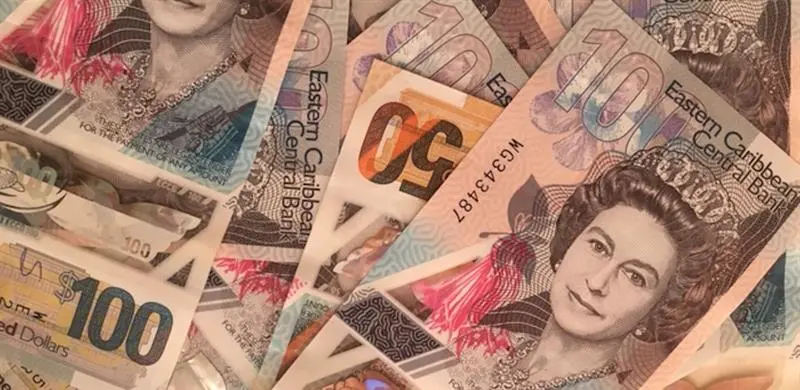
The Eastern Caribbean Central Bank (ECCB) is officially commemorating the 50th anniversary of the EC dollar’s fixed exchange rate, marking a major milestone in the economic history of the Eastern Caribbean Currency Union (ECCU).
On July 7, 1976, regional governments fixed the value of the EC dollar to the United States dollar at a rate of EC$2.70 to US$1.00. This decision, made during a period of global economic uncertainty, has since become one of the longest-standing and most resilient fixed exchange rate agreements in the world.
For five decades, the fixed parity has remained unchanged, with no devaluations or revaluations. This stability has been credited with:
- Keeping inflation low across the region.
- Strengthening public and investor confidence in the EC dollar.
- Providing a predictable environment for trade and sustainable economic growth.
ECCB Governor Timothy N.J. Antoine emphasized that while the past 50 years proved the bank’s capacity for stability, the focus for the next 50 years is the “Big Push”—an initiative to leverage that stability for “transformation and shared prosperity for every citizen”.
The credibility of the currency is protected by the ECCB Agreement, which includes strict legal safeguards. Under Article 24(2), the Bank must maintain external reserves of at least 60% of its demand liabilities. Additionally, Article 17(2) requires the unanimous approval of both the Monetary Council and the Board of Directors before any change can be made to the exchange rate parity.
The ECCB continues to serve as the monetary authority for eight member territories, including Anguilla, Antigua and Barbuda, Dominica, Grenada, Montserrat, St. Kitts and Nevis, Saint Lucia, and Saint Vincent and the Grenadines. As it marks this golden jubilee, the Bank reaffirms its commitment to maintaining the EC dollar as a cornerstone of regional resilience and prosperity.