
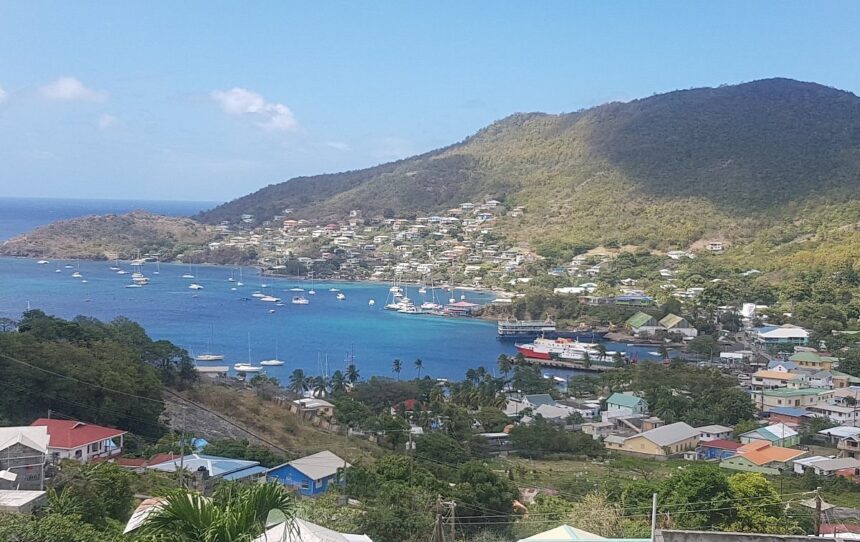
Three decades have passed since the turquoise waters of Admiralty Bay were stained by a mystery that still haunts this island paradise. October 2026 marks the 30th anniversary of the murder of Jerome “Jolly” Joseph, a 30-year-old local boat taxi driver whose death triggered an international firestorm and a trial that remains one of the most controversial in Caribbean history. Despite the passage of time, the central question asked by the presiding judge in 1997 remains unanswered: “Who shot Jolly Joseph?”.
The mystery began on the night of October 6, 1996, when Joseph was last seen ferrying an American sailing couple, James and Penny Fletcher, to their yacht, the Carefree. Three days later, his body was discovered floating off the coast of Bequia. A forensic examination revealed a grim detail: Joseph had been killed by a single .22-caliber bullet that pierced his heart.
The Fletchers, a couple from Huntington, West Virginia, who were on a round-the-world sailing voyage, were quickly detained and charged with the murder. Their arrest transformed a local tragedy into a high-stakes diplomatic standoff involving the highest levels of the U.S. government, including President Bill Clinton and Senator Jay Rockefeller, who lobbied for the couple’s “due process” amid allegations of corruption and extortion in the Vincentian legal system.
The Fletchers spent nine months in a Vincentian prison, facing the possibility of execution by hanging if convicted. However, when the case finally reached trial in August 1997, it collapsed almost immediately. Justice Dunbar Cenac of the Eastern Caribbean High Court ruled that the prosecution had failed to provide any direct or indirect evidence linking the couple to the crime.
“The question remains: Who shot Jolly Joseph?” Justice Cenac remarked while directing the jury to acquit the pair. He noted that there was “not one scintilla of physical evidence” connecting the Fletchers to the murder—no fingerprints, no blood, no ballistics, and no clear motive.
The most significant piece of evidence was a missing .22-caliber handgun that the Fletchers had registered with Vincentian customs upon their arrival. The couple claimed the weapon had been stolen by a former deckhand they had fired, a claim the deckhand denied. Despite extensive searches, the murder weapon was never found, and the prosecution was never able to prove that the bullet that killed Joseph came from the Fletchers’ gun.
While the Fletchers maintained their innocence and eventually returned to the United States, the acquittal left the island of Bequia in shock and Joseph’s family in tears. Supporters of the Fletchers argued that the police had made no effort to look for other suspects, fearing that finding a local killer would damage the vital tourist trade. Conversely, some Vincentians felt the island had been painted as corrupt by U.S. media reports they believed were designed to protect the “classic ugly Americans”.
Thirty years later, the file on Jerome “Jolly” Joseph remains open but cold. The case, often referred to as “Paradise Lost,” serves as a somber reminder of the complexities of international law and the fragility of justice in small island nations.
For the people of Bequia, Joseph is remembered as a well-known boatman whose life was cut short during what should have been a routine fare. While the diplomatic and legal battles have long since faded from the headlines, the killer who pulled the trigger that October night has never been held to account.
As the sun sets over the masts in Admiralty Bay today, the “unsolved” status of the case remains a lingering shadow over this “paradise on earth”