• Diaspora advocates rally to repatriate Vincy stranded in France

    Diaspora advocates rally to repatriate Vincy stranded in France

    Repatriation efforts are now underway for Shaquille King, a Vincentian national stranded in France.  Through the High Commission of Saint Vincent and the Grenadines in London, officials are actively facilitating the issuance of an Emergency Travel Document while liaising directly with British authorities in Paris to monitor King’s personal welfare and secure his safe return home.

    Parallel to official diplomatic actions, an on-the-ground rescue operation mounted by independent diaspora advocate Rufus Collins and Rich Bosz has dramatically improved King’s physical safety and living conditions. Rich Bosz traveled from England to Paris to personally locate King, removing him from homelessness and providing him with warm hotel accommodations, clean clothing, and hot meals. In a video message recorded from France, King expressed deep gratitude to the thousands of well-wishers who offered support, confirming that he is safe, in good health, and relieved to no longer be sleeping outdoors while waiting for final travel arrangements.

    The repatriation process now hinges on resolving complex international transit logistics and securing flight funding. Initial plans to route King home via the United Kingdom were invalidated because British border regulations strictly prohibit transit or entry into UK territory on an Emergency Travel Document.

    Consequently, organizers and community members are actively raising funds to purchase a specialized flight itinerary routing King from France through Martinique directly to Saint Vincent. Community organizers have issued an urgent appeal for public donations to finalize ticket purchases, emphasizing that collective mutual aid is essential to bridging administrative gaps during unexpected overseas crises.

    King’s current repatriation push follows weeks of severe personal hardship triggered by the theft of his passport while traveling from Switzerland to France between October 9 and early November. Left without valid identification or travel clearance, King sought emergency assistance from consular authorities to arrange his return home.

    However, his efforts were derailed when he was unable to pay a required €125 processing fee for an Emergency Travel Document, having only €60 in remaining funds. Despite offering his remaining money toward the cost, King reported that consular assistance was withheld and he was instructed to seek living support from French government agencies.

    Stranded in Europe with depleted funds, King endured three weeks of extreme privation, sleeping outdoors under a bridge in Paris while attempting to navigate bureaucratic hurdles. During his ordeal, King dispatched more than 100 email appeals for assistance to administrative and consular bodies, which he reported went unanswered or were outright rejected.

    King publicly criticized consular representatives, specifically identifying London consular officer Susan Medely, alleging discriminatory treatment and a failure to uphold core human rights protections owed to Commonwealth citizens in distress.

    The urgency surrounding King’s safe return is heightened by an impending legal deadline set by French immigration authorities. Officials have warned that King’s authorized stay in France expires on November 23, 2026, after which he faces forced overstay status and potential deportation proceedings.

    King has stressed that any visa violation would occur strictly by force of circumstance rather than choice, calling on state authorities and community supporters to finalize his departure before the deadline expires. With official diplomacy and grassroots community aid now aligned, final preparations are proceeding to ensure King’s successful return home to Saint Vincent and the Grenadines.

  • Intl. partnership unlocks support for Vincy cricketers

    Intl. partnership unlocks support for Vincy cricketers

    Young Vincentian athletes have received a substantial boost in their sporting and educational pursuits following a major handing-over ceremony at the Arnes Vale Sporting Complex on Monday, October 19, 2026. The Ministry of Youth, Sports, Culture, and Creative Industries, in partnership with Desh Bhagat University Americas (DBUA)—an offshoot of India’s renowned Desh Bhagat University officially distributed 15 comprehensive cricket equipment kits to support grassroots sports development and nurture the next generation of Caribbean cricketing talent.

    The collaborative initiative addresses a critical barrier in youth sports development: the rising cost of athletic equipment. Minister of Youth, Sports, Culture, and Creative Industries, Honorable Kaschaka Cupid, expressed deep gratitude for the donation, emphasizing that while St. Vincent and the Grenadines is rich in natural athletic talent, proper gear and structured early-childhood involvement are essential for young players to reach their full potential. Minister Cupid urged young athletes to care for the equipment and highlighted the government’s focus on grassroots cricket as a tool for community building and positive youth engagement.

    The partnership reflects a broader vision of combining athletic training with academic empowerment. Mr. Aryan Madan, Operations Director at Desh Bhagat University Americas, described the distribution as an investment in the character and future of Vincentian youth.

    Noting the Caribbean’s legendary cricket heritage, Mr. Madan emphasized that sports instill vital life skills—such as discipline, teamwork, leadership, and resilience in the face of setbacks—that directly complement classroom learning and prepare students to become responsible community leaders. Chancellor of Desh Bhagat University, Dr. Zora Singh, reiterated that holistic student development requires an equal balance of academics, research, and athletics.

    Reinforcing the government’s diplomatic and developmental goals, Minister of Foreign Affairs Dwight Fitzgerald Bramble, commended Desh Bhagat University for its tangible contribution to the nation.

    Minister Bramble highlighted the government’s strategic approach to leveraging international partnerships for maximum public benefit and welcomed DBUA’s announcement of higher education scholarship opportunities for young Vincentians. Encouraging the young athletes present to embrace the opportunities ahead, Minister Bramble reaffirmed that sports and education remain powerful pathways for personal growth and national pride.

  • 14 Coast Guard personnel graduate seamanship course

    14 Coast Guard personnel graduate seamanship course

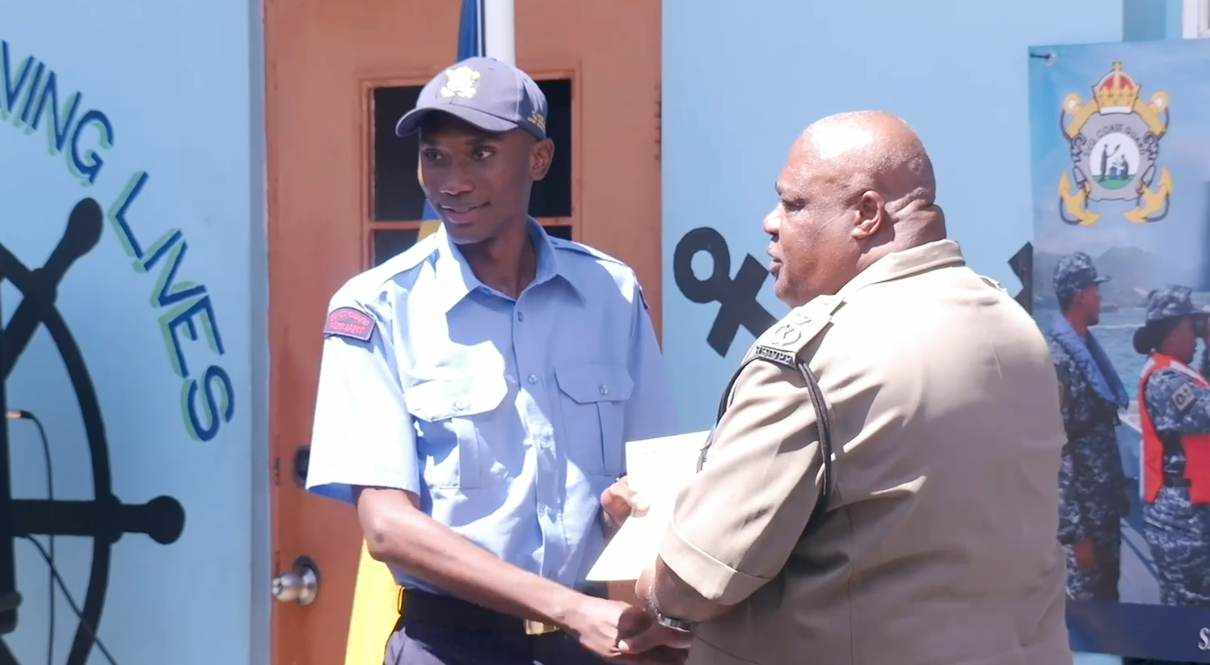
    Fourteen participants drawn from the St. Vincent and the Grenadines Coast Guard Auxiliaries, the Special Services Unit (SSU), and the Rapid Response Unit (RRU) have successfully completed the rigorous Basic Seamanship Course 1 of 2026. The graduation ceremony, held on Friday, October 16, 2026, at the Coast Guard Base in Calliaqua, marked the culmination of an intensive six-week residential training program designed to sharpen foundational seamanship skills, operational discipline, and law enforcement readiness across the nation’s maritime domain.

    Commencing on September 7, 2026, the comprehensive curriculum challenged participants across a wide spectrum of maritime disciplines. Trainees underwent rigorous instruction in nautical terminology, knots and splices, towing, anchoring, boat handling, helmsman and lookout duties, ship husbandry, navigation, survival at sea, firefighting, basic first aid, and damage control.

    Additionally, the course integrated crucial legal and operational modules, including international maritime law, maritime law enforcement, use of force, the Powercraft Act, customs and immigration regulations, basic engineering troubleshooting, aids to navigation, international rules of the road for preventing collisions, and weapons familiarization. All 14 candidates successfully met or exceeded the demanding 83 percent passing standard.

    A central highlight of the training was an intensive practical sea trial aboard the Coast Guard patrol vessel Captain Hugh Mulzac, which journeyed to St. Lucia and back. Under direct instructor supervision, trainees applied their classroom knowledge to real-world operational scenarios, taking full command of vessel navigation, helmsman duties, engine room checks, docking procedures, and onboard meal preparation.

    Course Officer Sub Lieutenant Daniel commended the graduates for their perseverance, evoking the words of author Isaac Dinesen that “the cure for anything is salt water—sweat, tears, or the sea,” representing the hard work, sacrifice, and maritime dedication exhibited by the cohort.

    The ceremony also celebrated two decades of institutional growth, marking 20 years since retired Commander James initiated the Coast Guard’s first basic seamanship course in 2006. Commissioner of Police Trevor Bailey praised the in-house coordination of the program, noting that conducting such high-caliber training locally proves that St. Vincent and the Grenadines possesses the internal expertise to build world-class security professionals.

    Highlighting that the nation’s economic and security interests are deeply tied to its vast territorial waters, Commissioner Bailey charged the graduates to uphold the core values of integrity, loyalty, discipline, teamwork, and devotion to duty as guardians of the nation’s shores.

  • CARDI reports trials of drought resistant tomato in SVG successful 

    CARDI reports trials of drought resistant tomato in SVG successful 

    The Caribbean Agricultural Research and Development Institute (CARDI) has reported highly successful field trials of new drought-resistant and disease-tolerant tomato varieties at an evaluation plot in Belair. The initiative, conducted in close collaboration with the World Vegetable Center (WorldVeg) in Taiwan, the Ministry of Agriculture, and the Taiwan International Cooperation and Development Fund (Taiwan ICDF), aims to safeguard tomato production against escalating climate pressures while boosting income security for Vincentian farmers.

    Tomato production across St. Vincent and the Grenadines and the wider Caribbean has faced severe threats in recent years from rising temperatures, prolonged dry spells, and devastating plant afflictions, including the Tomato Yellow Leaf Curl Virus, bacterial wilt, and late blight.

    To combat these challenges, researchers evaluated a total of 15 selected tomato lines—narrowed down from an initial pool of 30 to 40 candidate lines bred at the World Vegetable Center in Taiwan specifically for tropical climate resilience. Eight of these top-performing lines were highlighted during a WorldVeg Tomato Field Day exhibition, demonstrating exceptional vigor, high yield potential, and robust disease resistance.

    The multi-year evaluation process, initiated in 2024, tested the crop lines across both dry and rainy seasons to monitor their adaptability to high heat, shifting rainfall patterns, varying soil types, and humidity levels across different agro-ecological zones.

    Among the tested varieties, two lines emerged as standout favorites. Line 2151 demonstrated early bearing, uniform fruit shape, and a clustering growth habit that produces significantly higher fruit counts per tree, translating directly into superior yields per acre. Line 2172 gained overwhelming praise from local commercial farmers, such as Valina Chance, due to its large, firm fruit profile ideally suited for slicing and meeting exact domestic market demands.

    Beyond agronomy, the project carries a profound economic benefit for smallholders. Unlike expensive commercial hybrid seeds that require continuous repurchasing, these newly introduced lines are open-pollinated. This empowers local farmers to harvest, select, and multiply their own seeds from season to season, drastically lowering production costs while maintaining crop quality comparable to high-cost commercial hybrids.

    Representatives from WorldVeg and Taiwan ICDF emphasized that these trials represent a crucial step toward long-term food security, with plans to expand similar climate-resilient trials to peppers, pumpkins, okra, and callaloo across St. Vincent and the Grenadines.

  • SVG Launches Upgraded Wireman Licensing System

    SVG Launches Upgraded Wireman Licensing System

    The Ministry of Transport, Infrastructure and Physical Planning has officially launched an upgraded Wireman licensing system designed to modernize regulatory oversight, elevate electrical inspection standards, and enhance public safety across residential, commercial, and national infrastructure developments.

    Announcing the initiative, Minister of Transport, Infrastructure and Physical Planning Nigel Stephenson stated that the project has been a work in progress for some time. The modernized framework addresses changing demands within the electrical industry by replacing a regulatory structure that had remained in place for more than five decades.

    The previous Wireman licensing system dated back to 1969, when statutory provisions were first established to regulate individuals engaged in electrical wiring installations. Minister Stephenson noted that while the 1969 framework served an important purpose during its era, the evolution of the electrical industry made a comprehensive review and modernization essential.

    For years, practicing electricians and wiremen expressed concerns regarding prolonged waits for an updated licensing process. The newly launched system directly responds to these calls, providing a structured framework that allows tradespeople to regularize their professional standing and continue applying their trade under updated safety standards.

    Proper electrical wiring and rigorous inspection procedures are critical to protecting lives, homes, and commercial properties. The Ministry emphasized that the quality of work performed by wiremen plays an essential role in national development, carrying direct implications for public safety, economic growth, and overall national resilience.

    Minister Stephenson underscored that effective government regulation must be accompanied by supportive measures for industry tradespeople. To achieve these goals, the upgraded framework pairs regulatory oversight with opportunities for professional growth, continuous learning, and formal recognition of practical experience.

    During the official launch ceremony, the Electrical Inspectorate Division presented special honors to recognize significant contributions to the trade.

    Earnest Dover was recognized and presented with an award as the longest-serving practicing electrical wireman. A posthumous award was also presented in honor of Dudley Hinds, celebrating his legacy and service to the electrical industry.

  • Palace ‘Fully Open’ to Losing Crown in 17 Nations

    Palace ‘Fully Open’ to Losing Crown in 17 Nations

    Buckingham Palace has formally signaled that it remains entirely open to Commonwealth realms removing King Charles III as their head of state if citizens decide they no longer wish for the monarchy to lead their nations. The clarification emphasizes a foundational principle within the royal household: the monarchy exists to serve only where its presence is actively desired by the public.

    Speaking to The Times, a senior royal aide made the Palace’s stance unambiguous regarding potential constitutional transitions across member states:

    “The King and the royal family are there to serve the people of these regions for as long as they wish. But if they don’t wish it anymore, then we really are fully open to that. The family serves when it’s wanted and if not, then a new arrangement can be found.”

    The aide added that the royal household maintains “absolutely no difficulty” with member countries charting their own sovereign paths, reiterating that any decisions regarding national governance rest entirely with the citizens and leadership of each respective realm.

    An official spokesperson for Buckingham Palace reinforced this position in statements reported by The Independent, clarifying that choices regarding national sovereignty have long been recognized by the Crown as the exclusive prerogative of individual nations:

    “It has long been the Palace position that it is up to individual Commonwealth realm nations to determine what is right for them in matters of sovereignty. His Majesty is delighted and honoured to serve as Head of State for as long as they may wish, but equally supportive if they choose a different path.”

    The Palace’s declarations follow the conclusion of a complex and demanding nine-day royal tour of the Caribbean undertaken by King Charles III. Spanning three countries and numerous public engagements, the visit took place against a backdrop of intensifying debates over the historical legacy of the transatlantic slave trade and growing calls across the region for formal apologies and financial reparations from the United Kingdom.

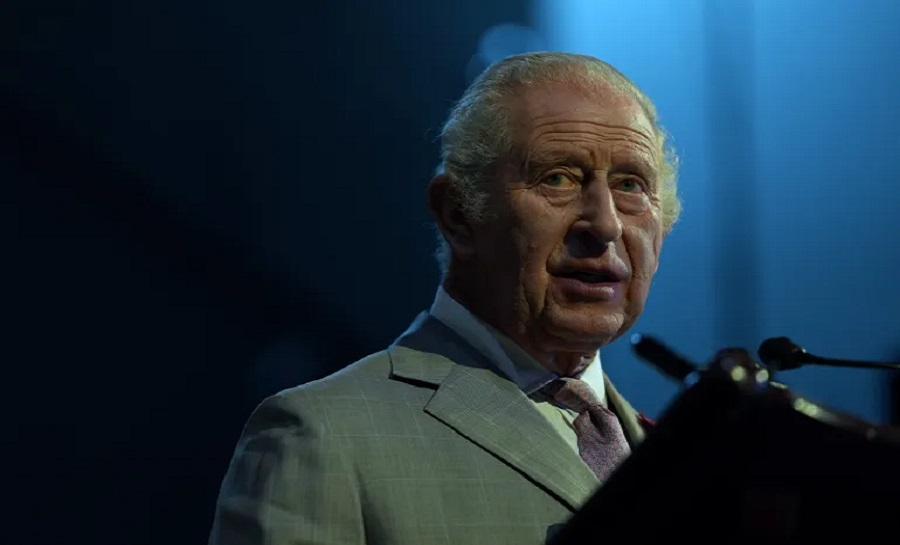
    During a major address launching a Commonwealth summit at the culmination of the trip, King Charles addressed the history of slavery directly, stating that the transatlantic slave trade “fills my heart with horror and my soul with the most profound personal sorrow.” While expressing deep personal regret, the King did not offer a formal state apology during the summit address.

    Reflecting on the tour’s dynamics, Palace officials characterized the nine-day itinerary across three countries as challenging and exhausting, yet ultimately successful in demonstrating royal statecraft:

    Demanding Itinerary: The visit involved intensive scheduling across three nations in high heat, marked by sensitive diplomatic discussions and political conversations.

    Diplomatic Statecraft: Palace aides noted that the King relishes the demanding aspects of his role and remains dedicated to strengthening relationships where complex political issues are at play, describing the monarch as a “great secret weapon” in diplomatic outreach.

    Balanced Line: Officials emphasized the necessity of navigating a careful line between UK government policy and the distinct constitutional role of the monarch.

    In detailing the royal household’s perspective on constitutional change, Palace representatives highlighted that transitions from realms to republics represent a normal, established process within Commonwealth history rather than a breach of bilateral relations.

    The following table synthesizes the historical precedents and official Palace posture regarding sovereign transitions within the Commonwealth:

    Transition ParameterHistorical Precedent Details & Institutional Position
    Recent Transition BenchmarkBarbados (2021): Cited by Palace officials as a model transition executed with mutual respect and without rancour. King Charles attended the transition events, and Barbados remains a supportive Commonwealth member.
    Reign of Queen Elizabeth II17 Nations: A total of 17 countries successfully transitioned from realms to republics during the reign of the late Queen, demonstrating long-standing precedent.
    Institutional StanceStandard Practice: Palace statements emphasize that such shifts are neither novel nor unprecedented, representing routine exercises of national self-determination.

    A Buckingham Palace spokesperson pointed directly to the 2021 transition of Barbados as evidence that constitutional restructuring does not diminish ongoing partnership within the Commonwealth family:

    “When the nation decided it wanted to change to a republic, His Majesty was delighted to go along to events which marked its transition, and of course it very much remains a supportive member of the wider Commonwealth family, alongside other nations that have followed the same path. There is actually nothing unusual in this… It’s simply a matter of what countries want to do, and what is right for them.”

    The Palace also addressed reports regarding political coordination between royal officials and the UK government during the Caribbean visit. Officials firmly denied suggestions that the royal household was blindsided by the UK Prime Minister’s decision to express openness to apologizing for Britain’s role in the transatlantic slave trade in an op-ed.

    A Palace source confirmed direct communication between royal aides and the Prime Minister prior to the publication of the op-ed, affirming that Downing Street acted entirely within its entitlement and with full advance awareness from the royal household.

    Ultimately, the Palace’s declarations affirm that while King Charles remains honored to serve as head of state across Commonwealth realms, the Crown stands ready to respect and support whichever constitutional direction member nations choose to pursue.

  • Why Britain’s £40 Million Reparations Offer Falls Short

    Why Britain’s £40 Million Reparations Offer Falls Short

    King Charles’ drivel and PM Burnham’s insult

    Plain Talk has always maintained that the struggle for Reparations is not for the faint of heart. The developments unfolding at the Commonwealth Heads of Government Meeting in Antigua are proof perfect that the Caribbean would need more marathoners than sprinters if it is ever to receive just compensation for the crimes against humanity committed by the former enslaving countries, among whom the United Kingdom played the lead role as head crook.

    This year has witnessed rapid changes and advances in the struggles for reparatory justice. Beginning with the March 25 United Nations vote of 123 for, 3 against and 52 abstentions, which labelled chattel slavery as the gravest crime against humanity, to the Next Steps conference in Accra, Ghana, which united Global Africa in the push for reparations, to the 3rd Caribbean Reparations Conference in Barbados last September, there has been a momentum shift. Renewed focus has been brought to the crime and underdevelopment that slavery and colonialism have wrought on the Caribbean.

    Some say we are at a tipping point. We say not so fast. While there have been great advancements, strong headwinds remain. We need look no further than King Charles’ lazy, tired trope of sorrow and regret, and the UK’s PM Burnham’s insulting 40 million pounds offer in response to the developmental mess Britain largely created. The Caribbean, once labelled as the most prized piece of real estate in the world, is currently, by any measurement on the developmental scale — health, education, wealth generation, debt burden or climate vulnerability — at the very bottom.

    This is not the time for eloquent speech and nice-sounding prose. Who really cares about Charles’ crocodile crooning about his personal pain and sorrow? If “evil need not have the last word”, what is so difficult about apologising for slavery and committing to repair?

    It is a lie to say, as Charles did in Antigua, that “history is not for us to choose or change”!

    In Requiem for a Nun, the American novelist William Faulkner said, “The past is never dead. It’s not even past.” Charles knows that history continues to shape the future. As historian William Pettigrew revealed in his groundbreaking book, Britain’s Slave Traders: A Forgotten History, King James II was the most important English slave trader of the 17th century. Pettigrew also established the true significance of the trade in enslaved Africans in Britain’s development as a modern nation.

    Therefore, the foundation stone for the wealth currently owned by the House of Windsor, which Charles now rules, is money gained from the capture, torture, transhipment and enslavement of Africans. He does not have to speak for all of Britain. He could apologise for the sordid and despicable acts of his foreparents and offer to give back some of the hundreds of millions in treasures stolen from enslaved and colonised peoples, some of whom now serenade him as King of the Commonwealth.

    As Antigua’s Gaston Browne said, “fairness also requires an honest engagement with our shared history”. Charles’ platitude is useless drivel.

    And then there’s Britain’s prime minister, Andy Burnham’s insult.

    As the CARICOM Ten-Point Plan for Reparatory Justice: A Manifesto for the Coming Enlightenment declares, “The case for slavery reparations and climate justice is inextricably linked … Colonialism is an historical and ongoing driver of the climate crisis that has compounded the economic, social and environmental vulnerabilities of the Caribbean.”

    Clearly, the effects of slavery and colonial exploitation remain evident in economic inequality, development challenges and other structural shortcomings. Brought kicking and screaming to the apology pulpit at the CHOGM in Antigua, Burnham’s waffling comments about an apology and his strident opposition to financial reparations were underwhelming, given the gravity of the problems facing our region. 

    St. Lucia’s PM Phillip Pierre was on point when he declared that “an apology without repair is incomplete”.

    So, what should we make of Britain’s Burnham commitment to offer 40 million pounds over 3 years aimed at accelerating critical infrastructure investment, including green energy initiatives? He should have been laughed out of the room. Twelve English-speaking Caribbean countries are in the Commonwealth. Sit with the announcement again — 40 million pounds over three years. Now let’s calculate the insult. If the money were shared equally, each country would get 333,000 pounds or 113,000 pounds per year. Burnham and his ilk are not serious partners.

    Burnham’s announcement lends added weight to Mia Mottley’s bold speech at the United Nations General Assembly last September: “The same mindset that allowed for enslavement is the same mindset that currently sustains inequities in power structures and international institutions.” PM Mottley was highlighting the ongoing legacy of slavery and its impact on global governance and financial systems.

    Here’s a contrast in commitment. Since 2022, following the Russian invasion of Ukraine after years of Western provocation, with a chief culprit being the United Kingdom that Burnham now leads, Britain has squandered about 25 billion pounds in a senseless and unwinnable war aimed at dismembering and defeating Russia — 25 billion with a capital B.

    Yet Burnham insults our leaders, people and countries with a measly 40 million pounds offer. As Black Stalin reminds us, “Black man doh get nothing easy.” The struggle continues — reparations in our lifetime.

  • Business as usual? Fix the thing Mr. Prime minister

    Business as usual? Fix the thing Mr. Prime minister

    Open Letter: Business as usual, PM Friday?

    Dear Prime Minister Friday,

    I wish you and your cabinet of ministers the very best as you navigate the difficult ship of public governance and nation building.  I could only imagine how complex and difficult this task is, given the high levels of visible neglect and disengagement across our communities, the near-bankrupt state of the economy and the gross non-performance of important productive sectors, reinforced by an unpredictable and volatile backdrop of global insecurity.

    But, nonetheless, work as you must so that the quality of life of our citizens can be improved and our nation can return to acceptable levels of law and order, increase productivity and respect for human life and dignity.

    I take liberty in sharing some candid thoughts with you, hoping that they will cause you and your cabinet to pause, breathe, and hopefully change political course early enough. I have admired and respected, in opposition and now in government, the calm and warmth you bring to public leadership — a necessary bundle of skills, which every leader should possess.

    They are most useful in times of significant challenge and certainly in moments of crisis. I believe our country is somewhere between these two political poles.  But I have no doubt, however, that you will use them and the collective talents of your team and our citizens to advance the development agenda of our beloved nation.

    It is one of the many reasons why hundreds of Vincentians supported your party in the last general election. To be precise and personal, I decided to vote in the last general elections because of your party’s expressed public commitment to transparency and accountability in government and the promise of ethical leadership — in essence, a vow to put the country before your party and people before politics.

    Yet, less than a year in government, your party looks like, sounds like and acts like the ULP. The signs and signals are blatantly before our eyes.  What I am getting at is this, Dr. Friday. If your party is honest about good governance, how come government ministers’ private businesses have contracts with or are working with the state? Are public trust and private privilege cousins?

    And how come, without widespread public conversations, attempts have been made or are still being made to amend the Representation of the People Act and the Constitution on the matter of dual citizenship for Members of Parliament?  

    If your party is committed to ethical decision-making, how come a chairman of a statutory body moves from chair to CEO without standard recruitment processes to give other qualified and competent Vincentians an opportunity to apply? If, as you and your party campaigned and promised in the last general election, to be transparent about matters of the state, how come the Chatham Bay sale took place in an almost secretive manner?

    These are some of the questions that emanate from the actions of your administration as you near the one-year mark in government, that I would like answers to, and I am very sure others would, too. Of course, my questions have absolutely nothing to do with the competence or the quality of the people involved. Invariably, they are decent and hard-working Vincentians who are deserving. But you are the one who promised good governance and so, the people have a legitimate expectation of seeing that it is pursued by you.  

    One might argue that nothing wrong was done and the actions are legally permissible. Those arguments may also be true. But legality without propriety in government undermines public trust in our institutions and leaders and sends the wrong signal to the political inner circle and the rest of us on the periphery.

    When the principles of fairness, honesty and accountability are compromised, the fog of corruption begins. I hope that your administration will act sooner rather than later by introducing a suite of ethical standards for public officers, including those who serve us in that near hallowed space of Parliament.  In so doing, I hope you can start with rescuing, reviewing and eventually passing the Integrity in Public Life and the Prevention of Corruption Bills 2004.

    After all, in your most explicit commitment to good governance, it is you who said, you will “bring to Parliament and pass Integrity legislation” (NDP Manifesto 2015, p. 7) as part of your vision for St. Vincent and the Grenadines.  

    Fix the thing Mr. Prime Minister.

  • New ECCB 5-Cent Coins Keep the Golden Hind Design

    New ECCB 5-Cent Coins Keep the Golden Hind Design

    The Eastern Caribbean Central Bank (ECCB) will begin issuing its new series of 5-cent circulation coins in Montserrat next week, followed by Grenada during the week of 16 November 2026. The new coins will be introduced in the remaining participating member countries during the week of 23 November 2026.

    The introduction of the new coins features a redesigned obverse (front) bearing the ECCB logo, surrounded by the flags of the participating member countries of the Eastern Caribbean Currency Union (ECCU). This replaces the portrait of Her Majesty Queen Elizabeth II featured on the previous coin series.

    The reverse (back) of the coin remains unchanged, retaining the traditional and iconic image of the sailing ship, the Golden Hind.

    The redesigned coins represent an updated visual identity for the ECCB’s circulation currency while retaining a familiar feature of the existing coin series.

    The ECCB will continue to provide information on the introduction of the new coins as they become available across the Currency Union.

  • Why Ralph Gonsalves still matters in SVG politics

    Why Ralph Gonsalves still matters in SVG politics

    The Unity Labour Party’s 2025 defeat was a major turning point in Saint Vincent and the Grenadines. It ended a period of government that began in 2001, when Ralph Gonsalves became prime minister, and demonstrated that voters were prepared to transfer power after more than two decades. Such a result matters not only as a change of administration but also as a clear electoral assessment of the governing party’s record and its appeal at that moment. It should not, however, be mistaken for the immediate disappearance of the political presence built around Gonsalves over many years.

    A long tenure creates forms of political influence that do not vanish on election night. Gonsalves is widely recognized, has extensive experience in national government, and has been a central figure in public debate across successive generations. His years in office give voters a substantial record to evaluate, including policies and decisions they may support, question, or reject. They have also provided opportunities to establish working relationships and personal connections across communities. These factors can sustain public relevance even when the party associated with a leader loses office.

    The distinction is between choosing a new government and declaring that a former prime minister has no further role in public life. The 2025 result gave the electorate’s mandate to a different administration; it did not, by itself, settle every question about Gonsalves’s future participation in politics or civic discussion. He may remain a prominent voice, a source of advice for supporters, or a subject of scrutiny for opponents. None of those possibilities guarantees renewed authority. His legacy may shape how the ULP responds to defeat, but rebuilding confidence will depend on choices made by the party and on voters’ judgments in future contests. A historic loss marks a break in political control, while the influence of a long-serving leader is more likely to change gradually, through public debate and changing electoral priorities.

    Ralph Gonsalves retains political significance partly because he is a highly recognizable voice in St. Vincent and the Grenadines. His forceful public speaking, confidence in policy debates, and long experience in national politics allow him to frame issues in terms familiar to many voters. Supporters may value his ability to explain government choices, challenge opponents, and connect subjects such as public services, employment, infrastructure, and the cost of living to daily experience. That communication style can preserve attention and trust even when electoral circumstances change.

    His standing also rests on relationships built over decades. Established supporters, party activists, and community contacts form networks through which political ideas and local concerns continue to circulate. The ULP’s existing organization can provide a platform for meetings, outreach, and debate, while people who identify with Gonsalves or his political principles may remain engaged between elections. A party’s defeat does not immediately dissolve its local connections, remove its capacity to organize, or erase the loyalty of voters who continue to see its leader as a credible representative. Such ties can sustain influence without determining the result of the next contest.

    However, durable support should not be confused with majority backing. The 2025 outcome is an important measure of voters’ choices, and it signals that established loyalties alone are insufficient to secure power. Gonsalves and the ULP face the task of understanding why some voters turned elsewhere, stayed home, or no longer felt represented. That requires listening beyond familiar supporters and engaging with concerns that may not be captured by party activists or long-standing community relationships. His public profile and political networks remain assets, but their future value will depend on how effectively they respond to changing expectations. In this sense, his continued relevance is not proof that the defeat can be set aside; it is a reason to examine how his experience and visibility might be used to rebuild trust and broaden the party’s appeal.

    After a lengthy period in government, Ralph Gonsalves may remain an influential voice in St. Vincent and the Grenadines, but the form of that influence depends on the responsibilities he holds after the election. If he retains a parliamentary role, he can question ministers directly and test the new administration’s proposals against its promises. If he remains active in the United Labour Party, his influence may instead be expressed through its strategy, candidate development, and public response. He could also contribute as an elder statesman or commentator without occupying a formal leadership position. These possibilities should not be treated as interchangeable, or assumed without confirmation.

    His experience governing the country gives him practical knowledge that can sharpen opposition scrutiny. He can draw attention to the costs, implementation demands, and institutional consequences of policy choices, while also explaining where the new government’s plans differ from earlier approaches. That experience is most useful when it supports evidence-based debate rather than simply defending the previous administration. On matters such as public finances, social services, infrastructure, and external relations, a credible opposition can identify risks, acknowledge sound decisions, and offer workable alternatives. Gonsalves’s familiarity with these issues may help the ULP contribute to national discussion even as voters assess the performance of the new administration.

    The defeat also raises strategic questions for the party and for Gonsalves personally. He may choose to lead a period of renewal, or make room for newer voices to build visibility and take responsibility. Either course requires the ULP to examine why some voters changed sides and what concerns shaped their decision. Rebuilding trust will depend on listening to those voters, addressing criticism directly, and showing that the party has learned from the result. Dismissing dissatisfaction as misunderstanding could deepen the distance between the ULP and the electorate. Whether Gonsalves leads that reflection or supports it from another role, his choices will affect how the party balances experience with renewal. His continuing significance will therefore depend not only on his prominence, but on whether he helps the opposition scrutinize power, improve its proposals, and respond constructively to national challenges.

    The 2025 defeat has changed the terms of Ralph Gonsalves’s political relevance, but it has not erased it. His long experience in public life, familiarity with national issues, loyal supporters, and ability to command attention in public debate remain significant assets. Political influence does not end automatically when a party leaves office: an experienced opposition figure can shape scrutiny of the government, represent voters who remain committed to his party, and influence arguments about the country’s direction. Gonsalves is therefore still a force in St. Vincent and the Grenadines, even as the election has placed clear limits on what that influence can achieve.

    Those limits matter. A substantial political profile cannot substitute for public confidence, and previous victories do not guarantee another. The result indicates that enough voters chose change, making it essential for Gonsalves and the ULP to understand why. That means listening carefully to concerns about governance and leadership, rather than treating the outcome as a temporary setback or relying on established loyalties. It also means presenting credible, specific policies that address people’s priorities and demonstrate how the party would respond differently. Without that work, visibility may keep Gonsalves central to political discussion while leaving the ULP unable to broaden its appeal.

    The party’s future will also depend on whether it can make meaningful space for a new generation. Renewal need not dismiss Gonsalves’s experience; it can place that experience within a wider team and offer voters a convincing sense of direction beyond one leader. His next test is to help the ULP adapt while remaining responsive to the electorate that rejected it in 2025. The result did not make his influence irrelevant, but it did make its limits unmistakable. How he and his party interpret the vote, address public concerns, and share leadership will determine whether that influence becomes a foundation for renewed support or remains a prominent presence without electoral momentum.


  • Coral Reef Monitoring: 18 Trained in St. Vincent

    Coral Reef Monitoring: 18 Trained in St. Vincent

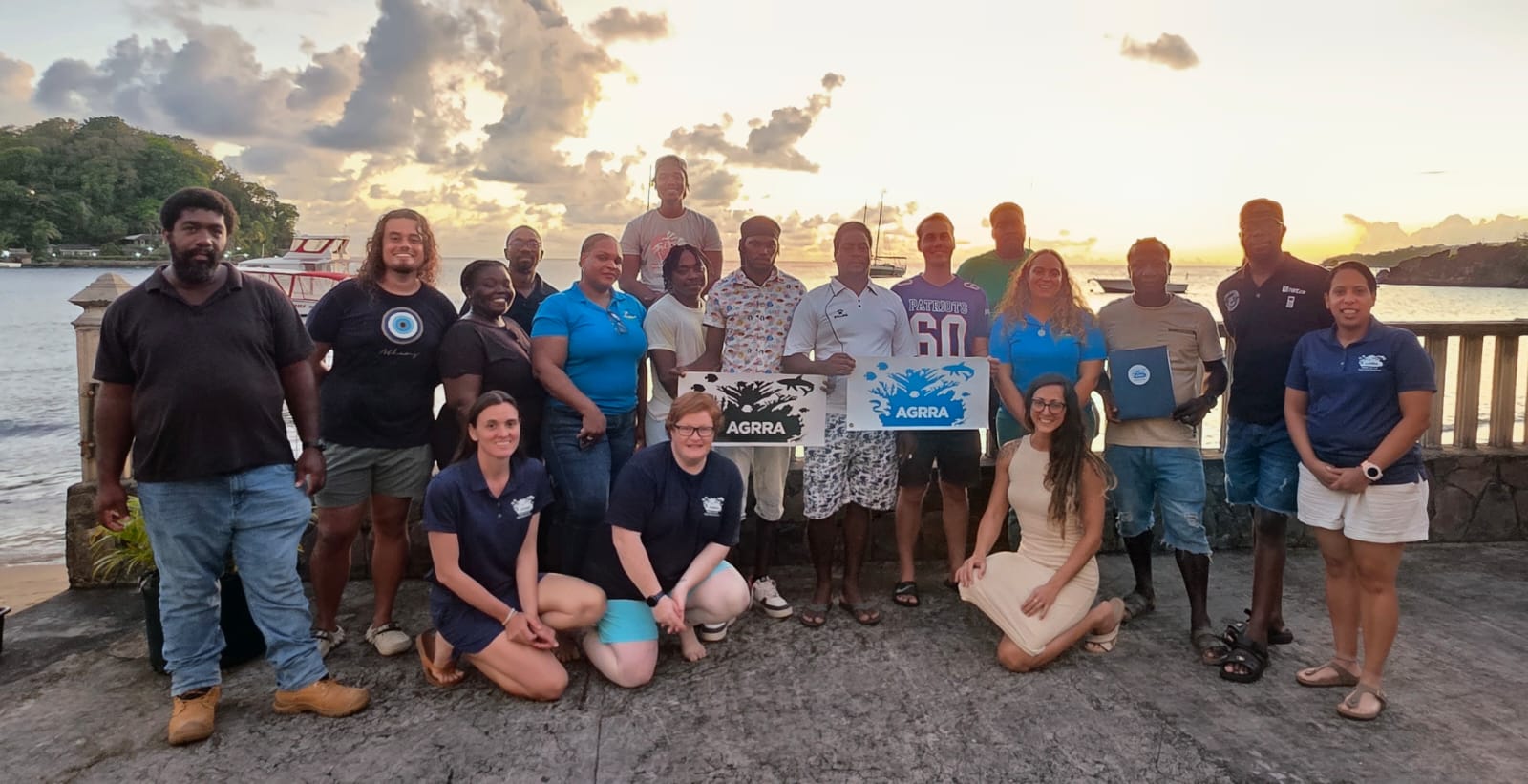
    The Ministry of Fisheries, Marine and Land Conservation and Climate Resilience spearheaded an Atlantic and Gulf Rapid Reef Assessment (AGRRA) training to strengthen local capacity to monitor and assess coral reef health using standardised methods.

    “Our reefs protect our coastlines, feed our communities and support our tourism sector. Having a trained national team that monitors them using the same methods as the rest of the Caribbean means our management decisions can rest on solid, comparable data,” said Mrs Delight Ollivierre-Davis, coordinator of the project activity from the Ministry of Fisheries, Marine and Land Conservation and Climate Resilience.

    The five-day course ran from 19 to 23 October 2026 at Paradise Beach Hotel in Villa, St. Vincent, bringing together 18 participants. Daily sessions from 9 am to 5 pm combined classroom theory with practical fieldwork, including seven training dives. Participants gained hands-on skills to observe, measure, and analyse reef conditions, and the data they collect will support marine management and decision-making in St. Vincent and the Grenadines.

    Participants came from the Ministry of Fisheries, Marine and Land Conservation and Climate Resilience; We Are Mayreau’s Reef Life team; CLEAR Caribbean; Richmond Vale Academy; National Parks, Rivers and Beaches Authority; Tobago Cays Marine Park; Serenity Dive; and Environmental Protection in the Caribbean (EPIC).

    AGRRA and the Ocean Research and Education Foundation (ORE) delivered the training, with facilitators Giselle Brady, Michelle Taylor, and Claudia Guerrero. It combined classroom sessions with supervised in-water exercises covering two of AGRRA’s survey protocols: Benthos and Fish. Participants learned to identify corals, algae, invertebrates, and key reef fish; record reef conditions, including coral bleaching and disease; and enter and check data in the regional AGRRA database.

    Participants who completed every component earned a Professional Development Certification as AGRRA Coral Reef Monitoring Surveyors under their respective protocol, while others received partial certification in the aspects of the training they completed (theory or practical). All graduates joined the AGRRA Caribbean Network, which has trained more than 2,000 people from 25 countries.
    Dive Antilles supported all seven training dives, providing boat access to dive sites, equipment, and safety assistance.

    The Ministry of Fisheries, Marine and Land Conservation and Climate Resilience facilitated the training, funded through its Ridge to Reef project, “Conserving Biodiversity and Reducing Land Degradation using a Ridge to Reef Approach” (“Ridge to Reef”). The United Nations Development Programme (UNDP) implements the project with funding from the Global Environment Facility (GEF), with the Ministry of Agriculture, Forestry and Rural Transformation as the implementing project lead. CLEAR Caribbean funded the in-water training and dive operations through a Caribbean Biodiversity Fund project supported by the German Federal Ministry for the Environment, Climate Action, Nature Conservation and Nuclear Safety (BMUKN) through the International Climate Initiative (IKI) and KfW.

    Why it matters

    Caribbean reefs are under growing pressure. The Global Coral Reef Monitoring Network’s 2025 report found that hard coral cover in the region fell by 48% between 1980 and 2024, while disease, heat stress and overfishing continue to take a toll. Standardised, long-term monitoring helps managers detect decline, recognise recovery and assess whether protection is working.

    “Good reef management starts with knowing what is actually happening underwater. This group now has the skills to collect reliable data year after year, and that long-term record is what will help us better understand the impact that conservation and restoration work is having,” said Dr Owen Day, Executive Director of CLEAR Caribbean.

    The training supports ongoing national efforts to improve coral reef monitoring and protect marine biodiversity in St. Vincent and the Grenadines. Because AGRRA methods are used across the region, data collected locally can be compared with reefs throughout the Caribbean.

    “In the Grenadines, the reef is part of daily life. Training our Reef Life team alongside fisheries officers and regional partners means people from our own communities are directly involved in protecting our environment for the next generation,” said Marion Isaacs, Executive Director of We Are Mayreau.

    Next steps

    Participants will form a national AGRRA monitoring team and carry out reef assessments across St. Vincent and the Grenadines. The team will receive continued support from the broader AGRRA team, including guidance to help sustain and strengthen the capacity developed through the training.

  • We don’t need the U.S Embassy to lecture us on Cuba

    We don’t need the U.S Embassy to lecture us on Cuba

    The  St Vincent Times newspaper recently featured an article authored by Ms Karin Sullivan, the Charge d’ Affaires of the United States Embassy to Barbados and the Eastern Caribbean, titled “The Truth Behind Havana’s Darkness”.

    In her article, Ms Sullivan purports to lecture us – the people of Barbados and the Eastern Caribbean – about the situation in our sister Caribbean nation of Cuba. She also regaled us with her opinions about how relatively harmless she considers the US sanctions regime against Cuba to be.

    I would like to inform Ms Sullivan that the people of the countries of the Caribbean Community constitute some of the best educated and most informed national populations to be found anywhere in the entire world. I would also like to assure her that officials of our governments and of the CARICOM Secretariat analyze and study the situation in Cuba very carefully, particularly when considering the annual United Nations resolution condemning the US embargo of Cuba and demanding its termination.

    In fact, a few months ago – in the month of May 2026 to be precise- our CARICOM Ministers of Foreign Affairs held a meeting in the Republic of Suriname ; gave deep and long consideration to the situation in Cuba; and issued a detailed Statement on the matter. Here, then, for the benefit of Ms Sullivan, is the text of the Foreign Ministers’ Statement :

    “The Caribbean Community (CARICOM) Council for Foreign and Community Relations (COFCOR) expresses its profound concern regarding the ongoing and intensifying economic, commercial, and financial measures imposed upon the Republic of Cuba. 

    The COFCOR reminds that the mounting hardships facing the Cuban people also seriously impact CARICOM nationals studying and living in Cuba, whose well-being remains a priority for the Community.

    These measures compound the trade and economic embargo imposed on Cuba for over six decades, which has had a deleterious effect on the lives and livelihoods of the Cuban people. 

    COFCOR unequivocally affirms Cuba’s sovereign right to import and receive fuel, and condemns the obstruction of energy supplies to Cuba, which has precipitated a grave humanitarian crisis.

    COFCOR reaffirms the need for the preservation of the Caribbean as a Zone of Peace and expresses alarm at recent statements that suggest the possibility of military aggression against the Republic of Cuba; any such action would inflict unnecessary human suffering, impose grave material costs, and fundamentally destabilize the security architecture of the entire Caribbean region.

    As a matter of international law and in solidarity with the resolutions adopted year after year by the overwhelming majority of United Nations member states, the COFCOR reaffirms that Cuba poses no threat to any nation, that it stands as a peaceful and cooperative member of the international community, and that the continued application of these unilateral coercive measures constitutes an unjustifiable violation of human rights, the principles of free trade, and the fundamental norms governing relations among sovereign states.”