• Privy Council Overturns Trinidad Anti-Gay Laws

    Privy Council Overturns Trinidad Anti-Gay Laws

    Consensual sex between adults of the same sex in private is officially no longer a criminal offence in Trinidad and Tobago following a landmark judgment by the Judicial Committee of the Privy Council. Delivering its final ruling in a constitutional battle that spanned nearly a decade, the five-member panel dismissed the State’s cross-appeal and allowed the appeal brought by gay rights activist Jason Jones, bringing an end to historic legislation that criminalized private, consensual intimacy. The decision establishes that Sections 13 and 16 of the Sexual Offences Act must be interpreted in alignment with the Constitution, ensuring that adult citizens can no longer be prosecuted or branded as criminals for engaging in private, consensual sexual relations.

    The ruling marks a decisive victory for Jones, who initiated the legal challenge to overturn laws that heavily impacted the nation’s LGBT community. However, the Law Lords emphasized that the legal ramifications extend far beyond homosexual relationships, altering the statutory landscape for heterosexual adults as well.

    Prior to the ruling, Section 13 of the Sexual Offences Act criminalized buggery—defined as sexual intercourse per anum—carrying a maximum penalty of 25 years’ imprisonment. Because the original statutory language applied to sexual acts committed by a man with another man or by a man with a woman regardless of consent, heterosexual couples engaging in private, consensual acts were also technically exposed to severe criminal sanctions.

    Similarly, Section 16 of the Act penalized “serious indecency” with up to five years’ imprisonment. Defined broadly as any act other than sexual intercourse involving the use of genital organs for sexual arousal or gratification, Section 16 encompassed acts such as consensual oral sex between adults.

    Although the provision contained limited exceptions for certain acts between married spouses, it effectively rendered a wide spectrum of private, consensual sexual conduct between unmarried adults—whether same-sex or opposite-sex—potentially illegal. By ruling that both sections infringed fundamental constitutional rights, the court removed the threat of criminal prosecution from all consenting adults.

    The judgment was handed down by a panel comprising Lord Reed, Lord Briggs, Lord Sales, Lord Burrows, and Lady Rose. In their written decision, the judges affirmed that the challenged provisions directly violated Jones’ fundamental constitutional right to respect for his private and family life.

    Emphasizing the essential human dimension of private intimacy, the Board observed that the ability to form a deep connection with another person through an intimate and loving relationship constitutes a vital interest for all human beings, one that the state cannot arbitrarily criminalize.

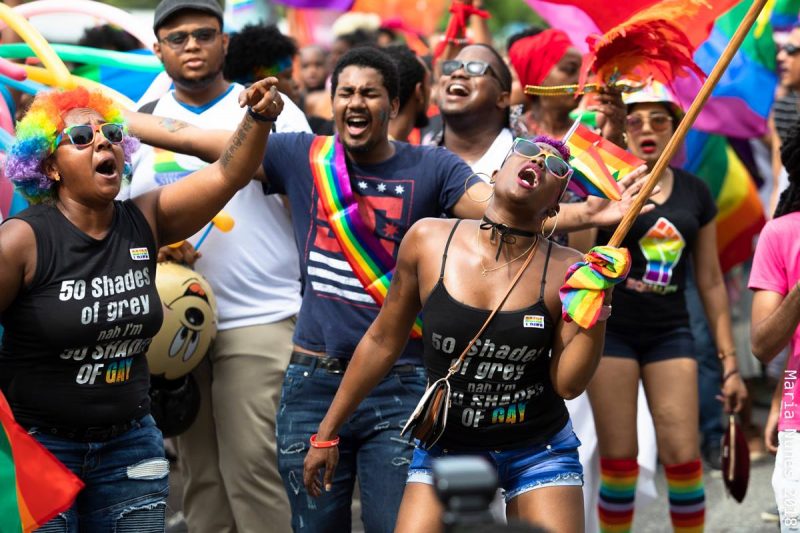
    This final ruling brings to a close a legal journey that gained significant public momentum in 2018, when High Court Justice Devindra Rampersad first declared the sodomy laws unconstitutional. That same year, hundreds of supporters gathered in St Clair for Trinidad and Tobago’s first public gay pride parade on July 29.

    While the Privy Council has left open the precise final framing of the formal remedial order, the Board’s decision conclusively settles the substantive constitutional question, ensuring that private, consensual adult intimacy is protected under the law.

  • SVG cannot scapegoat Taiwan for its debt crisis

    SVG cannot scapegoat Taiwan for its debt crisis

    As St. Vincent and the Grenadines confronts an unprecedented fiscal crisis, prominent radio host and commentator Chester Connell has rejected attempts to blame long-standing diplomatic ally Taiwan for the island nation’s economic and development struggles. Speaking on Hot 97.1 SVG during a broadcast on whether the country should seek an International Monetary Fund (IMF) structural program or switch diplomatic allegiance to Mainland China for financial relief, Connell declared that responsibility for the island’s economic state rests firmly at home rather than with foreign partners.

    The debate over foreign alliances comes against a backdrop of severe domestic economic pressure. St. Vincent’s national debt has climbed to between $3.1 billion and $3.5 billion, with approximately 40 percent of that total accumulated over just the past three years.

    The strain on public finances is already acute, as roughly 39 to 40 cents of every single dollar generated through government customs duties and tax revenue is currently absorbed by debt service payments. With public revenue consumed by debt maintenance, state services face severe tightening, leading some commentators and citizens to suggest that major geopolitical shifts may be necessary to relieve the financial burden.

    Amid calls from some quarters to sever ties with Taipei in exchange for potential debt relief from Beijing, arguments have emerged suggesting that Taiwan shares blame for the island’s plight by continuously extending loans and financial backing to the government over the years.

    Addressing these claims, Connell acknowledged that while critics accuse Taiwan of enabling government spending, Taiwan would be entirely justified in turning that argument back onto the Vincentian public. If SVG leaders or citizens claim desperation caused by foreign borrowing, Taiwan can legitimately point out that the Vincentian electorate repeatedly authorized the government’s fiscal direction at the ballot box.

    Connell underscored that St. Vincent and the Grenadines is ninety-five percent responsible for its current financial predicament. He highlighted that voters democratically elected and re-elected the ruling administration through five consecutive terms, making the nation’s debt trajectory a direct outcome of domestic political choices and governance rather than external manipulation. While recognizing that the island faces a desperate financial reality, Connell maintained that blaming a bilateral partner for issuing requested credit ignores the fundamental principle of national accountability and the democratic choices made by the electorate over decades.

    The commentary also addressed the broader diplomatic and practical ramifications if St. Vincent were to abandon its alliance with Taiwan purely out of financial necessity. Acknowledging that shifting ties for monetary relief risks making the nation appear flighty or disloyal after decades of partnership, Connell noted that desperate economic circumstances often force sovereign governments to prioritize immediate survival over historical ties.

    Regarding Vincentian scholarship recipients currently studying in Taiwan, Connell expressed confidence that any transition would include arrangements allowing current students to complete their degree programs using Chinese funding before directing future educational cohorts directly to Mainland China. Ultimately, Connell’s analysis stresses that whether St. Vincent pursues strict IMF structural adjustments or geopolitical realignment, the country must first acknowledge its own primary role in its economic development challenges.

  • SVG’s debt curse: What an IMF program means

    SVG’s debt curse: What an IMF program means

    Facing a daunting public debt burden of 113 percent of gross domestic product that threatens to climb to 145 percent by 2031 if left unaddressed, St. Vincent and the Grenadines stands at a critical financial crossroads. Following the 2026 International Monetary Fund (IMF) Article IV consultation, Prime Minister and Minister of Finance Dr. Godwin Friday announced a homegrown fiscal adjustment program designed to stabilize public finances and realign the nation with the Eastern Caribbean Currency Union benchmark target of 60 percent debt-to-GDP.

    Yet as economic pressures mount—compounded by $2.5 billion in private sector liabilities across commercial banks and credit unions—debates are intensifying over whether Kingstown will eventually need to transition from a self-directed recovery strategy into a formal, multilateral structural adjustment program supported by the IMF.

    If St. Vincent and the Grenadines ultimately formally enrolls in an IMF arrangement, such as an Extended Fund Facility or Extended Credit Facility, international experience indicates that a clear set of structural expectations will immediately follow. Central to any IMF-backed package is a binding commitment to fiscal consolidation, typically anchored around achieving a primary surplus target of at least 3 percent of GDP over the medium term.

    For Vincentian households and public sector workers, this adjustment path would translate into tight controls on government expenditure, rationalization of state-owned enterprises, strict limits on public sector wage bill growth, and enhanced tax collection efficiency. Simultaneously, multilateral lenders would prioritize structural benchmarks designed to improve public financial management, strengthen customs administration, and protect foreign exchange reserves while shielding social safety nets for vulnerable populations.

    The potential trajectory for St. Vincent is illuminated by the historical outcomes of neighboring Caribbean island nations that previously navigated high-debt crises through IMF conditional programs. Jamaica stands out as one of the region’s most dramatic cases of debt reduction. In 2013, with public debt surging near 150 percent of GDP and foreign exchange reserves severely depleted, Kingston entered into consecutive IMF Extended Fund Facility and Stand-By arrangements. Through sustained primary surpluses averaging nearly 7 percent of GDP, local debt restructurings, and deep structural reforms,

    Jamaica successfully slashed its debt ratio to under 80 percent within a decade. Crucially, Jamaica established an independent Economic Programme Oversight Committee (EPOC) comprising private sector, trade union, and civil society representatives to monitor implementation transparently. However, this fiscal transformation came at a heavy societal price, requiring prolonged public sector wage freezes, stringent cuts in capital investment, and sharp compressions in domestic demand.

    Barbados offers another highly relevant regional benchmark through its Barbados Economic Recovery and Transformation (BERT) framework initiated in 2018 under Prime Minister Mia Mottley. Facing public debt exceeding 148 percent of GDP and dangerously depleted foreign reserves, Barbados combined a domestic debt restructuring with a comprehensive IMF Extended Fund Facility program.

    The BERT model restored central bank reserves to over $1.6 billion—equivalent to more than seven months of import cover—lowered debt-to-GDP to approximately 94 percent, and pioneered innovative debt-for-climate swaps under the IMF’s Resilience and Sustainability Facility to build natural disaster resilience. Like Jamaica, Barbados established an independent BERT Monitoring Committee to maintain public trust and monitor quantitative performance targets. The Barbadian experience demonstrated that an IMF program can succeed without destroying social stability if accompanied by strong national ownership, targeted retrenchment packages, and robust social protection spending.

    Further down the island chain, Grenada provides additional insights from its 2014 to 2017 IMF-supported structural adjustment program. After public debt escalated to 108 percent of GDP following external economic shocks, St. George’s implemented strict fiscal discipline, restructured commercial debt, and enacted a statutory Fiscal Responsibility Act that capped public sector wage bill growth as a proportion of national output. Grenada’s program successfully reduced debt below 65 percent of GDP prior to the recent severe disruptions caused by Hurricane Beryl in 2024. Grenada’s trajectory demonstrated that statutory fiscal rules can lock in gains, though maintaining those gains requires continuous management against climate-related vulnerabilities.

    Evaluating whether an IMF program represents a good fit for St. Vincent and the Grenadines requires weighing these regional precedents against Kingstown’s specific vulnerabilities. The primary advantage of an IMF-backed agreement is macroeconomic credibility. Formal endorsement by the Fund serves as a stamp of approval that lowers sovereign borrowing costs, unlocks hundreds of millions of dollars in highly concessional development financing from the World Bank and Caribbean Development Bank, and provides a structured mechanism to enforce fiscal discipline across political cycles. For an economy carrying a public debt burden that expanded by 45 percentage points of GDP since 2019 due to the La Soufrière volcanic eruption and pandemic recovery costs, multilateral backing provides financial insulation that a purely self-funded budget cannot match.

    However, the regional record also underscores substantial risks that St. Vincent must manage if it adopts an IMF framework. A rigid focus on rapid primary surplus accumulation can constrain essential capital spending on climate resilience, infrastructure, and hospital upgrades at a time when natural disaster frequency is rising. Furthermore, as highlighted by economic commentators and former leaders in SVG, private sector debt in minibuses, agriculture, and construction is heavily collateralized by family real estate titles. Overly aggressive public sector austerity could trigger broader economic stagnation, driving up loan defaults and asset foreclosures across the domestic banking system.

    Ultimately, Caribbean outcomes prove that an IMF program is not inherently a cure or a curse; its fit for St. Vincent depends on design and domestic leadership. If Kingstown pursues an IMF-supported pathway, the island can achieve sustainable debt reduction similar to Barbados and Jamaica provided it maintains strong national ownership, avoids externally dictated austerity formulas, creates an independent domestic monitoring committee composed of local stakeholders, and explicitly protects health, education, and social protection budgets. By pairing international financial discipline with clear social safeguards, St. Vincent can convert its debt crisis into a foundation for long-term economic stability.

  • Cold front to bring heavy rain, rough seas across the Caribbean

    Cold front to bring heavy rain, rough seas across the Caribbean

    A shifting weather pattern is set to bring noticeable changes to the Caribbean as a cold front nudges closer to the region heading into the weekend. In a forecast delivered on Tuesday, November 10, 2026, meteorologist Brian Shields reported that while early-week conditions feature scattered, spotty showers, a significant build-up of rainfall, gusty winds, and lower temperatures will sweep across the northern Caribbean by Friday and Saturday.

    The atmospheric shift is driven by a front developing from New England and Atlantic Canada, stretching down through Bermuda and the Bahamas. As the front pushes southward toward the end of the working week, moisture will be pulled up ahead of it. While Shields noted the system is not as strong as the major front that impacted the region last February, it will nonetheless disrupt current weather patterns, bringing heavy rain down through the Bahamas and into parts of the Greater Antilles.

    Precipitation is expected to increase markedly starting Thursday and peaking through Friday and Saturday. Major areas in line for enhanced rainfall include Cuba, Jamaica, the Cayman Islands, the Bahamas, Haiti, the Dominican Republic, Belize, and Mexico’s Yucatan Peninsula, including Cancun, Cozumel, Merida, and Campeche. While short-term rainfall around the Cayman Islands and Jamaica may see localized totals of 25 millimeters or slightly more, the arrival of the main front over the weekend promises a much more active period with heavy downpours at times.

    Behind the frontal boundary, cooler air will slide across northern territories. Temperatures across Florida are forecast to drop into the 40s Fahrenheit in many areas, while the Bahamas will experience chillier morning temperatures. Further south, daytime temperatures will hover near 25 degrees Celsius in Jamaica and the low 20s Celsius in Cuba. Although coastal lowlands may notice only minor temperature shifts, the higher terrain of Haiti and the Dominican Republic will see a distinct cool-down, with noticeably colder conditions taking hold by Sunday morning.

    In addition to rain and temperature drops, marine conditions will deteriorate across regional waters. Gustier winds arriving alongside the front will elevate wave heights across the Gulf of Mexico, the southeastern United States, the Bahamas, and the central Caribbean. Marine forecasts indicate seas building to between 2 and 2.5 meters—roughly 7 to 9 feet—in some spots, prompting advisory warnings for mariners and coastal interests.

    The incoming front will not affect all parts of the region equally. In the southeastern Caribbean, Trinidad and Tobago continue to be dominated by dry, unseasonably warm weather, with persistent drought conditions holding firm.

    Passing showers remain possible across Barbados, St. Lucia, St. Vincent and the Grenadines, and Grenada, where rain chances rise up to 50 percent by Wednesday. Meanwhile, drier spots in the northeastern Caribbean—including Antigua and Barbuda, St. Kitts and Nevis, Anguilla, and St. Maarten—may see the tail end of the front draw in much-needed rain by the close of the weekend.

  • Why honesty beats a kind lie every time

    Why honesty beats a kind lie every time

    When someone agrees to come on Monday, you should not have to spend Tuesday trying to find them.

    You may have taken time off work. You may have borrowed the money for the job. By Tuesday afternoon, the repair is still waiting, and you are wondering whether to call somebody else. An explanation would help. Instead, the telephone rings unanswered.

    It is an ordinary frustration, but it tells us something about how we treat each other. One person makes a promise. Another person arranges part of their life around it. When the promise is forgotten, the inconvenience falls on the person who believed it.

    I think we could improve a good deal of life in St. Vincent and the Grenadines by taking that relationship more seriously.

    We speak about wanting a better country. Usually, the conversation soon reaches money, jobs or buildings. Those concerns deserve attention. Yet much of our day is shaped by smaller encounters: whether somebody answers a question, finishes work they have accepted or tells us in time that an arrangement has changed.

    A country becomes easier to live in when these things work. People can plan. They waste fewer journeys. A working parent can arrange an appointment without wondering whether the trip will come to anything. A small business can accept an order with some confidence that its supplier will deliver.

    Keeping our word begins with being honest about what we can do. The desire to please can get us into trouble. We agree to help because the person is standing in front of us and saying no feels unkind. Later, when we have to find the time or the money, we avoid the conversation.

    There is kindness in an honest answer, even when it disappoints. A person who knows that we cannot help is free to try elsewhere. Someone waiting on a promise may let other opportunities pass.

    This applies to the help we offer young people. An adult can speak warmly about wanting to guide a teenager, then discover that meeting regularly takes more time than expected. The teenager notices the missed appointments. They may say little, but they are learning how much weight to give the next promise.

    We should be careful with that trust. If we can help with an application, help with the application. If we can teach a skill for two hours on a Saturday, agree on the Saturday. A modest undertaking, completed, gives a young person something they can use.

    They also learn from the way adults handle mistakes. An apology, followed by an effort to put things right, teaches responsibility. Pretending nothing happened teaches them to protect their pride at someone else’s expense.

    For those of us who believe in God, there is a familiar duty here. We ask for wisdom. Receiving it may require us to listen when someone says that our conduct has hurt them. It may require us to accept that a person with less education or standing has understood a situation better than we have.

    That can be uncomfortable. Most people find it easier to explain their intentions than to examine their behaviour. But good intentions offer little comfort to someone who has carried the cost of what we did.

    The same honesty is needed when we favour people we know. In SVG, relationships reach into almost every part of life. A customer may be a relative. Someone seeking an opportunity may have helped us years ago. We feel an obligation, and often with good reason.

    Before making an exception, though, we need to consider who will have to wait. The customer whose work is pushed back may also be struggling. The applicant without a personal connection may need the opportunity just as badly. We cannot see everyone’s circumstances from our own circle.

    Treating people fairly sometimes means explaining to a friend why we cannot give them what they want. That conversation can strain a relationship. Avoiding it can leave someone else paying for a favour they knew nothing about.

    Care for the country also includes the things we use together. A community centre, a playing field or a school can fall into poor condition while everybody assumes somebody else will attend to it. By the time the damage is obvious, the repair may be beyond what the group can afford.

    Money is often a real obstacle. Where the money is available, somebody still has to arrange the work and check that it has been done. An agreement reached at a meeting needs a person who will carry it through after everyone goes home.

    We should value the people who do that work, and share it more fairly. The person who usually organises an activity may also be caring for a parent, earning a living and raising children. Willingness should not become a reason to leave everything with them.

    Taking on one task can help, provided we finish it. The organiser should not have to spend the week reminding us about the job we volunteered to do.

    These habits have consequences across our islands. They affect whether a business keeps its customers, whether a community group can continue and whether a young person feels able to trust an adult. Much of that is within our reach, even when larger decisions are beyond us.

    We will still disappoint each other. Illness interrupts plans. Money runs short. Work takes longer than expected. People can often understand a difficulty once they know what has happened.

    If Monday is no longer possible, make the call. Explain the delay and give a date you can honour. The person waiting has a day to get on with, too.

  • How to Support Men’s Mental Health This November

    How to Support Men’s Mental Health This November

    Our Men Deserve More | Let’s Talk!

    November is observed as Men’s Month and Men’s Mental Health Awareness Month. Yet, as we are more than ten days in and I am deeply disappointed by the apparent lack of public awareness, activities, and initiatives dedicated to the well-being of our men.

    Where are the conversations? Where are the programmes? Where is the collective effort to encourage men to prioritise their mental health and to remind families, businesses, and communities that our men need care and support too?

    Last month, during Breast Cancer Awareness Month, we witnessed a tremendous show of solidarity. People wore pink, businesses displayed their support, and communities came together to promote awareness. I wholeheartedly applaud these efforts. The fight against breast cancer deserves our continued attention and support. However, I believe we must also ask ourselves why that same enthusiasm and commitment are not as evident when it comes to men’s mental health.

    This is not a competition between men’s and women’s health. It is a call for greater balance, compassion, and recognition.

    We cannot continue to complain about our men while doing so little to support them.

    We complain when men are struggling, when they are found on the blocks, when they become disconnected from their families, and when their lives take destructive turns. Yet, how often do we stop to consider the emotional and psychological burdens they may be carrying?

    How many men are silently battling depression, anxiety, loneliness, financial pressure, and the expectations of being providers and protectors? How many have been taught that asking for help is a sign of weakness?

    We must recognise that behind the man who appears strong may be someone who is struggling and simply needs a listening ear, a safe space, or access to professional support.

    As a society, we have a responsibility to do more than condemn the outcomes of men’s struggles. We must also invest in their well-being and create environments where seeking help is encouraged, not ridiculed.

    I am therefore respectfully calling upon the Ministry of Health, relevant government authorities, businesses, churches, community organisations, and families to make men’s mental health a priority this November or the next.

    Let us organise meaningful activities, promote mental health awareness, encourage regular check-ins, and provide opportunities for men to access support. Let our workplaces recognise the men who contribute to their success. Let our families make time to ask the men in their lives how they are really doing.

    I am also proposing that we select a colour to represent men’s mental health awareness and designate a specific day this November for a national show of solidarity. Let businesses, churches, schools, government offices, and individuals wear that colour as a visible declaration that the mental health of our men matters.

    Imagine the message we could send if Saint Vincent and the Grenadines stood together to say, “We see you. We value you. Your mental health matters.”

    November must be more than a month of recognition in name only. It must be a time of action, awareness, and genuine support.

    As a pastor and advocate for men’s mental health, I am willing and available to work with any organisation interested in planning and executing activities, developing initiatives, and spreading awareness. I believe we can make a meaningful difference if we are prepared to work together.

    Let us rally our men. Let us support our men. Let us recognise our men.

    Because our men deserve more than criticism when they struggle. They deserve compassion, encouragement, and the opportunity to live healthy and fulfilling lives.

    This November, let us demonstrate that we care not merely through our words, but through our actions.

  • interCaribbean nonstop Barbados–Martinique flights start Jan 25

    interCaribbean nonstop Barbados–Martinique flights start Jan 25

    interCaribbean Airways announces the launch of nonstop flights between Grantley Adams International Airport (BGI) in Barbados and Martinique Aimé Césaire International Airport (FDF) in Fort-de-France, Martinique, beginning Monday, January 25, 2027.

    The new service expands interCaribbean’s regional network, strengthening links between the French and English-speaking Caribbean while creating additional opportunities for business, tourism and family travel.

    Operating three times weekly on Mondays, Wednesdays and Fridays, the route will be served by interCaribbean’s ATR turboprop aircraft, with a scheduled flight time of approximately 55 minutes. The schedule is designed to facilitate onward connections through the airline’s Barbados hub.

    Flight Schedule – Effective January 25, 2027

    Operating Mondays, Wednesdays and Fridays

    Flight          RouteDepartureArrival
    JY722          Barbados (BGI) → Martinique (FDF)10:55AM11:50 AM
    JY723          Martinique (FDF) → Barbados (BGI)12:20 PM1:15 PM

    All times are local. Schedule subject to change.

    The new service will connect Martinique to interCaribbean’s extensive regional network through its Barbados hub, providing passengers with greater opportunities to travel between Martinique and destinations across the Caribbean. From Barbados, travelers can access destinations in Guyana, Trinidad, Antigua, St. Kitts, St. Maarten and Tortola, as well as destinations in the Northern Caribbean, including the Bahamas, Jamaica and the Turks and Caicos Islands. The service will also provide improved access to Martinique for passengers traveling from across the Caribbean and international gateways served through Barbados, supporting business, tourism and family travel.

    “Improving connectivity within the Caribbean remains central to our strategy,” said Trevor Sadler, CEO of interCaribbean Airways.

    “Martinique is an important addition to our network and another step toward bringing Caribbean communities closer together. By connecting Martinique through our Barbados hub, we can provide travelers with access to a wider regional network while supporting business, tourism and family travel. Our focus remains on developing sustainable routes that make regional travel more convenient and accessible.”

    The launch further strengthens Barbados’ position as a key interCaribbean hub and builds on the airline’s continued expansion of regional services. Martinique becomes the newest destination in interCaribbean’s growing Caribbean network.

  • Caribbean Innovators Head to Wall Street

    Caribbean Innovators Head to Wall Street

    New York Stock Exchange to Host Future Caribbean’s Largest Global AI Builder Showcase

    The New York Stock Exchange (NYSE) will host Future Caribbean’s Global AI Investor Showcase on Friday, November 13, bringing selected emerging AI ventures before an international audience of investors, business leaders, prospective customers and industry partners.

    Co-hosted by Lily Dash, Founder of Future Caribbean, and Bill Tai, Chairman of ACTAI Global and an early investor in Canva and Zoom, the showcase marks a major milestone for the Caribbean-led initiative and the culmination of its inaugural Global AI Buildathon.

    “Life thrives in ecosystems. So do companies and the economic growth they drive,” said Lily Dash, Founder of Future Caribbean. “Builders need access to global capital, partnerships, computing resources and customers. Future Caribbean has been a collective effort to bring those conditions together around global solutions relevant to the Caribbean. Innovation can come from anywhere. We are creating the connections through which the next category-defining AI company could emerge,” Dash added.

    Barbados, Trinidad and Tobago, Jamaica, The Bahamas, Guyana, the United States, Canada, the United Kingdom and Australia will present AI-powered solutions addressing challenges across finance, energy, tourism, healthcare, disaster management and the blue economy.

    The participating companies will be unveiled at the showcase, which will also feature founder presentations, a fireside conversation and awards recognising standout innovations. The event will provide selected founders with opportunities to engage directly with potential investors, customers and commercial partners, opening pathways to capital, business development and international markets.

    The showcase is sponsored by Invest Barbados and Andrik Capital, with Bookit.com, supported by Lin Dai, serving as travel partner for participating teams.Bill Tai and ACTAI Advisors were Future Caribbean’s first backers and founding partners, supporting the development of the initiative and its international network.

    The November 13 showcase is the result of an international initiative that has attracted approximately 450 builders from 39 countries, supported by more than 200 advisors and judges and 48 partner organisations.

    Launched in May 2026 at IDB Invest Sustainability Week in Barbados, Future Caribbean’s inaugural Global Agentic AI Buildathon set out to connect talented entrepreneurs with the expertise, resources and commercial relationships needed to transform emerging technologies into viable businesses.

    The programme received 236 applications representing approximately 450 builders across 39 countries, demonstrating international interest in developing AI solutions relevant to Caribbean industries and distributed markets worldwide.

    Over the course of the initiative, participants benefited from more than 660 one-to-one advisory sessions and 2,000 individual human judging reviews across quarterfinal, semifinal and final rounds.

    The programme brought together entrepreneurs, engineers, researchers, investors and industry specialists, creating opportunities for technical collaboration, commercial validation and access to experienced mentors.

    Now, selected ventures will take the next step: presenting their technologies at the New York Stock Exchange, one of the world’s most recognised financial institutions.

    For Future Caribbean, the transition from a regional launch in Barbados to an international investor showcase on Wall Street illustrates the potential of connecting Caribbean opportunity with global partnerships and capital.

    Artificial intelligence is reshaping industries worldwide, creating opportunities for entrepreneurs to build new products, automate complex processes and address problems that have historically been difficult or expensive to solve.Yet access to the resources required to build successful technology companies remains concentrated in a relatively small number of global innovation hubs. Future Caribbean was established to help change that.

    Rather than treating the Caribbean solely as a market for technologies developed elsewhere, the initiative seeks to position the region as an active contributor to the global AI economy.

    The Caribbean’s established strengths in financial services, tourism, insurance, corporate services and international commerce offer a valuable foundation for developing AI applications with relevance far beyond the region. These industries routinely operate across jurisdictions, currencies, regulatory frameworks and disconnected systems, creating complex challenges that emerging AI technologies are increasingly capable of addressing. By connecting entrepreneurs with industry expertise and real-world commercial opportunities, Future Caribbean aims to turn these challenges into the foundation for globally scalable businesses.

  • Unsettled weather, thunderstorms approach SVG

    Unsettled weather, thunderstorms approach SVG

    Meteorological authorities in St. Vincent and the Grenadines have issued a 72-hour weather outlook warning residents, motorists, and mariners to prepare for unsettled weather, isolated thunderstorms, and hazardous marine conditions beginning Tuesday evening.

    Fair to partly cloudy skies on Tuesday morning are expected to give way to increasing cloudiness by Tuesday evening, bringing a few showers and isolated thunderstorms. The core of the atmospheric disruption is driven by an approaching low-level trough scheduled to cross the region by late Tuesday into Wednesday. On Wednesday, November 11, conditions will become occasionally cloudy and breezy, accompanied by scattered showers and thunderstorms. Official weather advisories instruct residents and motorists living or traveling near rivers, streams, and areas prone to flash-flooding or landslides to remain alert throughout the mid-week period.

    Unsettled weather will persist into Thursday, November 12, with partly cloudy to cloudy skies, periodic breezes, scattered showers, and isolated thunderstorms continuing across the islands.

    Additionally, atmospheric tracking indicates that a Saharan dust patch will create slight to moderate haze over the area by Thursday. Wind patterns will transition from gentle to moderate southeasterly breezes of 12 to 25 kilometers per hour toward a northeasterly direction, with localized wind speeds occasionally gusting up to 30 to 35 kilometers per hour.

    Coastal and marine environments face heightened risk throughout the 72-hour period due to incoming northerly swells and occasional long-period breaking wave action along the coastlines of St. Vincent and the Grenadines. Open-water sea conditions, currently ranging between 0.5 and 1.2 meters, are projected to build gradually by mid-week, reaching heights up to 1.0 meter west of the islands and up to 1.8 meters east of the islands. Weather officials have advised small-craft operators and sea-bathers to exercise extreme caution when venturing near the water.

    The St. Vincent and the Grenadines Meteorological Services emphasized that while the 72-hour outlook provides essential advance guidance, members of the public should monitor daily weather updates for real-time localized changes as the low-level trough progresses across the eastern Caribbean.

  • Two British- born sons of Dominica make prestigious 2027 powerlist

    Two British- born sons of Dominica make prestigious 2027 powerlist

     Music executive and entertainment entrepreneur Riki Bleau and business investor Antoine Dixon-Bellot, two successful entrepreneurs of Dominican heritage, celebrate their inclusion on the 2027 Powerlist, an annual publication recognising 100 of the UK’s most influential people of African and Caribbean descent.

    Making it on the esteemed list which includes the likes of actor, Sir Idris Elba; podcaster and entrepreneur Emma Grede and City of London CEO, Ian Thomas; represents a proud moment for Dominica and its diaspora, highlighting the achievements of individuals from the Nature Isle on the international stage.  This is particularly significant as the island recently celebrated its 48th anniversary of independence.

    Both men share a connection to Scotts Head, the picturesque fishing village on Dominica’s south-western coast, from which their families originate.

    Bleau has established himself as an influential figure in the British and international music industry. The son of Joseph and the late Edmay Caprice-Bleau, he is the founder of Since ’93, a music label operating in partnership with Sony Music.  He has worked with the likes of Tems, Naughty Boy, Emeli Sandé, Sam Smith, Labrinth, Krept & Konan, Popcaan and Wizkid; contributing to the development of artists and musical projects that have achieved commercial success in the United Kingdom and internationally.

    He first appeared on the Powerlist in 2023 under the Media, Publishing, Entertainment, Sport category and has since continued to expand his influence across music, entertainment and business. His more recent activities include involvement in songwriter catalogue transactions reportedly exceeding US$6 million, the signing of Jamaican superstar Shenseea to his label and collaborating with Vybz Kartel on his UK and Europe shows in 2025 and 2026.

    Bleau has also maintained a connection with Dominica’s entertainment industry, including involvement in securing international performers Wizkid, Spice and Masika for performances at the World Creole Music Festival. His entrepreneurial interests extend beyond music through Bleu Magic Rum, manufactured in Dominica and developed with ambitions for wider Caribbean distribution. The brand’s Regional growth has been supported by partnerships with music heavyweights such as 3x Bouyon Artist of the Year Mr. Ridge and Jamaica’s DJ BoomBoom.

    His inclusion in the 2027 edition of the Power list is especially meaningful as a British Caribbean success.

    “Being included on the Powerlist is a tremendous honour, especially as someone who is so in touch with my Dominican heritage,” says Bleau.

    “I hope this recognition inspires someone, not just here in the UK, but in Dominica to aim for success in their respective fields,” he added.

    Dixon-Bellot, an entrepreneur, property investor and film industry executive makes his second consecutive appearance on the Powerlist under the Business, Corporate, Financiers and Entrepreneurs category. 

    Born in the United Kingdom to British father Mark Dixon and Dominican mother Camelia Bellot, Dixon-Bellot represents a growing generation of British entrepreneurs maintaining strong connections to their Caribbean heritage.

    Property investment remains central to his business activities. He has assembled an eight-figure property portfolio across London and the Southeast of England, encompassing residential developments, investment properties and hospitality assets including the 52-acre Greenstead Hall estate which has been developed as a luxury hospitality, accommodation and events destination.

    He is the founder of Mastermind Media, producing music videos for artists including Stormzy, Skepta, Lil Wayne and Sean Paul, before establishing East London Studios and CineHouse, which provide production facilities and equipment for the film and television sector. His diversified portfolio also includes Cinescope Optics, a business specialising in professional cinema lenses and optical equipment.

    In hospitality, Dixon-Bellot owns The House by Hilly Gant, a restaurant in Essex recognised with two AA Rosettes for culinary excellence.  Beyond his commercial ventures, Dixon-Bellot is committed to supporting aspiring entrepreneurs through mentoring, business education and professional networking opportunities.

    Dixon-Bellot, says he is “deeply humbled” and proud to represent the Dominica diaspora a second year in a row on the influential Powerlist.

    “Dominica may be a small island, but its people have an extraordinary spirit, resilience and ambition that extend far beyond its shores,” he reflects.

    “I am immensely proud of my Dominican heritage, and I hope to continue using my experience, businesses and platforms to support aspiring entrepreneurs and give back to the communities that have shaped who I am today.”

    Previous winners of Dominican heritage include Commonwealth Head Baroness Patricia Scotland and Professor Laura Serrant, a leading nursing educator in the UK.

    First launched in 2007, and published by Powerful Media, the Powerlist is an annual publication recognising 100 influential Black individuals whose achievements and leadership have made a significant contribution to British society and beyond.  Open to Black Britons across the globe as well as Black UK residents, it celebrates excellence across business, finance, entertainment, sport, technology, science, law, public service and other professional sectors.

    The 2027 edition features prominent figures from across British public and professional life, including City of London Corporation Chief Executive Ian Thomas, entrepreneur and broadcaster Steven Bartlett and Microsoft Chief of AI Transformation Officer, Pamela Maynard.

    The Powerlist recognises influence, leadership and achievement across different sectors. Its annual selection includes a ranked top ten, with other recognised individuals presented by professional category.

    For Bleau and Dixon-Bellot, their inclusion places their professional achievements within a wider celebration of Black British excellence, while drawing attention to their shared Dominican heritage. Click HERE to view the 2027 Powerlist.

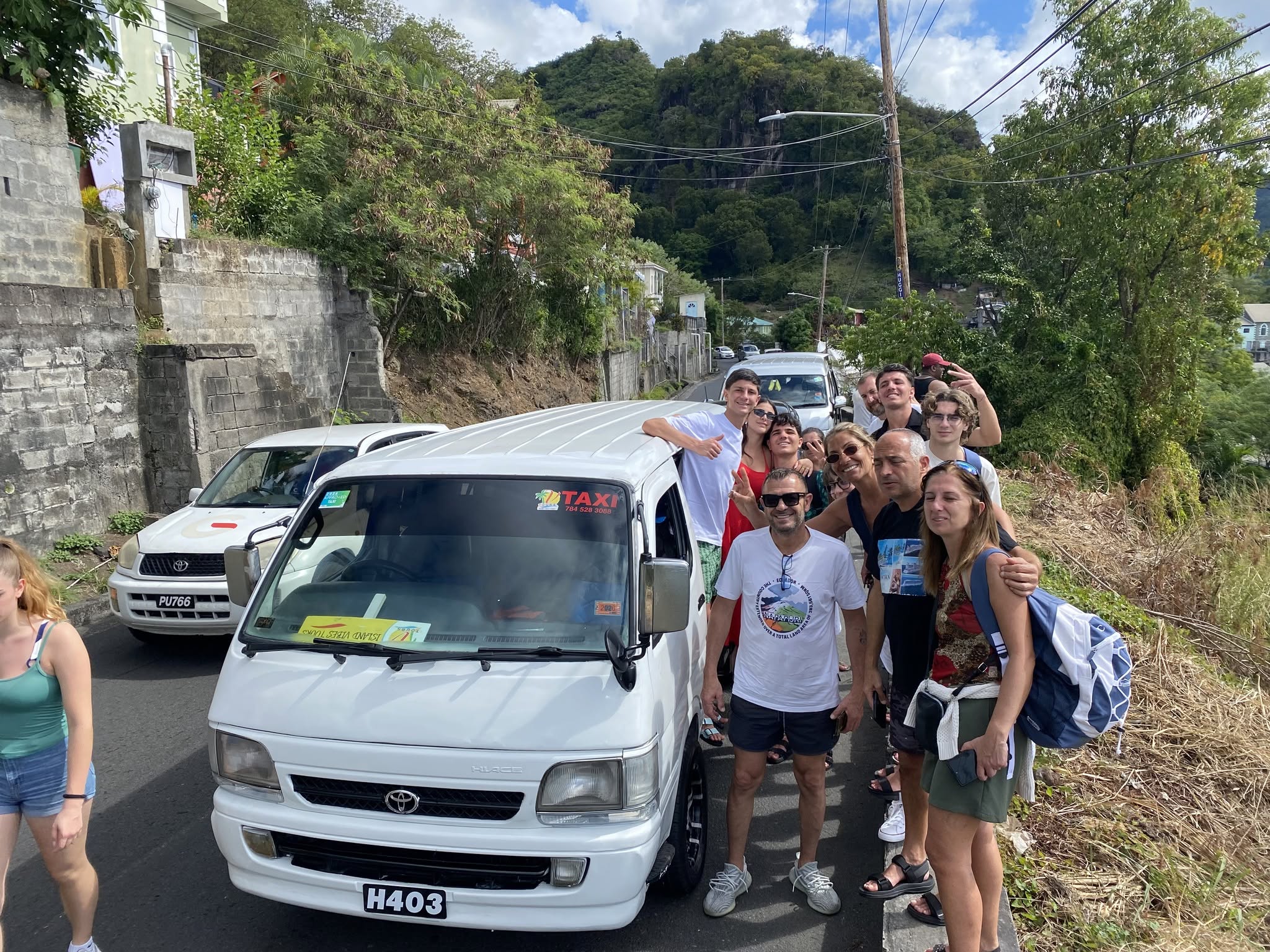
  • Regional expert leads SVG taxi, tour bus operators retreat

    Regional expert leads SVG taxi, tour bus operators retreat

    SVGTA to host free service excellence retreat for taxi and tour bus operators

    The St. Vincent and the Grenadines Tourism Authority (SVGTA) will host a free Taxi and Tour Bus Operators’ Service Excellence Retreat on November 16 and 17, as part of Tourism Month and its Cruise Service Excellence Programme.

    Held under the theme “Service Excellence: Better Service. Better Tips. More Possibilities,” the retreat will give operators practical ideas for their everyday interactions with cruise passengers and other visitors. It will take place at Grenadine House from 10:00 a.m. to 2:30 p.m. each day and approximately 40 operators are expected to participate daily, with each person attending on one day only.

    Led by a regional hospitality expert, the interactive sessions will explore practical ways to strengthen the visitor experience in St. Vincent and the Grenadines. Topics include professional communication, cultural awareness, visitor expectations, emotional intelligence and managing challenging interactions.

    Participants will also consider how professional presentation and memorable service can encourage positive recommendations and repeat business. The retreat will provide opportunities for operators to connect and share experiences with their peers.

    Taxi and tour bus operators can register their interest at https://tinyurl.com/Tourism-Retreat. Operators are asked to indicate their preferred date but note that attendance dates are subject to SVGTA confirmation as spaces are limited.

    The retreat forms part of the Authority’s wider efforts to support a welcoming, professional visitor experience as the cruise sector grows.

  • Sudden death in Victoria Village under investigation

    Sudden death in Victoria Village under investigation

    POLICE INVESTIGATE SUDDEN DEATH AT VICTORIA VILLAGE

    Police are investigating the circumstances surrounding the death of Darren Abby, a resident of Victoria Village who was found unresponsive on Sunday morning.

    According to investigations, at approximately 6:30 a.m. on Sunday, November 8, 2026, police received a report that Mr Abby, who was in his early 30s, had been discovered lying on his back in an unresponsive state after two persons arrived at their place of work.

    Police responded to the report and officers attended the location, where the scene was processed as investigations commenced.

    A medical doctor subsequently examined Darren Abby and officially pronounced him dead.

    At this stage of the investigation, there is no indication of foul play. However, a post-mortem examination is expected to be conducted to determine the cause of death.

    The Royal Saint Vincent and the Grenadines Police Force extend condolences to the family and friends of Mr. Darren Abby during this difficult time.

    Investigations are ongoing.